Category: Genealogy Research Tips

  • Are They From Where You Believe?

    Are They From Where You Believe?

    One of the first things we are often given when beginning genealogy research is a place.

    “My grandfather lived in Indianapolis.”

    “My family was from Illinois.”

    “My great-grandmother lived in this county.”

    Sometimes that information comes from a family member. Sometimes it comes from a family tree that has been copied and recopied. Other times, we may have a record that appears to establish where the person lived.

    But before we begin searching for birth certificates, marriage records, deeds, probate files, church records, and all the other records that may tell us about our ancestor’s life, there is a basic question we should answer:

    Did this person actually live where we believe they lived?

    A simple residence survey can help answer that question. We do not need to search every possible record at this stage. Instead, we can begin with a handful of basic sources.

    1. Census Records

    The U.S. federal census is usually a good place to begin because it gives us a snapshot of a household at a particular time and place.

    But remember that word: snapshot.

    A census does not necessarily tell us where someone lived throughout the entire year, and we should not automatically assume that every piece of information on a census came directly from the person we are researching.

    The person providing the information might have been a spouse, child, another relative, landlord, or even a neighbor. Our ancestor might not have been home when the census taker arrived. The person answering the questions may have known some things about the family and guessed at others.

    There is another complication: a person can sometimes appear more than once.

    My own grandmother provides an excellent example. She was born in Illinois and lived in the Arthur and Loami area before later living in Indianapolis. In the 1920 census, however, she appears twice. She was enumerated with her family in Arthur, Illinois, but she was also enumerated separately in Indianapolis, Indiana.

    If I looked at only one of those records, I could come away with a very different understanding of where she was at that point in her life.

    That does not make the census useless. Far from it. It means the census should be treated as evidence that we compare with other evidence.

    2. City Directories

    City directories can be one of our best tools for establishing where someone lived between federal censuses.

    I have seen this in my own family research.

    I located my grandfather in the 1911 Hartford City, Indiana, city directory. Later, I was able to locate him in Indianapolis city directories covering the period from 1921 through 1946. My grandmother also begins appearing with him in later directory entries.

    Instead of having only the federal censuses—perhaps seeing someone in 1920, again in 1930, and again in 1940—the directories allow us to follow a person’s presence in a community much more closely.

    They can also provide more than a name. Depending on the year and publisher, an entry may identify an address, occupation, employer, or spouse.

    When we find a person repeatedly in directories for the same community, we begin building a timeline. Changes in address, occupation, or the addition of a spouse can become clues that lead us to other records.

    The directory is therefore more than a place to find an address. It can help us establish when someone arrived, how long they remained, and when something in their life changed.

    3. Tax Records

    Tax records can be another valuable tool for determining where someone was located, particularly during years when no census was taken.

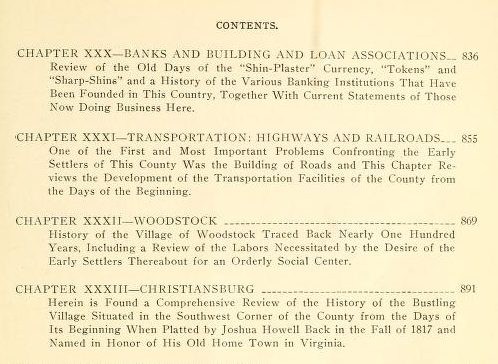
    I have used tax records in my own Howell research involving Joshua Howell in Botetourt and Montgomery Counties, Virginia.

    At first glance, finding Joshua in records from different counties could make it appear that he moved.

    But that is not necessarily what happened.

    Sometimes our ancestors did not move. The boundaries moved around them.

    County boundaries changed as new counties were created and existing jurisdictions were divided or reorganized. A person could live on the same land for years and appear in records belonging to different counties without ever physically moving.

    That is why understanding the history of the locality is so important.

    When a person disappears from one county’s records and begins appearing in another, do not immediately conclude that the family relocated. Check the history of the county boundaries. Look at maps from the period. Determine whether the jurisdiction changed around the family.

    Joshua’s tax records teach another important lesson.

    Joshua was not the only Howell family member in the area. His brother Benjamin had given some of his children the same names Joshua had given his children.

    That creates an obvious problem: when a tax list contains one of those names, which man is it?

    Fortunately, some of the tax records helped make that distinction. Entries identifying individuals as “son of J” or “s of B” helped separate Joshua’s sons from Benjamin’s sons.

    This illustrates why we should not simply search a tax collection for a name and stop when we find it.

    Look at the entire entry. Look at the other people on the list. Follow the person through successive years. Pay attention to small notations added by the person who created the record.

    And understand the boundaries of the jurisdiction in which the record was created.

    A few words such as “son of J” may separate two men with the same name. A different county name at the top of a later tax list may reflect a boundary change rather than a physical move by the family.

    Tax records can therefore help us establish where someone was located over time, distinguish people with the same name, and sometimes reveal something equally important:

    The ancestor stayed put while the map changed.

    4. Voter Registration and Poll Records

    Where they survive, voter registration records and poll lists can provide another piece of evidence for residence.

    To register or vote, a person generally had to meet residency requirements. That makes these records useful when we are trying to determine whether someone was actually living within a particular city, county, or precinct.

    These records will not exist for everyone, and eligibility to vote varied greatly by time and place. Their absence should therefore never automatically be interpreted as evidence that someone did not live there.

    When they do exist, however, they can provide another independent source supporting a residence.

    5. Newspapers

    Newspapers are one of my favorite resources for establishing where a family was at a particular time because they record something the census often cannot—the everyday activities and movements of ordinary people.

    Do not limit a newspaper search to obituaries, birth announcements, and marriage notices.

    My own family demonstrates why.

    My grandmother was born and lived in the Arthur and Loami area of Illinois before later living in Indianapolis. I have found newspaper articles concerning my grandmother herself in the Arthur and Loami area as well as Indianapolis, along with many newspaper entries involving other members of her family.

    Those articles help fill the spaces between the major records.

    A small social notice about visiting relatives might seem unimportant. But it gives us a name, a place, and a point in time. Several such articles collected over a period of years can help us follow the movements and connections of a family.

    My grandfather even received a speeding ticket that made the newspaper. It may not have been an event he wanted preserved for future generations, but for a genealogist, it is another dated piece of evidence placing him in a particular area.

    I have found countless newspaper entries involving members of my family in Hartford City and Indianapolis, Indiana, and around Arthur and Loami, Illinois.

    This demonstrates another important part of a residence survey:

    Do not search only for the person you are researching.

    Search for their spouse, parents, siblings, children, and other close relatives.

    Your ancestor may be mentioned in an article indexed under someone else’s name. A notice about parents receiving a visit from their daughter and grandson could help place that daughter in the community even though she was not the main subject of the article.

    But keep the evidence straight.

    An article placing a brother in Arthur establishes the brother’s presence there. It does not automatically establish that every member of his family lived there.

    Each piece of evidence needs to say what it actually says.

    When a Newspaper Gives You Another Question

    Newspapers can also give us a location that creates more questions than answers.

    I encountered exactly that with my great-granduncle, Tilghman Andrew Howell.

    In the newspaper obituary for his mother, Amelia Howell, née Rousseau, Tilghman was listed as living in “Washington.”

    Washington.

    But what Washington?

    Was the obituary referring to Washington, D.C.? Washington state? Or one of the many cities and towns named Washington?

    Without additional evidence, I cannot simply choose the Washington that seems most likely and begin researching as though I have established his residence.

    Instead, “Washington” becomes a clue.

    Now I can return to the other records in my residence survey. Census records, city directories, tax records, voter records, and additional newspapers may eventually provide the evidence necessary to determine which Washington the obituary meant.

    That is an important distinction in genealogy:

    A location mentioned in a record is evidence. It is not necessarily proof of the location we need.

    Don’t Search Just One Newspaper

    Another lesson I have learned is to search every newspaper available for the area you are researching.

    Do not assume that because you searched one newspaper—or one newspaper website—you have completed your search.

    A community may have had several newspapers operating at the same time. One might have carried a small social notice about your family that another newspaper never published.

    The surviving newspapers may also be scattered among different repositories.

    Some of the major online resources include Newspapers.com, NewspaperArchive.com, and GenealogyBank, but these should be starting points rather than the end of the search.

    Look for local digital newspaper collections as well.

    Then look beyond the internet.

    Newspaper archives may be located at the newspaper itself or at a local historical or genealogical society. But don’t stop there. Check public libraries, state libraries and archives, colleges, universities, museums, and other regional repositories.

    Some collections have been digitized and can be searched from home. Others may survive on microfilm or in original copies and require an in-person visit or assistance from an archivist or librarian.

    The newspaper you need may exist even though it does not appear on one of the major newspaper websites.

    6. Local and County Histories

    Do not overlook the history of the community itself.

    County histories, town histories, anniversary books, pioneer histories, local biographies, and publications produced by historical and genealogical societies can contain valuable clues about the people who lived there.

    Some contain biographical sketches of residents. Others discuss early settlers, businesses, churches, schools, military units, community organizations, migrations, and the families who helped establish the area.

    Even when the person you are researching does not have a biography of their own, look for their family members.

    A biography of a brother, uncle, cousin, neighbor, or business associate may mention your person. It may tell you where the family came from, when they arrived, where they moved, or which relatives remained behind.

    Local histories can also help us understand changing geography.

    Counties were created, divided, renamed, and reorganized. Townships changed. Communities disappeared or changed names. State and territorial boundaries changed.

    If an ancestor appears in one county and then another without any other evidence of a move, the history of those jurisdictions may explain what happened.

    The family may not have moved at all.

    The county line may have moved instead.

    But remember the same rule we have been applying throughout this survey:

    A local history gives us evidence—not automatic proof.

    Many local histories were compiled years after the events they describe. Information may have been supplied from someone’s memory or by descendants of the person being discussed. Names, dates, relationships, and places should be compared with contemporary records whenever possible.

    Local histories are also scattered among many repositories.

    Check local libraries and historical societies, but also look at state libraries and archives, college and university libraries, genealogical libraries, and digital book collections.

    Digital genealogy libraries can contain local histories, maps, family histories, yearbooks, and other books that help researchers understand both the people and the places they are studying.

    Sometimes the book sitting unnoticed on a library shelf contains the clue that explains not only who lived in the community, but why the records suddenly begin calling that same place by another county’s name.

    Build the Foundation First

    The purpose of this initial survey is not to learn everything about our ancestor.

    It is to establish a foundation.

    Start with the location the family believes is correct.

    Check the census.

    Look through available city directories.

    Examine tax records.

    Check voter registration and poll records when appropriate.

    Search the newspapers—and determine which newspapers actually existed for that place and time and where surviving copies can be found.

    Examine local and county histories, both for the people and for the history of the jurisdiction itself.

    Then compare what you found.

    One record may suggest a location. Several independent records pointing toward the same place begin to build a much stronger case. City directories, for example, can provide names, addresses, and occupations and can be especially useful for following someone between census years.

    But never forget that place names themselves can change.

    If your ancestor suddenly appears in a different county, investigate before deciding that they moved. Sometimes the person remained on exactly the same land while a new county was created around them.

    Think about what happened in my own research.

    My grandmother was born and lived in the Arthur and Loami area of Illinois before later living in Indianapolis. Yet in the 1920 census she appears in two places, once with her family in Arthur and once in Indianapolis.

    My grandfather can be followed through years of city directories, connecting him first to Hartford City and later to Indianapolis.

    Joshua appears in tax records from Botetourt and Montgomery Counties, but that does not by itself mean Joshua moved. Understanding the changing county boundaries is necessary to understand what those records actually tell us. At the same time, notations such as “son of J” and “s of B” help distinguish Joshua’s sons from the similarly named sons of his brother Benjamin.

    Newspapers provide still more pieces. I have found articles about my grandmother in the Arthur and Loami area as well as Indianapolis, along with countless entries involving other members of the family. Even something as ordinary as visiting relatives—or as embarrassing as a speeding ticket—can provide dated evidence of someone’s presence in a community.

    And one obituary tells me that Tilghman Andrew Howell was living in “Washington” without telling me which Washington.

    Each source gives us another piece of the puzzle.

    Only after establishing where the person was living should we begin digging deeply into the major records of that locality—vital records, deeds, probate, court files, church records, military records, and the many other sources that can reconstruct a person’s life.

    Before asking what records your ancestor left behind, make sure you know where to look for them.

    Your ancestor may indeed have lived exactly where the family always said.

    But first, ask the question:

    Are they from where you believe?

  • Two Numbers, One Story: Unraveling the Mystery of My Father’s Social Security Records

    While researching my father, Robert Gordon Howell, I came across something that immediately caught my attention. Among the many records documenting his life were references to two different Social Security number prefixes: 312 and 457. At first glance, it appeared as though he may have been associated with two different Social Security numbers.

    For most people, that would raise an obvious question: How could one person have two Social Security numbers?

    As a genealogist, however, I have learned that the first conclusion is rarely the correct one. Rather than assuming an error—or assuming the records were correct—I decided to investigate. That journey led me into the history of the Social Security Administration and introduced me to two of the most valuable records available to family historians: the SS-5 Application for a Social Security Number and the Numident.

    The Beginning of Social Security

    The Social Security Act was signed into law by President Franklin D. Roosevelt on August 14, 1935, creating a nationwide retirement insurance program for American workers. As the program developed, every eligible worker needed a unique number so that wages and future benefits could be accurately recorded.

    Beginning in late 1936, Americans completed an Application for Account Number, better known today as the SS-5. What started as a simple administrative form has become one of the most valuable genealogical records available for twentieth-century research.

    Unlike many government documents, the SS-5 was usually completed by the applicant or with information provided directly by the applicant. Because of that, it often contains firsthand information rather than details supplied by relatives many years later.

    Why Genealogists Value the SS-5

    An original SS-5 application may include:

    • Full legal name
    • Date of birth
    • Place of birth
    • Father’s full name
    • Mother’s full maiden name
    • Employer
    • Home address
    • Signature of the applicant

    For genealogists, few twentieth-century documents provide so much reliable information in one place. When birth certificates are missing or conflicting records exist, the SS-5 often becomes one of the strongest pieces of evidence available.

    The Numident

    While many researchers are familiar with the SS-5, far fewer have heard of the Numident.

    The Numident—short for Numerical Identification System—is the Social Security Administration’s master electronic record for an individual’s Social Security account. It was developed as the agency computerized its records and serves as a lifetime history of a person’s Social Security file.

    Unlike the original SS-5, which records information provided when the account was first established, the Numident may document changes made throughout a person’s life. These updates can include:

    • Name corrections
    • Replacement Social Security cards
    • Changes resulting from marriage or divorce
    • Corrections to birth information
    • Death reporting
    • Administrative updates made by the Social Security Administration

    For genealogists, the Numident often answers questions that the original SS-5 cannot.

    A Research Mystery

    While reviewing my father’s records, I noticed references to two different number prefixes: 312 and 457.

    Rather than jumping to the conclusion that he had two Social Security numbers, I treated the discovery as a research problem.

    Were both numbers actually Social Security numbers?

    Was one the result of a transcription error?

    Could one have been copied incorrectly onto another record?

    Was one associated with a replacement card or an administrative action?

    Or was there another explanation entirely?

    These are exactly the kinds of questions genealogists should ask before reaching a conclusion.

    One of the most important lessons I have learned during years of family history research is that records do not always agree. Government documents contain mistakes. Clerks make errors. Information is copied incorrectly. Sometimes a document raises more questions than it answers.

    That is why original records matter.

    Following the Evidence

    Rather than relying on secondary sources or indexes, I requested copies of the original Social Security records associated with my father’s account. By comparing those records with military files, Veterans Administration records, employment documents, and other contemporary records, I hope to determine exactly why two different prefixes appear and whether they represent an actual discrepancy or a simple misunderstanding.

    This investigation is still underway.

    Like many genealogical problems, the answer may ultimately prove to be quite simple—or it may reveal an entirely unexpected chapter in my father’s life.

    Either outcome will be based on evidence rather than assumption.

    Lessons Learned

    This experience has reinforced several principles that guide my research.

    Never assume a record is correct simply because it is official.

    Always compare multiple independent sources.

    Whenever possible, obtain the original document rather than relying on an index or transcription.

    Allow the evidence—not the theory—to determine the conclusion.

    Those principles have served genealogists well for generations, and they remain just as important today.

    Looking Ahead

    As I continue researching my father’s life, I expect the SS-5, the Numident, and other Social Security records to answer many of the questions that still remain. Whether the mystery of the two prefixes proves to be a clerical error, an administrative correction, or something entirely different, the investigation itself has already demonstrated the value of careful documentation and thoughtful analysis.

    Every record tells part of a story.

    Sometimes the most important discoveries begin with something as simple as a few numbers on a government form.

    For a genealogist, those numbers are rarely just numbers—they are clues waiting to be understood.

    Footnotes

    1. Social Security Administration, “The Story of the Social Security Number,” accessed August 2, 2026, https://www.ssa.gov/history/ssn/ssnchron.html
    2. Social Security Administration, Application for a Social Security Card (Form SS-5), Social Security Administration, accessed August 2, 2026, https://www.ssa.gov/forms/ss-5.pdf
    3. Social Security Administration, Program Operations Manual System (POMS): Numident, accessed August 2, 2026, https://secure.ssa.gov/poms.nsf/home
    4. Social Security Administration, Historical Background and Development of Social Security, accessed August 2, 2026, https://www.ssa.gov/history/
  • Finding My Father’s Missing Morning Reports

    One of the biggest challenges in military genealogy isn’t always finding the record—it’s figuring out where the record is located. That was exactly the situation I found myself in while researching my father, Robert Gordon Howell, and trying to document the two times he was hospitalized while serving with Company C, 1877th Engineer Aviation Battalion during World War II.

    Like many researchers, the first place I turned was Fold3.com (https://www.fold3.com), a subscription website owned by Ancestry.com that specializes in military records. I was excited, thinking I would quickly locate my father’s Morning Reports. Unfortunately, I soon discovered that Fold3’s current Morning Report collection only extends through 1939, well before my father’s World War II service.

    For a short time, I thought I had reached a dead end.

    Fortunately, I kept searching.

    While exploring the National Archives and Records Administration (NARA) website (https://www.archives.gov), I discovered that many Army Morning Reports through December 1944 have been digitized in the National Archives Catalog. Instead of searching by a person’s name, you search by the month and year, then browse the Morning Reports for the unit you are researching. The key is knowing the soldier’s unit designation and company. In my father’s case, that meant the 1877th Engineer Aviation Battalion, Company C.

    Armed with that information, I was able to locate exactly what I had been searching for.

    The Morning Reports documented both of my father’s hospitalizations. The first occurred from August 9–17, 1944, and the second from November 15–22, 1944. The reports recorded the day he left his unit for the hospital and the day he returned to duty. Although each entry consists of only a few lines, those few lines confirmed important events in his military service that I had never been able to document before.

    As I continued reading the November Morning Reports, another discovery caught my attention. On the report dated November 22, 1944, five soldiers—including my father—were mentioned. Several of the men were listed as being promoted from Private to Private First Class (PFC). That immediately made me wonder when my father eventually earned his promotion to Technician Fifth Grade (Tech 5).

    Naturally, I wanted to keep reading.

    That’s when I encountered another obstacle. The digitized Morning Reports currently available online end with December 1944. The 1945 reports I need, along with the reports from my father’s Korean War service between 1953 and 1958, have not yet been digitized.

    But instead of looking at that as bad news, I see it as my next adventure.

    Now I have a great excuse to take a genealogy road trip to St. Louis, Missouri, and spend time at the National Archives at St. Louis, where the original Morning Reports are preserved. Once I identify the units my father served with during his later military career, I’ll be able to examine those records in person. My hope is that the 1945 Morning Reports will tell me exactly when he was promoted to Tech 5, while the Korean-era reports may help reconstruct the rest of his military service from 1953 through his discharge in 1958.

    That’s one of the things I love most about genealogy.

    Every answer seems to lead to another question, and every new discovery opens another door. What began as a search for two hospital stays has turned into another chapter of my father’s military story—and another destination on my genealogy travels. I can’t wait to see what St. Louis has waiting for me.

    If you’re researching an Army veteran from the World War II era, don’t overlook the Morning Reports. They may not tell an entire story, but they often provide the missing pieces that bring a veteran’s service to life. Sometimes, all it takes is knowing where to look.


    This article is part of my ongoing Military History series. Through original records, photographs, archival research, and family stories, I am preserving my family’s military heritage one discovery at a time. My hope is that these articles not only honor those who served but also encourage others to uncover, preserve, and share the military history within their own families.