

One of the first things we are often given when beginning genealogy research is a place.
“My grandfather lived in Indianapolis.”
“My family was from Illinois.”
“My great-grandmother lived in this county.”
Sometimes that information comes from a family member. Sometimes it comes from a family tree that has been copied and recopied. Other times, we may have a record that appears to establish where the person lived.
But before we begin searching for birth certificates, marriage records, deeds, probate files, church records, and all the other records that may tell us about our ancestor’s life, there is a basic question we should answer:
Did this person actually live where we believe they lived?
A simple residence survey can help answer that question. We do not need to search every possible record at this stage. Instead, we can begin with a handful of basic sources.

1. Census Records
The U.S. federal census is usually a good place to begin because it gives us a snapshot of a household at a particular time and place.
But remember that word: snapshot.
A census does not necessarily tell us where someone lived throughout the entire year, and we should not automatically assume that every piece of information on a census came directly from the person we are researching.
The person providing the information might have been a spouse, child, another relative, landlord, or even a neighbor. Our ancestor might not have been home when the census taker arrived. The person answering the questions may have known some things about the family and guessed at others.
There is another complication: a person can sometimes appear more than once.
My own grandmother provides an excellent example. She was born in Illinois and lived in the Arthur and Loami area before later living in Indianapolis. In the 1920 census, however, she appears twice. She was enumerated with her family in Arthur, Illinois, but she was also enumerated separately in Indianapolis, Indiana.
If I looked at only one of those records, I could come away with a very different understanding of where she was at that point in her life.
That does not make the census useless. Far from it. It means the census should be treated as evidence that we compare with other evidence.

2. City Directories
City directories can be one of our best tools for establishing where someone lived between federal censuses.
I have seen this in my own family research.
I located my grandfather in the 1911 Hartford City, Indiana, city directory. Later, I was able to locate him in Indianapolis city directories covering the period from 1921 through 1946. My grandmother also begins appearing with him in later directory entries.
Instead of having only the federal censuses—perhaps seeing someone in 1920, again in 1930, and again in 1940—the directories allow us to follow a person’s presence in a community much more closely.
They can also provide more than a name. Depending on the year and publisher, an entry may identify an address, occupation, employer, or spouse.
When we find a person repeatedly in directories for the same community, we begin building a timeline. Changes in address, occupation, or the addition of a spouse can become clues that lead us to other records.
The directory is therefore more than a place to find an address. It can help us establish when someone arrived, how long they remained, and when something in their life changed.

3. Tax Records
Tax records can be another valuable tool for determining where someone was located, particularly during years when no census was taken.
I have used tax records in my own Howell research involving Joshua Howell in Botetourt and Montgomery Counties, Virginia.
At first glance, finding Joshua in records from different counties could make it appear that he moved.
But that is not necessarily what happened.
Sometimes our ancestors did not move. The boundaries moved around them.
County boundaries changed as new counties were created and existing jurisdictions were divided or reorganized. A person could live on the same land for years and appear in records belonging to different counties without ever physically moving.
That is why understanding the history of the locality is so important.
When a person disappears from one county’s records and begins appearing in another, do not immediately conclude that the family relocated. Check the history of the county boundaries. Look at maps from the period. Determine whether the jurisdiction changed around the family.
Joshua’s tax records teach another important lesson.
Joshua was not the only Howell family member in the area. His brother Benjamin had given some of his children the same names Joshua had given his children.
That creates an obvious problem: when a tax list contains one of those names, which man is it?
Fortunately, some of the tax records helped make that distinction. Entries identifying individuals as “son of J” or “s of B” helped separate Joshua’s sons from Benjamin’s sons.
This illustrates why we should not simply search a tax collection for a name and stop when we find it.
Look at the entire entry. Look at the other people on the list. Follow the person through successive years. Pay attention to small notations added by the person who created the record.
And understand the boundaries of the jurisdiction in which the record was created.
A few words such as “son of J” may separate two men with the same name. A different county name at the top of a later tax list may reflect a boundary change rather than a physical move by the family.
Tax records can therefore help us establish where someone was located over time, distinguish people with the same name, and sometimes reveal something equally important:
The ancestor stayed put while the map changed.

4. Voter Registration and Poll Records
Where they survive, voter registration records and poll lists can provide another piece of evidence for residence.
To register or vote, a person generally had to meet residency requirements. That makes these records useful when we are trying to determine whether someone was actually living within a particular city, county, or precinct.
These records will not exist for everyone, and eligibility to vote varied greatly by time and place. Their absence should therefore never automatically be interpreted as evidence that someone did not live there.
When they do exist, however, they can provide another independent source supporting a residence.

5. Newspapers
Newspapers are one of my favorite resources for establishing where a family was at a particular time because they record something the census often cannot—the everyday activities and movements of ordinary people.
Do not limit a newspaper search to obituaries, birth announcements, and marriage notices.
My own family demonstrates why.
My grandmother was born and lived in the Arthur and Loami area of Illinois before later living in Indianapolis. I have found newspaper articles concerning my grandmother herself in the Arthur and Loami area as well as Indianapolis, along with many newspaper entries involving other members of her family.
Those articles help fill the spaces between the major records.
A small social notice about visiting relatives might seem unimportant. But it gives us a name, a place, and a point in time. Several such articles collected over a period of years can help us follow the movements and connections of a family.
My grandfather even received a speeding ticket that made the newspaper. It may not have been an event he wanted preserved for future generations, but for a genealogist, it is another dated piece of evidence placing him in a particular area.
I have found countless newspaper entries involving members of my family in Hartford City and Indianapolis, Indiana, and around Arthur and Loami, Illinois.
This demonstrates another important part of a residence survey:
Do not search only for the person you are researching.
Search for their spouse, parents, siblings, children, and other close relatives.
Your ancestor may be mentioned in an article indexed under someone else’s name. A notice about parents receiving a visit from their daughter and grandson could help place that daughter in the community even though she was not the main subject of the article.
But keep the evidence straight.
An article placing a brother in Arthur establishes the brother’s presence there. It does not automatically establish that every member of his family lived there.
Each piece of evidence needs to say what it actually says.
When a Newspaper Gives You Another Question
Newspapers can also give us a location that creates more questions than answers.
I encountered exactly that with my great-granduncle, Tilghman Andrew Howell.
In the newspaper obituary for his mother, Amelia Howell, née Rousseau, Tilghman was listed as living in “Washington.”
Washington.
But what Washington?
Was the obituary referring to Washington, D.C.? Washington state? Or one of the many cities and towns named Washington?
Without additional evidence, I cannot simply choose the Washington that seems most likely and begin researching as though I have established his residence.
Instead, “Washington” becomes a clue.
Now I can return to the other records in my residence survey. Census records, city directories, tax records, voter records, and additional newspapers may eventually provide the evidence necessary to determine which Washington the obituary meant.
That is an important distinction in genealogy:
A location mentioned in a record is evidence. It is not necessarily proof of the location we need.
Don’t Search Just One Newspaper
Another lesson I have learned is to search every newspaper available for the area you are researching.
Do not assume that because you searched one newspaper—or one newspaper website—you have completed your search.
A community may have had several newspapers operating at the same time. One might have carried a small social notice about your family that another newspaper never published.
The surviving newspapers may also be scattered among different repositories.
Some of the major online resources include Newspapers.com, NewspaperArchive.com, and GenealogyBank, but these should be starting points rather than the end of the search.
Look for local digital newspaper collections as well.
Then look beyond the internet.
Newspaper archives may be located at the newspaper itself or at a local historical or genealogical society. But don’t stop there. Check public libraries, state libraries and archives, colleges, universities, museums, and other regional repositories.
Some collections have been digitized and can be searched from home. Others may survive on microfilm or in original copies and require an in-person visit or assistance from an archivist or librarian.
The newspaper you need may exist even though it does not appear on one of the major newspaper websites.
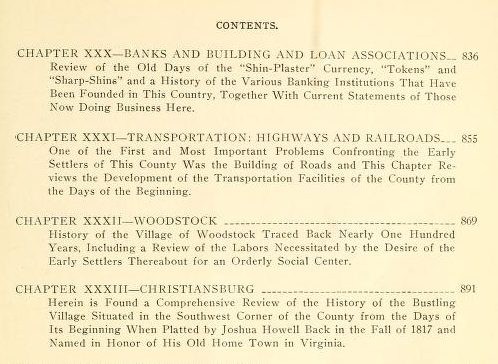
6. Local and County Histories
Do not overlook the history of the community itself.
County histories, town histories, anniversary books, pioneer histories, local biographies, and publications produced by historical and genealogical societies can contain valuable clues about the people who lived there.
Some contain biographical sketches of residents. Others discuss early settlers, businesses, churches, schools, military units, community organizations, migrations, and the families who helped establish the area.
Even when the person you are researching does not have a biography of their own, look for their family members.
A biography of a brother, uncle, cousin, neighbor, or business associate may mention your person. It may tell you where the family came from, when they arrived, where they moved, or which relatives remained behind.
Local histories can also help us understand changing geography.
Counties were created, divided, renamed, and reorganized. Townships changed. Communities disappeared or changed names. State and territorial boundaries changed.
If an ancestor appears in one county and then another without any other evidence of a move, the history of those jurisdictions may explain what happened.
The family may not have moved at all.
The county line may have moved instead.
But remember the same rule we have been applying throughout this survey:
A local history gives us evidence—not automatic proof.
Many local histories were compiled years after the events they describe. Information may have been supplied from someone’s memory or by descendants of the person being discussed. Names, dates, relationships, and places should be compared with contemporary records whenever possible.
Local histories are also scattered among many repositories.
Check local libraries and historical societies, but also look at state libraries and archives, college and university libraries, genealogical libraries, and digital book collections.
Digital genealogy libraries can contain local histories, maps, family histories, yearbooks, and other books that help researchers understand both the people and the places they are studying.
Sometimes the book sitting unnoticed on a library shelf contains the clue that explains not only who lived in the community, but why the records suddenly begin calling that same place by another county’s name.

Build the Foundation First
The purpose of this initial survey is not to learn everything about our ancestor.
It is to establish a foundation.
Start with the location the family believes is correct.
Check the census.
Look through available city directories.
Examine tax records.
Check voter registration and poll records when appropriate.
Search the newspapers—and determine which newspapers actually existed for that place and time and where surviving copies can be found.
Examine local and county histories, both for the people and for the history of the jurisdiction itself.
Then compare what you found.
One record may suggest a location. Several independent records pointing toward the same place begin to build a much stronger case. City directories, for example, can provide names, addresses, and occupations and can be especially useful for following someone between census years.
But never forget that place names themselves can change.
If your ancestor suddenly appears in a different county, investigate before deciding that they moved. Sometimes the person remained on exactly the same land while a new county was created around them.
Think about what happened in my own research.
My grandmother was born and lived in the Arthur and Loami area of Illinois before later living in Indianapolis. Yet in the 1920 census she appears in two places, once with her family in Arthur and once in Indianapolis.
My grandfather can be followed through years of city directories, connecting him first to Hartford City and later to Indianapolis.
Joshua appears in tax records from Botetourt and Montgomery Counties, but that does not by itself mean Joshua moved. Understanding the changing county boundaries is necessary to understand what those records actually tell us. At the same time, notations such as “son of J” and “s of B” help distinguish Joshua’s sons from the similarly named sons of his brother Benjamin.
Newspapers provide still more pieces. I have found articles about my grandmother in the Arthur and Loami area as well as Indianapolis, along with countless entries involving other members of the family. Even something as ordinary as visiting relatives—or as embarrassing as a speeding ticket—can provide dated evidence of someone’s presence in a community.
And one obituary tells me that Tilghman Andrew Howell was living in “Washington” without telling me which Washington.
Each source gives us another piece of the puzzle.
Only after establishing where the person was living should we begin digging deeply into the major records of that locality—vital records, deeds, probate, court files, church records, military records, and the many other sources that can reconstruct a person’s life.
Before asking what records your ancestor left behind, make sure you know where to look for them.
Your ancestor may indeed have lived exactly where the family always said.
But first, ask the question:
Are they from where you believe?

