The Family My Grandmother Never Let Me Forget
When I was born, I immediately became part of something much larger than just my immediate family. I had three first cousins close to my own age—Bob, Mike, and Alisha. As little children, we spent time together playing, laughing, and simply enjoying being kids.
Unfortunately, those memories are few.
When my parents divorced, I was almost four years old. Although our family changed, I remained in Oregon until I was eight. During those years, I saw my first cousins only occasionally. After moving to Florida, those visits became even more infrequent, and more than ten years would pass before I saw them again. As often happens in childhood, memories slowly fade with time.
Moving to Florida, however, brought one of the greatest blessings of my life.
My grandmother.
If there was one lesson she taught me over and over again, it was that family mattered. She never forgot her cousins, and she made sure I knew them as well.
One of those cousins was Virginia Hartman, née Makepeace, who would travel from Illinois to visit us. As a child, I also knew of Kenneth, Halford, and Paul. They were simply names to me then. Years later, through genealogical research, I discovered that Kenneth and Halford were Virginia’s brothers and that Paul was her son, who was tragically killed as a civilian during the Vietnam War in 1968.
Another family I came to know was Richard Fisher and his wife, Marguerite, née Reinbach. They lived only about a quarter to half a mile from our home, making visits easy and frequent. Their son, Carleton Fisher, lived in Tampa but always made time to visit his parents. Whenever he came to see them, he also made sure to stop by and visit us. Carleton was only two years older than my father, and his kindness left a lasting impression on me. Their daughter, Lora, always enjoyed sitting down to play cards with me, creating memories that I still treasure today.
As a child, these were simply people my grandmother loved.
Only years later did I realize that I had been surrounded by family history all along.
When I eventually began researching my grandmother’s family, I discovered that these cousins were all connected through the Hunsaker family.
The names I had heard throughout my childhood slowly began to fit together like pieces of a puzzle.
Alice.
Virgilla.
Charles.
Franklin.
Katherine “Kittie” Hunsaker—my great-grandmother.
Idella.
Laura.
Genealogy gave me the relationships.
My grandmother had already given me the people.
After my grandmother passed away, I found an old photograph among her belongings showing the Hunsaker children together. Suddenly, those names were no longer just names on a pedigree chart. They became smiling faces connected to people I had actually known.
One of the greatest gifts Virginia ever gave me was preserving family photographs. Because of her kindness, I now have photographs of my grandmother and her sisters that might otherwise have been lost forever.
Those photographs are more than images.
They are family history preserved.
Looking back now, one memory stands out more than the others.
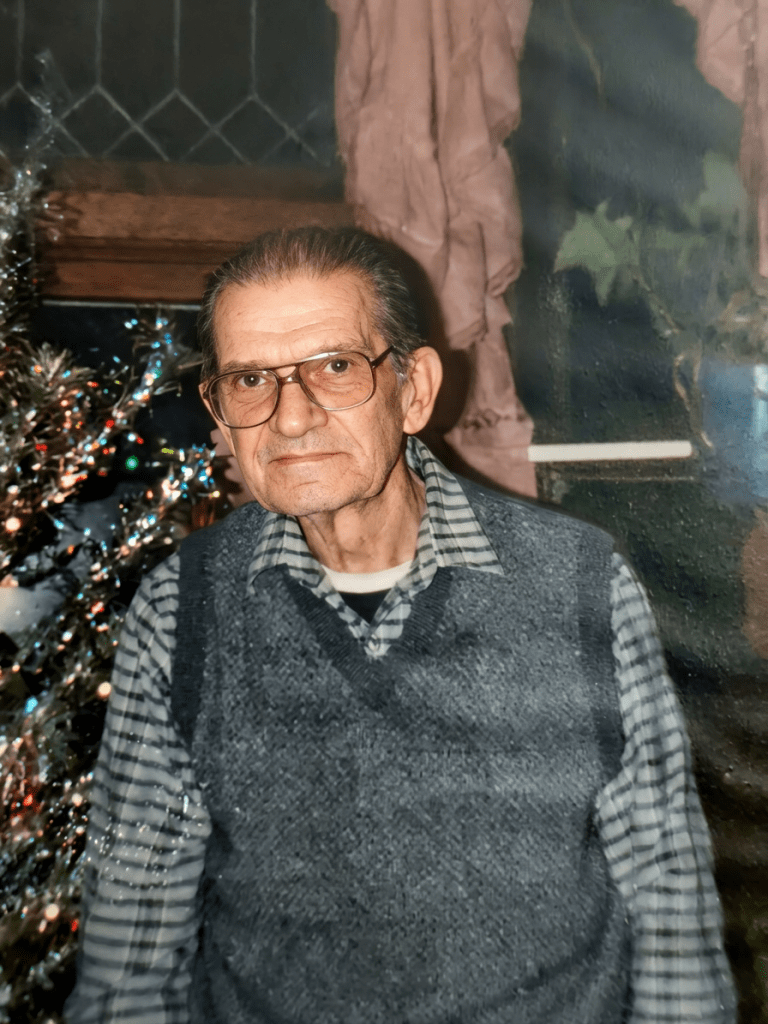
As a young boy, I regularly visited Richard and Marguerite Fisher. I remember their kindness far more than I remember our conversations. Children rarely understand the significance of the people around them.
Only years later did I realize something remarkable.
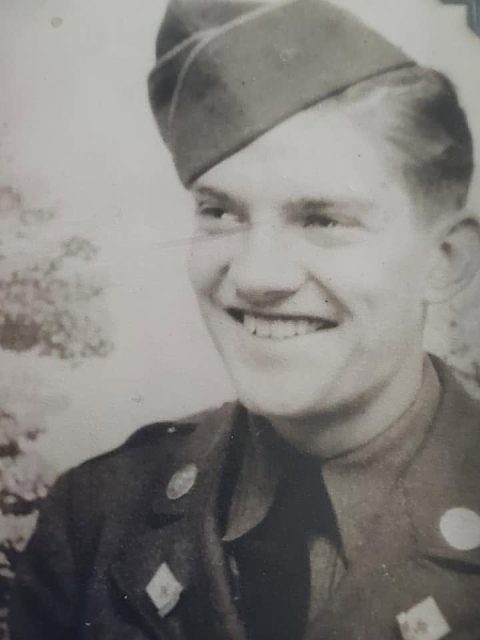
I hadn’t simply met a World War I veteran.
I had known one.
I had sat in his home.
I had visited him countless times.
He wasn’t just a veteran I had read about in a history book.
He was my cousin.
That realization means even more today than it ever could have as a child.
As Richard and Marguerite grew older, I remember visiting them even after they could no longer safely live by themselves. One Halloween, I remember walking past their empty house after they had moved away. At the time, I couldn’t explain why seeing that empty house affected me.
Today I understand.
That house represented family.
Genealogy often focuses on discovering ancestors we never had the opportunity to meet.
But sometimes the greatest blessing is realizing we actually knew some of them—or at least the cousins who carried those family stories forward.
I owe that realization to my grandmother.
She understood something that I wouldn’t appreciate until much later.
Family isn’t only found in birth certificates, census records, or family trees.
Family is found in relationships.
It is found in visits, conversations, shared photographs, card games, and keeping in touch across decades.
My grandmother never allowed those connections to disappear.
Because of her, I didn’t simply inherit names.
I inherited family.
And because she valued those relationships, I now have photographs, memories, and stories that no document could ever provide.
As I continue researching my family history, I often think back to those visits with cousins I barely understood at the time.
Today, I understand exactly what my grandmother was trying to teach me.
The greatest discoveries in genealogy are not always found in old records.
Sometimes, they are found in the people we were fortunate enough to know.
Today, many of those cousins are gone. Their homes are quiet, the visits have ended, and the card games are now only memories. Yet every time I open a family photograph, read an old letter, or discover another historical record, I find myself thinking of my grandmother. She understood something that took me decades to appreciate. Family is life’s greatest treasure. Genealogy has helped me discover my ancestors, but my grandmother taught me something even more important—to cherish the family we have the opportunity to know while they are still with us. The records preserve our history, but it is the relationships that preserve our hearts.
This article is part of my ongoing Family History series. Through these stories, I hope to preserve the people, places, and discoveries that have shaped my family’s journey—and perhaps inspire you to preserve yours as well.