
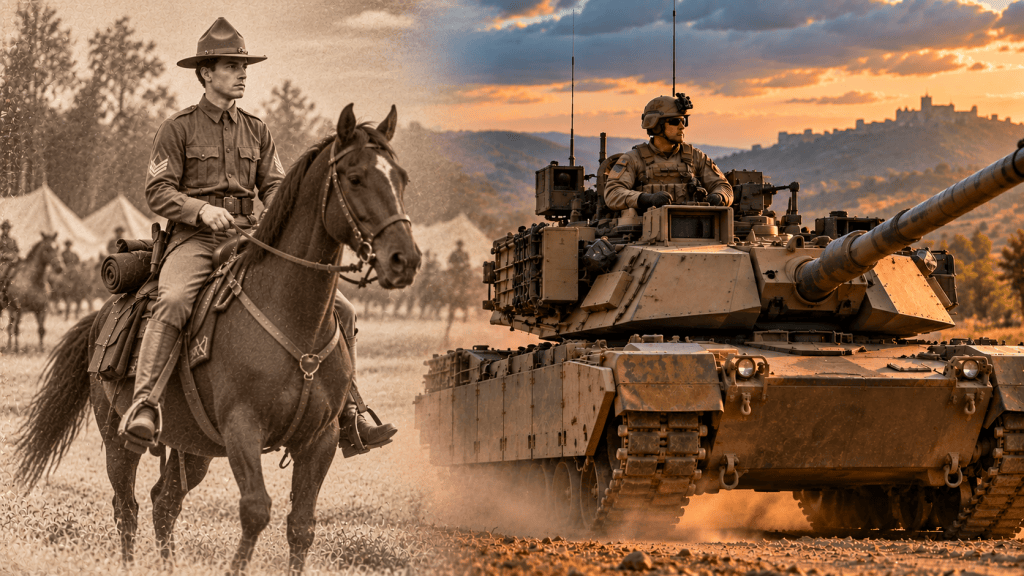
Every soldier knows that the military is built on a foundation of unspoken connections. We wear the patches of campaigns fought before we were born, and we walk the parade grounds where legends once stood. But sometimes, history doesn’t just echo—it pulls over to the side of the road, looks you right in the eye, and hands you a pair of crossed sabers.
Last week, I shared how a family road trip through France collided with my grandfather Joseph’s footsteps in the mud of the Meuse-Argonne Offensive. That discovery showed how our family’s past and present were riding in the exact same car down a French highway in 2002. But as I kept digging deeper into the archives, the threads of our family tree stretched back even further, revealing a second, jaw-dropping intersection with the past.
This is the story of Joseph’s brother—my great-granduncle, George Grover Howell—and a century-old cavalry legacy that my own archival research finally brought to light.
The Heat of the Gas Boom
Before I cracked open the records, the paper trail made George look like a standard turn-of-the-century Midwest tradesman. Around 1908, Hartford City, Indiana, was booming, driven by the discovery of natural gas. A 21-year-old George was earning his living as a glass worker, a grueling and dangerous trade spent around roaring pot furnaces.
But George was looking for a different kind of intensity. On June 30, 1908, just shy of his 22nd birthday, he walked away from the factory floor and signed up for the United States Regular Army.
He was assigned to the prestigious 4th Cavalry Regiment and sent north to Fort Snelling, Minnesota.
And this is where one of those strange little details in genealogy helps tell the story.
If you look up George in the 1910 U.S. Census, the government lists his status with the cold, technical term “inmate.” It’s a quirk that confuses modern researchers, but George wasn’t behind bars. He was a young cavalryman living in the barracks at Fort Snelling.
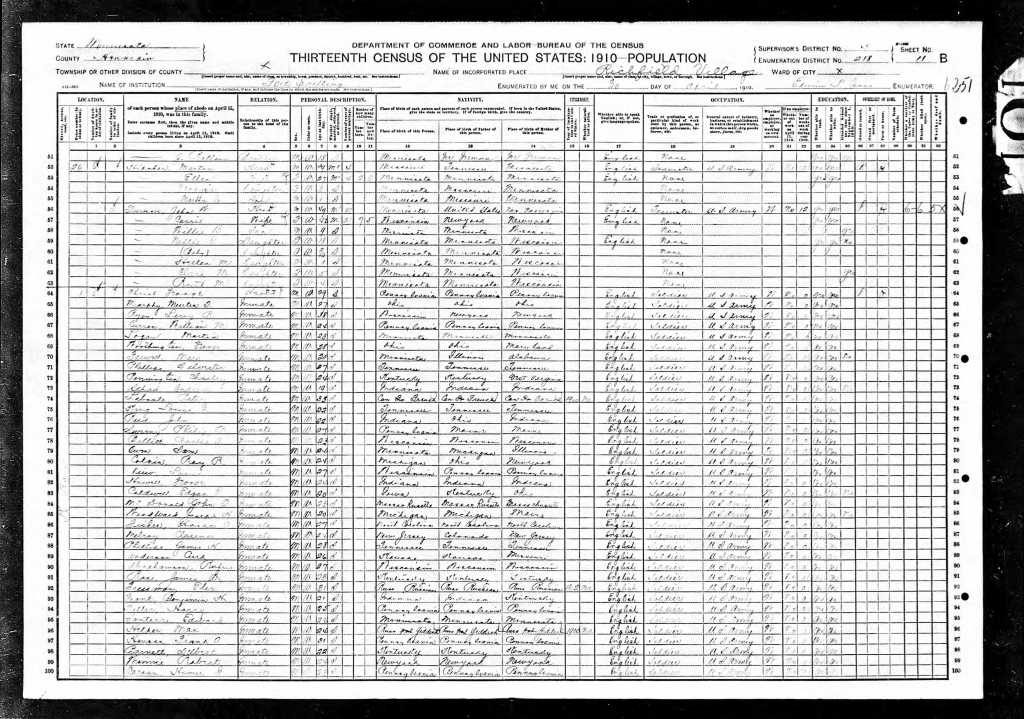
For me, that census entry transformed George from a name on the family tree into a soldier. He was living the life of a Regular Army cavalryman—years before the United States entered the First World War.
Patrolling a Wild Frontier
In the summer of 1911, George completed his first three-year hitch. Loving the soldier’s life, he chose to “re-up” immediately.
His timing was historic.
As the Mexican Revolution erupted into violence, the 4th Cavalry was ordered to the southwestern border. George went from Minnesota to the blistering, cactus-lined desert of the Rio Grande.
This was the era of the “Old Army”—a frontier military still dependent on horses, pack animals, isolated posts, and cavalry patrols. George served along the Mexican border during a period when revolution and instability just across the international line had become a serious concern for the United States.
By 1914, George was stationed at Fort Bliss in El Paso County. General John J. “Black Jack” Pershing arrived there in April 1914, placing two men whose military careers would take very different paths at the same post during the final months of George’s enlistment.
When George was discharged from Fort Bliss in September 1914, he walked away a corporal and a veteran of six years in the Regular Army.
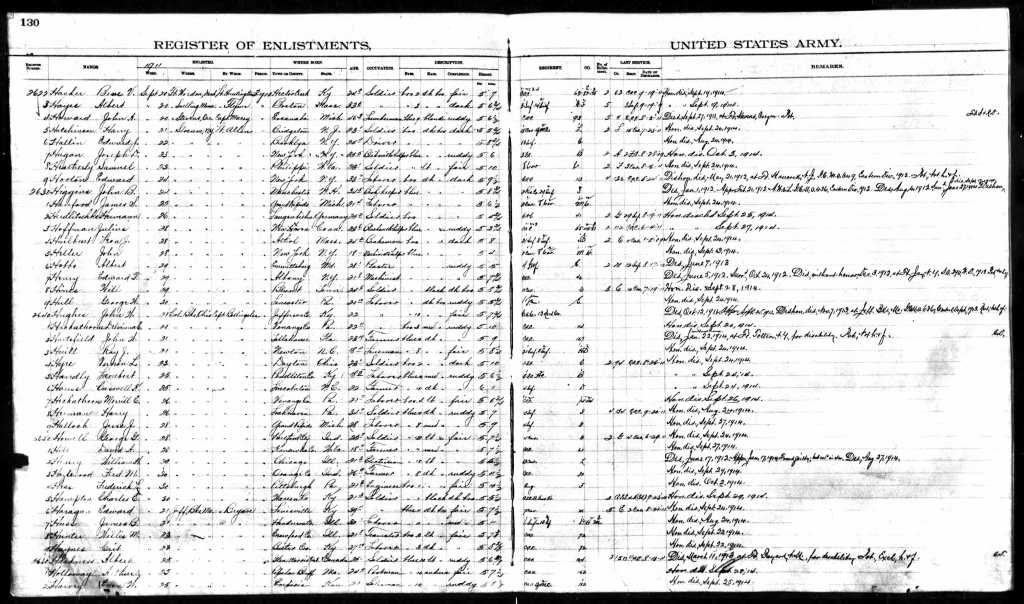
That document closes the first chapter of George’s military life.
But only the first.
The Replacement Mystery
The mechanical skills George had developed over the years transitioned well into the rapidly changing industrial world. By 1917, he was working as a machinist for the Bowser Manufacturing Company in Fort Wayne, building early automotive gasoline pumps.
When America entered World War I, local newspapers reported that George had joined his brother Joseph in the volunteer hometown Lafayette Battalion.
But when I followed George into the military records, I found something different.
George entered the Army again on March 5, 1918, and was assigned Army Serial Number 1159531.
That number became one of the keys to following him.
A surviving record puts George at Kelly Field, Texas, on March 6, 1918—only one day after entering service.
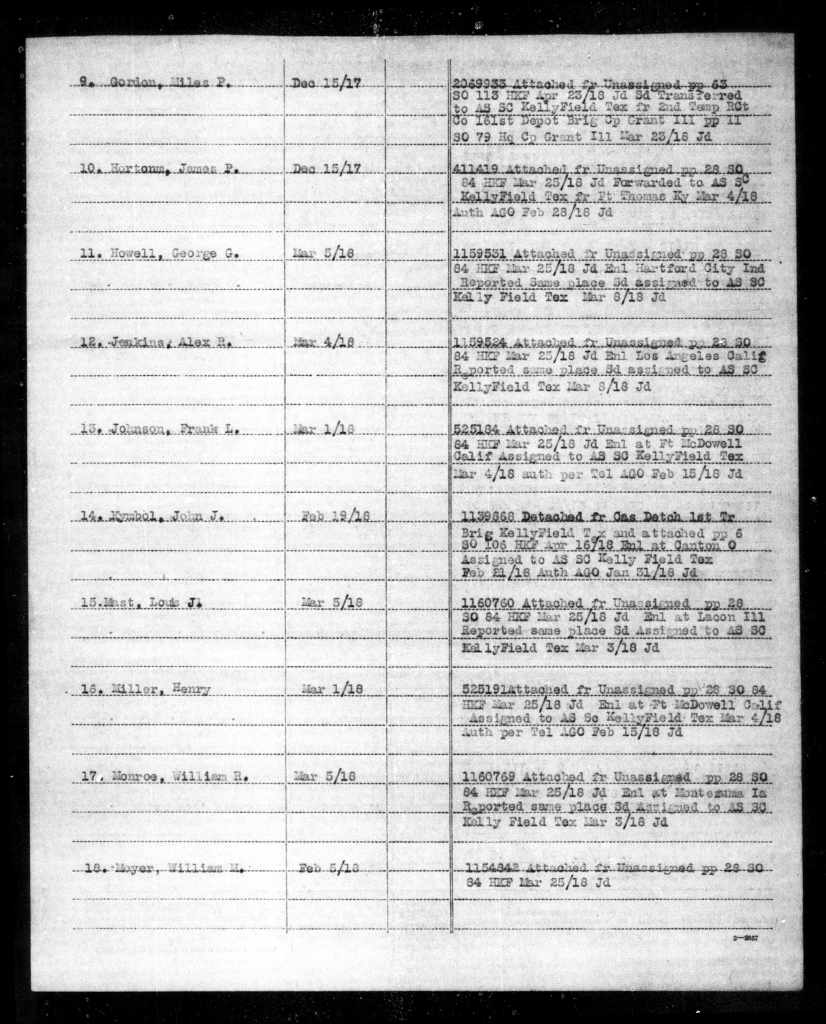
That one record changed the direction of the story.
George wasn’t going back to the cavalry.
He was entering an entirely different Army.
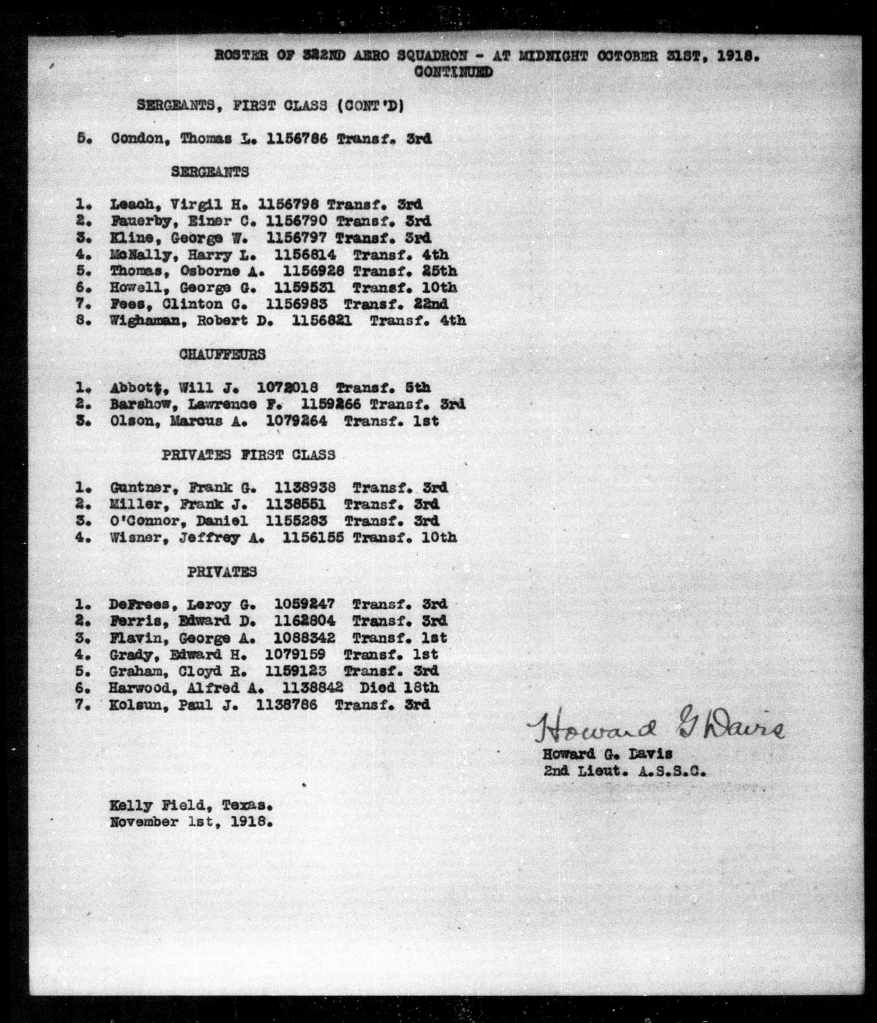
By July 31, another roster places George G. Howell, 1159531, with the 322nd Aero Squadron, Flying Department, at Kelly Field in South San Antonio, Texas.
Then I found him again.
The roster of the 322nd Aero Squadron at midnight on October 31, 1918, contains the same name and the same serial number.
But this record gives us something else.
George appears under the heading:
SERGEANTS.
There he was.
Sergeant George G. Howell, 1159531.
In only a few years, George had gone from horses to airplanes.
His first military career belonged to the old horse cavalry. He had served with the 4th Cavalry along the Mexican border and finished that chapter at Fort Bliss.
Now he was serving with an Aero Squadron at Kelly Field as the United States Army entered the age of military aviation.
George had entered the Army in 1908 during the age of the cavalry horse.
A decade later, he was a sergeant in an Army learning to fight in the sky.
And his paper trail doesn’t end with the Armistice.
On November 30, 1918—nineteen days after the fighting ended—George appears on another surviving roster. The name is the same. The serial number is the same: 1159531.
This time he appears with Candidate Company G, 2nd Battalion, C.I.O.T.S.
For now, that is where the surviving records leave him. They establish that George’s World War I service continued beyond the Armistice, even though we have not yet reconstructed every remaining step of that service.
While his younger brother Joseph fought with the 150th Field Artillery in France, George served stateside as the United States Army transformed around him.
Two brothers had answered the same call.
The Army simply sent them down very different roads.
The Timeline Folds Again
And that is where the timeline folds completely in on itself, bridging nearly a century of time.
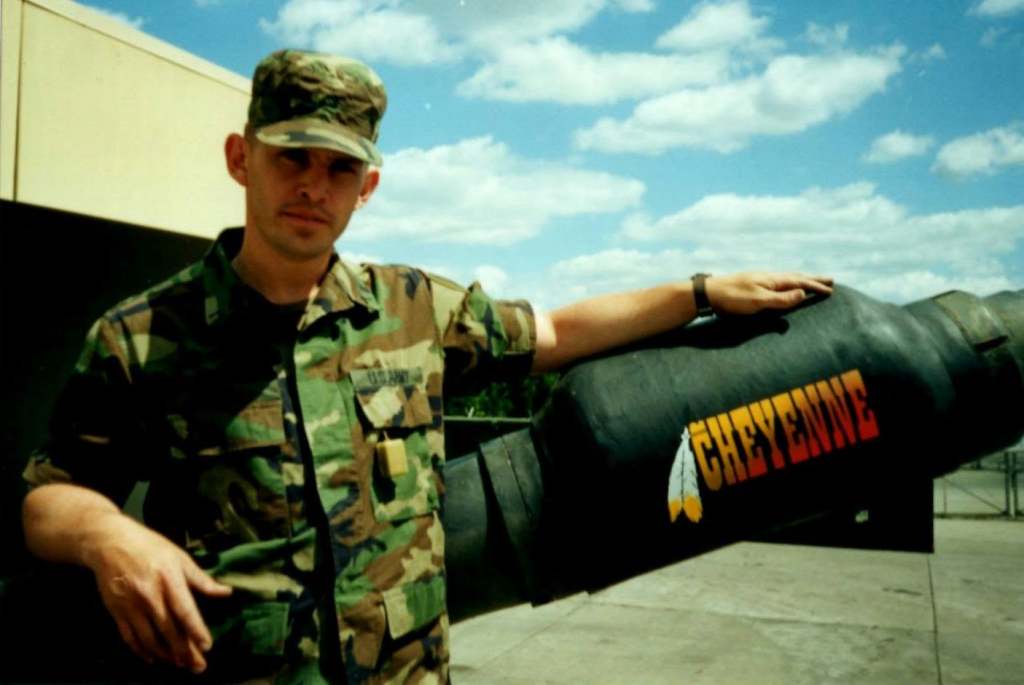
In early 2002, fresh out of basic training, I was shipped across the Atlantic to Schweinfurt, Germany, stationed at Conn Barracks.
My assignment?
Charlie Troop, 1/4 Cavalry, 1st Infantry Division.
When I pinned on that unit patch and looked at those crossed sabers, I had absolutely no idea that I was stepping directly into my great-granduncle George’s military lineage.
Nearly a century after George enlisted in the 4th Cavalry, I was serving in that same historic regiment, carrying the same cavalry lineage into a completely different Army and a completely different century.
But our mounts looked a little different.
Unlike George, who knew the cavalry from the back of a flesh-and-blood horse, an M1A1 Abrams tank was my steed. I was riding a beast made of steel, its turbine engine roaring, carrying the cavalry tradition into a high-tech century.
George had watched the Army change from horses to airplanes.
Nearly a century later, I was watching the cavalry tradition continue from inside seventy tons of American armor.
From horses to airplanes in George’s generation. From horses to an M1A1 Abrams in mine.
And the strangest part is that I didn’t know any of this at the time.
George had been dead for decades. His cavalry service existed in old records, census entries, military rosters, and pieces of family history waiting to be put back together.
I wore those crossed sabers without knowing that another Howell had served in the 4th Cavalry before me.
It took genealogy to bring us together.
The Tradition Continues
But the legacy doesn’t stop with George and me.
George and Joseph chose to serve their country when the world was on fire, establishing a tradition of military service that continued through our family.
Joseph’s son—my father—would eventually answer that call himself.
Years later, I put on the uniform.
And today, one of those little boys who held my hand near the concrete pillboxes in Belgium has grown up to make that same choice, putting on the uniform to lead soldiers on the front lines today.
Just how many generations of our family have answered this call?
It is a tradition that reaches back through centuries of our family history—a recurring thread of men who, in very different times and circumstances, chose to serve their country.
George’s surviving records rescued his military story from obscurity. And discovering that nearly a century later I had served in the same historic cavalry regiment revealed something I never knew while wearing those crossed sabers: military service has surfaced again and again throughout our family tree—from the cavalry trails of Fort Bliss, through the battlefields of France, and into the generations serving today.
But George and Joseph weren’t the beginning of this story.
Their uncle, Tilghman Andrew Howell, had answered the call decades earlier, marching with Company I, 130th Indiana Infantry, during the Civil War.
But Uncle Tilghman’s story… well, that’s a masterclass for a different time.
Historical Note: This story is part of a continuing series exploring the Howell family’s military legacy across generations. It is based on family records, military records, historical sources, and documented family research. Some narrative details are included to place those records within their historical setting. Where surviving records do not establish an exact location, event, or circumstance, the narrative should be understood as historical context rather than a statement of documented fact.

