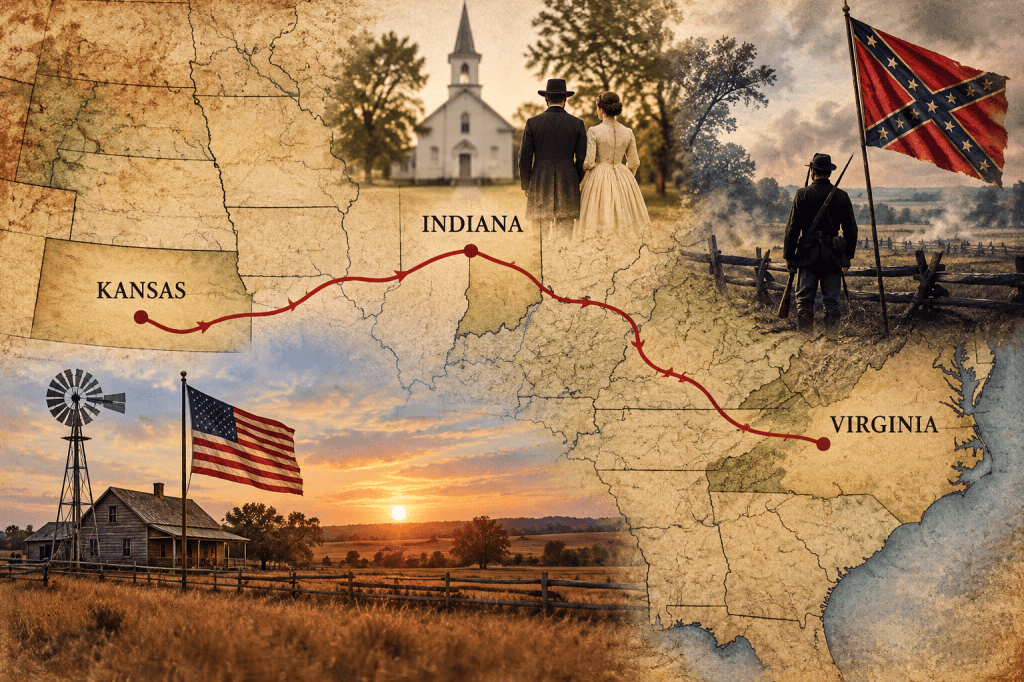
Gettysburg, Point Lookout, and the Family He Built After the Civil War
On April 14, 1865, twenty-two-year-old Dillard Charles Howell arrived at Point Lookout, Maryland, as a Confederate prisoner of war. Eight days earlier, Union soldiers had captured him near Burkesville, Virginia. General Robert E. Lee had surrendered at Appomattox on April 9, but Dillard was not yet free.
The prison held a painful connection to his family. His brother Lorenzo Dow Howell had died there before Dillard arrived. Two brothers from the mountains of southwestern Virginia had entered the Confederate Army. Both became prisoners, and both were connected to Point Lookout. Only Dillard would return to civilian life.
What happened after his release is as important as what happened during the war. Dillard would marry in Indiana, raise a family, settle in Kansas, and live long enough to tell a newspaper reporter what he remembered about Gettysburg fifty years earlier.
From Floyd County to the Army
Dillard was born September 10, 1842, in Floyd County, Virginia, a son of Isaac Howell and grandson of David Howell. The family descended from Joshua Howell, an ancestor whose descendants would appear in the records of several American wars.
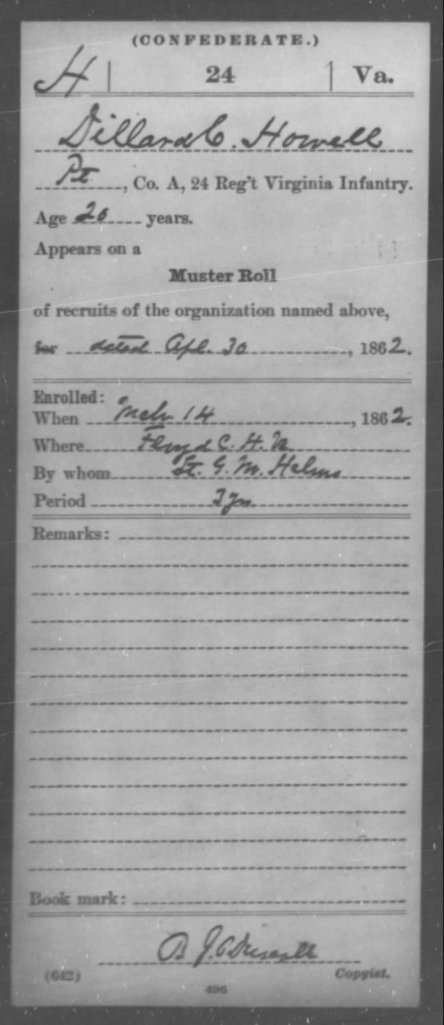
When the Civil War began in 1861, Dillard was eighteen. On March 14, 1862, he enlisted in Company A of the 24th Virginia Infantry, a company associated with the Floyd Riflemen. The regiment recruited from Floyd and neighboring southwestern Virginia counties and served in the Army of Northern Virginia.
Dillard’s compiled military service record identifies him as a private. Muster rolls trace his service through years of campaigning. An 1863 entry identifies him as a blacksmith’s assistant, a practical assignment in an army dependent on horses, wagons, and equipment that constantly needed repair.
That small detail is worth remembering. An ancestor’s military life was not necessarily a continuous series of battles. Much of it involved labor, marching, waiting, and trying to remain supplied.
Research tip — Read every service-record card. An enlistment index tells only part of the story. Compiled military service records can include muster rolls, pay information, hospital entries, clothing receipts, and notes about special duties. Compare dates across the entire file before deciding where a soldier was or what he was doing.
Gettysburg in Dillard’s Own Memory
In July 1863, the 24th Virginia entered the Battle of Gettysburg as part of Brigadier General James L. Kemper’s Brigade in Major General George E. Pickett’s Division. On July 3, the regiment took part in the Confederate assault on the Union center, remembered as Pickett’s Charge.
The attack was catastrophic. The 24th Virginia had approximately 395 men at Gettysburg and suffered casualties approaching forty percent of those engaged. Dillard survived, but the experience stayed with him for the rest of his life.
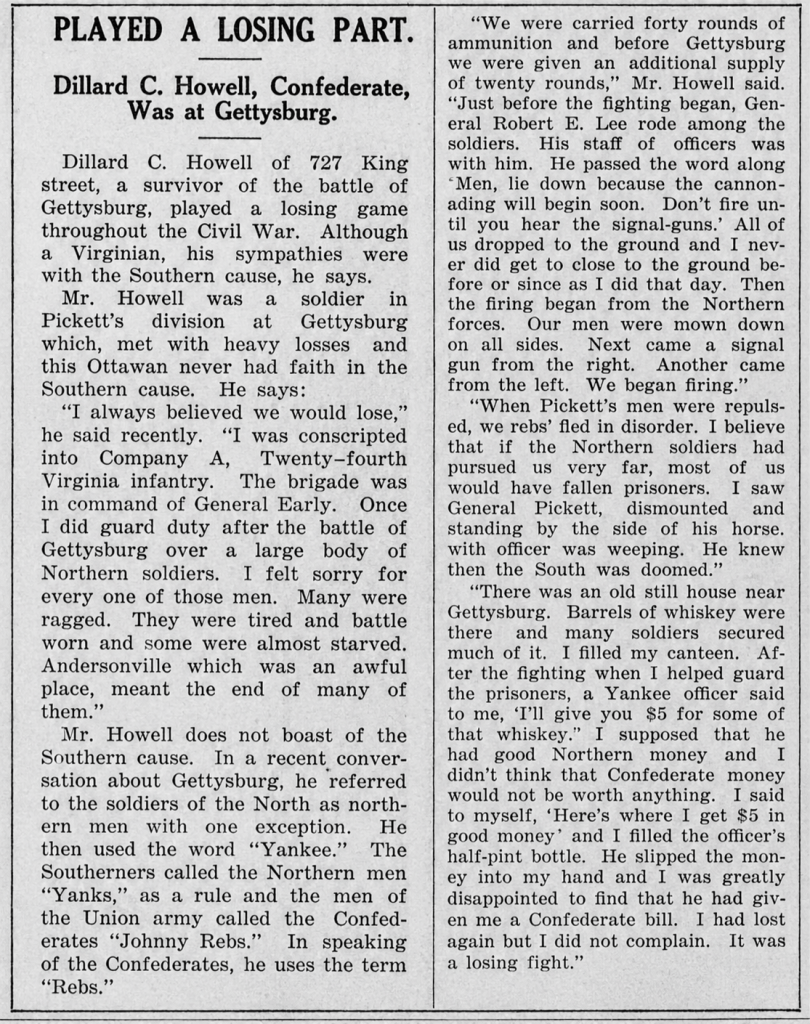
In 1913, an Ottawa, Kansas, newspaper published an interview under the headline “PLAYED A LOSING PART — Dillard C. Howell, Confederate, Was at Gettysburg.” By then he was an elderly man who had spent decades building a civilian life far from Pennsylvania.
Dillard remembered soldiers receiving additional ammunition before the assault. He recalled General Lee riding among the troops and warning them to lie down before the cannonading began. Then came the bombardment and the advance toward the Union line. He described men falling around him as Confederate formations crossed open ground under intense fire.
The assault failed. The surviving soldiers withdrew, leaving thousands dead, wounded, or captured across the battlefield. Dillard also remembered seeing General Pickett after the fighting and an officer overcome with emotion. These were memories recorded half a century later, not a minute-by-minute contemporary account, but they offer something muster rolls cannot: a soldier’s perspective.
His interview also preserved a surprisingly humorous encounter. Dillard recalled obtaining whiskey and later accepting five dollars from a Union officer for some of it, only to discover that he had been paid in Confederate currency. He could still appreciate the joke decades afterward.
Most striking was his assessment of the Confederate cause: “I always believed we would lose.” Rather than offering a triumphant battlefield tale, Dillard remembered an army that had suffered a terrible defeat. His words deserve to be read in the context of a war fought over secession and the preservation of slavery, even as his individual experience helps us understand the human cost of that conflict.
Research tip — Search anniversary newspapers. Fifty-year battle anniversaries and veterans’ reunions often prompted interviews that preserved first-person recollections. Search newspapers where your ancestor lived later, not only where the battle occurred. Try the soldier’s initials, regiment, hometown, and words such as “veteran” or “reunion.”
Capture and the Prison Where Lorenzo Died
The 24th Virginia continued serving after Gettysburg, including in the long campaigns around Petersburg. By April 1865, Lee’s army was retreating westward under mounting Union pressure.
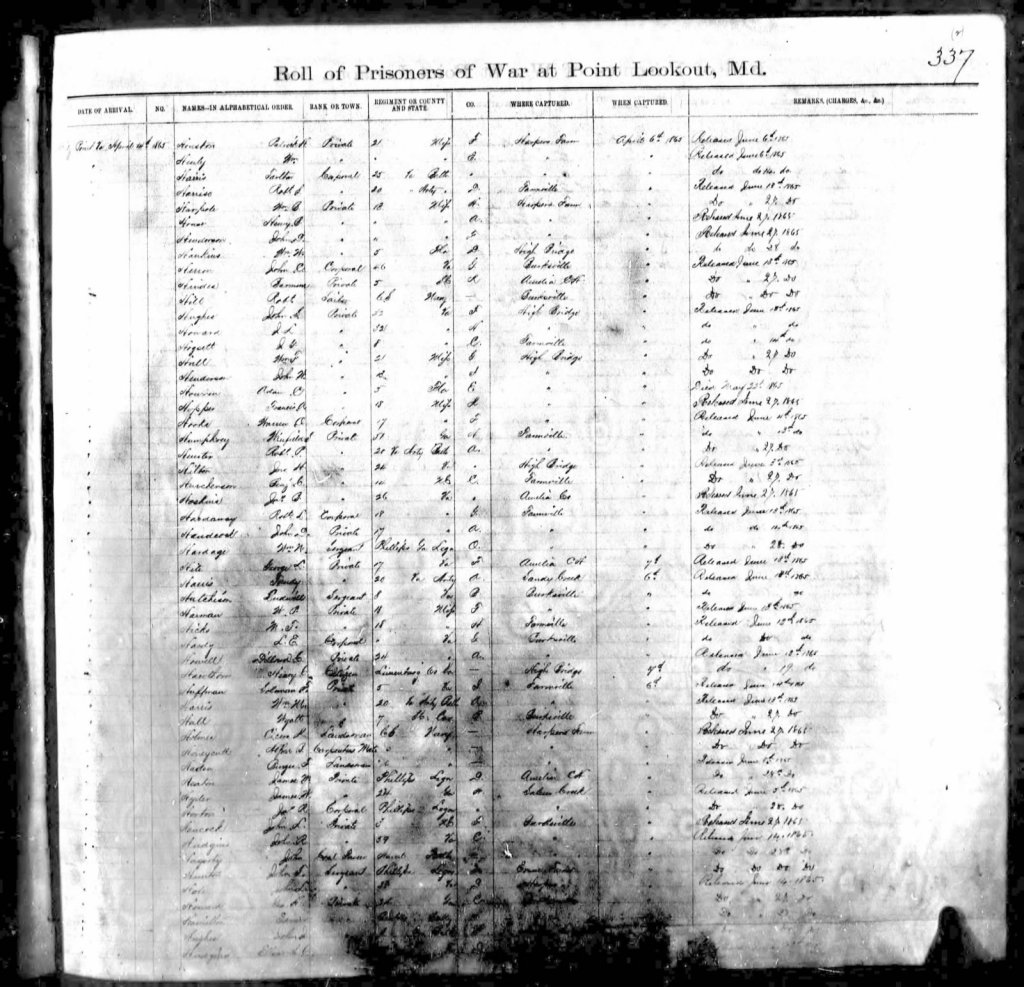
Dillard’s prisoner-of-war record states that he was captured at Burkesville, Virginia, on April 6, 1865. He arrived at Point Lookout eight days later. The camp stood at Maryland’s southern tip, where the Potomac River meets the Chesapeake Bay. Thousands of Confederate prisoners were confined there, and disease, exposure, and overcrowding contributed to many deaths.
Among those who had died was Lorenzo Dow Howell, Dillard’s brother. Lorenzo’s own article in this series tells the story of his service and death. Here, the crucial fact is the timing: Lorenzo was already dead when Dillard reached Point Lookout.
We cannot say from the records examined whether Dillard knew that news before his arrival, learned it in prison, or visited his brother’s burial place. Inventing such a scene might make dramatic reading, but it would not make sound family history.
On June 13, 1865, Dillard was released from Point Lookout, Maryland, according to his prisoner-of-war records. The prison paperwork recorded Floyd County as his residence and included a physical description: light complexion and hair, gray eyes, and a height of approximately five feet nine inches.
One brother had died in captivity. The other walked away from the camp and into a changed country.
Research tip — Follow the prisoner trail. Capture cards, prison registers, transfer records, and oaths of allegiance may supply different dates and personal details. Compare each document rather than assuming that the capture date, prison arrival date, and release date describe one event.
A Marriage in Indiana
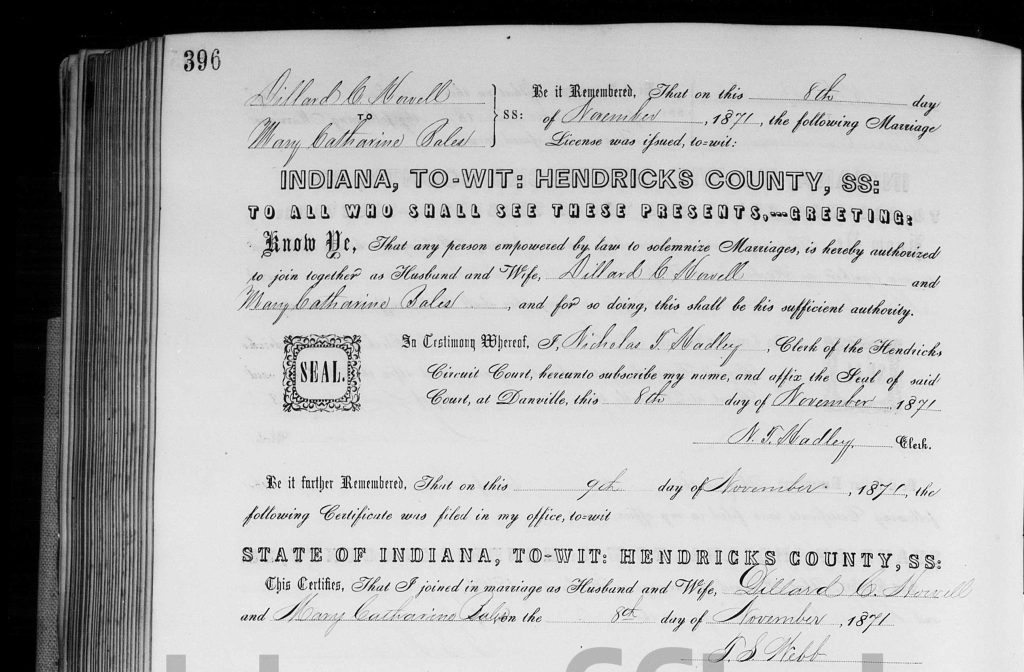
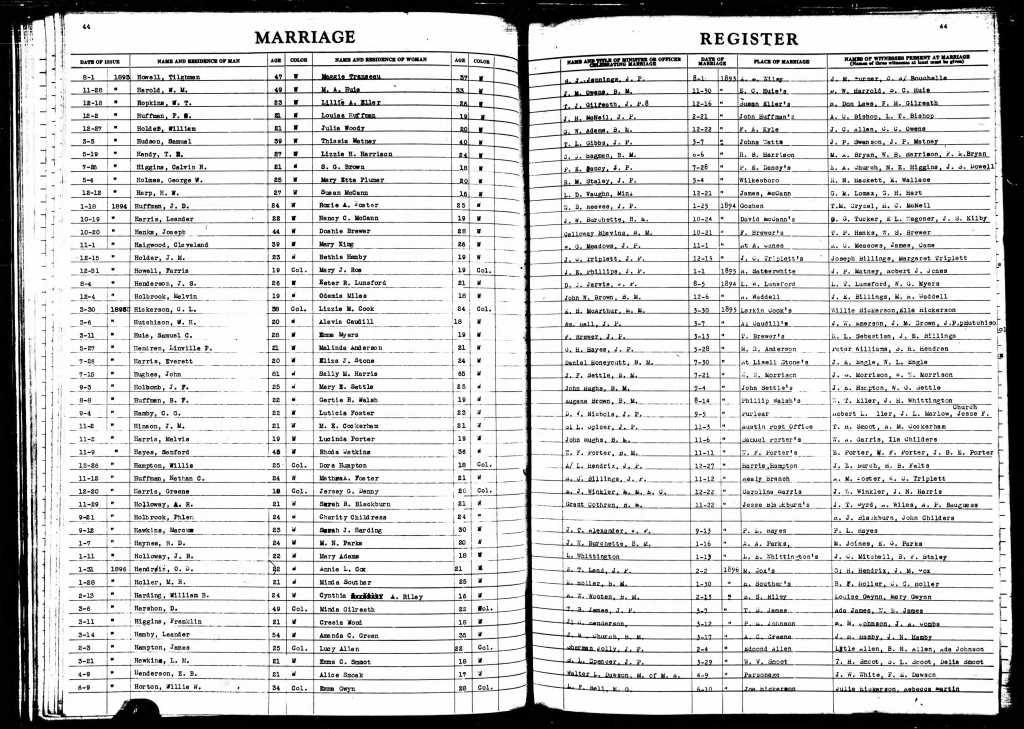
Six years after his release, Dillard’s life took a new direction. On November 8, 1871, Dillard C. Howell married Mary Catharine Bales in Hendricks County, Indiana. Their marriage record anchors him in a place between his wartime Virginia home and the Kansas community where he later lived.
The couple went on to raise five children identified in the family records: Victoria Florence Howell, born in 1873; Henrietta J. Howell, born in 1874; Lorenzo Dow Howell, born in 1879; James Howell, recorded under the names James Emmett and James Everett, born in 1883; and Charles E. Howell, born in 1888.
The younger Lorenzo’s name carried an unmistakable family connection. Dillard had lost his brother Lorenzo Dow Howell at Point Lookout. Years later, he and Mary gave their son that same name. No surviving statement tells us exactly why they chose it, but the repetition suggests that his brother’s memory remained close.
A later newspaper notice referred to a son named Everett Howell, who worked at the Illinois State Hospital in Peoria, Illinois. The family’s other records identify James as James Everett, resolving the apparent discrepancy: Everett was not an additional sixth child.
Research tip — Track names and migration together. A marriage record can place an ancestor between census years. Follow it with children’s birthplaces, census entries, directories, and land records to reconstruct a family’s route. Also remember that a person may appear under a first name, middle name, nickname, or initials. Check relationships and occupations before creating a second person in your family tree.
A Familiar Figure in Ottawa
Dillard and Mary eventually settled in Ottawa, Franklin County, Kansas. A 1903 city directory listed them at 737 King Street, while later records placed them at other addresses in town. These changing entries help trace the household through time.
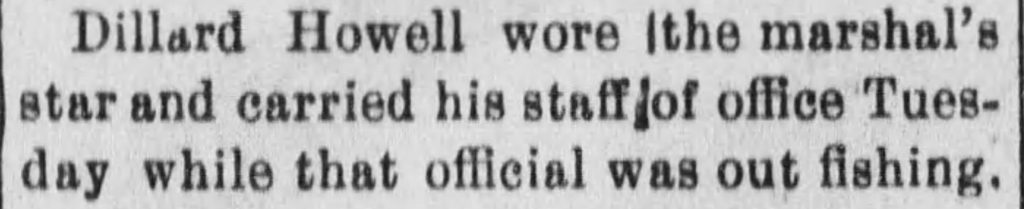
Local newspapers reveal a life that was not defined solely by the Civil War. In 1905, Dillard temporarily carried the city marshal’s badge and staff of office while the marshal was away fishing. Another report described his involvement in arresting two men found with suspicious tools. In 1912, he was appointed to replace a departing night watchman.
Family notices provide quieter glimpses. Dillard and Mary visited their son Lorenzo and his family. A 1915 report mentioned Everett’s visit from Illinois. Another notice identified a married daughter as Mrs. Dwight Brown, a clue for following the daughters after their surnames changed.
Such short newspaper items may seem ordinary beside a battlefield interview, but they reveal the decades that made up most of Dillard’s life: work, family visits, and relationships with neighbors.
Research tip — Do not ignore the social columns. A few lines about a visit, wedding, job, or illness can establish relationships and locations missing from official records. Search spouses and married daughters as carefully as the person whose surname you are tracing.
An Old Soldier Looks Back
In 1913, Gettysburg’s fiftieth anniversary brought Union and Confederate veterans back into public attention. A Franklin County newspaper identified ten local Gettysburg veterans, including seven former Union soldiers and three former Confederates. Dillard, listed as a veteran of Company A, 24th Virginia Infantry, was one of the three.
He did not attend the anniversary reunion, but his newspaper interview preserved his memories. It is remarkable that the same man whose military record lists him as a young private in 1862 was still speaking about his experiences in 1913, in a Kansas town far from his birthplace.
Dillard died on September 5, 1936, in Franklin County, Kansas, five days before his ninety-fourth birthday. He was buried at Prairie City Cemetery near Baldwin City. Mary survived him and died in 1952.
He had lived through the Civil War, Reconstruction, westward expansion, the First World War, and the Great Depression. Yet one thread linked the young soldier to the elderly husband and father: the name Lorenzo Dow Howell, passed from the brother who died to the son who grew up after the war.
The Next Howell Story
Dillard’s story follows Lorenzo’s in our journey backward through the family’s military history. It shows not only how one man survived war and imprisonment, but how his life continued through marriage, children, work, and remembrance.
The next chapter reaches into an earlier generation. Dillard’s father, Isaac Howell, had a sister, Nancy Ann Howell, born October 26, 1791, in Montgomery County, Virginia. Her story brings us to the era of the War of 1812.
Military files can tell us when an ancestor served. Newspapers may tell us what that person remembered. Marriage records and census entries reveal the family that followed. The richest family stories emerge when we bring those sources together without pretending they answer every question.
Lorenzo Dow Howell never returned from Point Lookout. Dillard did. And in the family he built afterward, his brother’s name lived on.
Historical Note: This story is part of a continuing series exploring the Howell family’s military legacy across generations. It is based on family records, military records, historical sources, and documented family research. Some narrative details are included to place those records within their historical setting. Where surviving records do not establish an exact location, event, or circumstance, the narrative should be understood as historical context rather than a statement of documented fact.
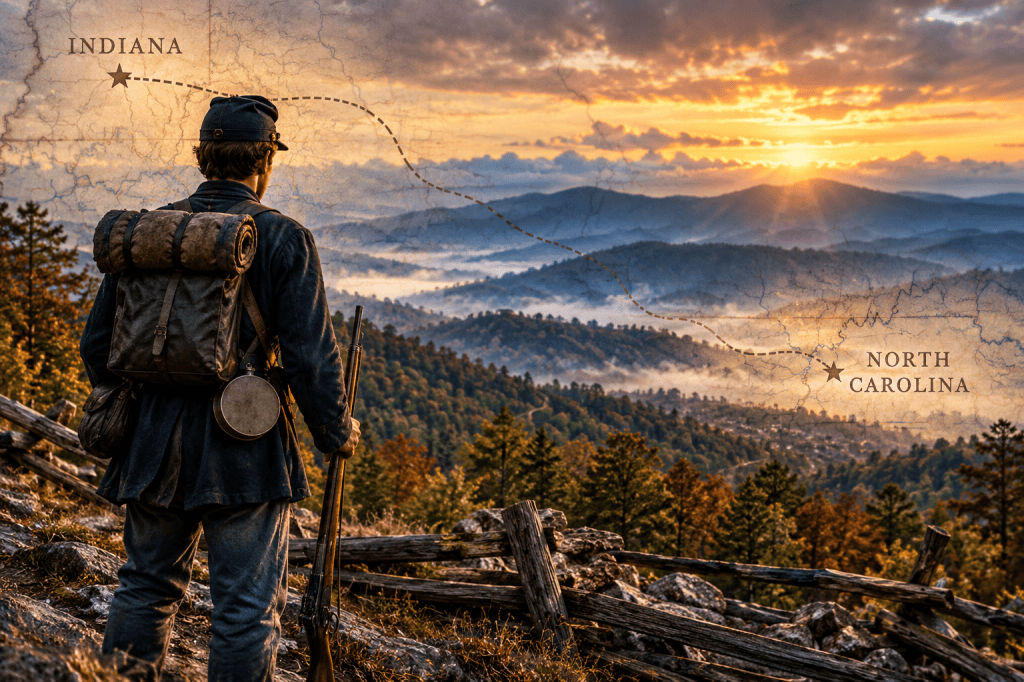
AI Generated Artwork