
Every soldier knows that the military is built on a foundation of unspoken connections. We wear the patches of campaigns fought before we were born, and we walk the parade grounds where legends once stood. But sometimes, history doesn’t just echo—it pulls over to the side of the road and stares you right in the face.
The only reason I am writing this today is because of a story my wife, Stephanie, recently wrote. She spent countless hours digging through old genealogy records and parsing through World War I military morning reports, meticulously tracing my grandfather’s travels through France. Because of her research, the invisible threads of our family tree suddenly became a map.
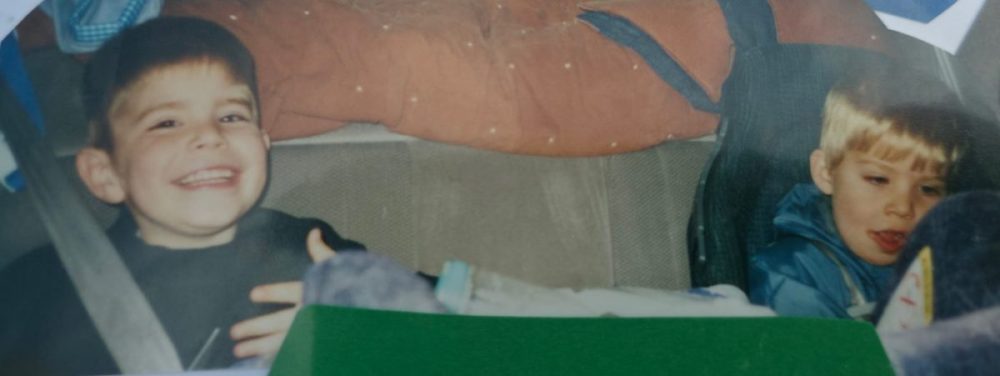
In 2002, I was stationed at Conn Barracks in Schweinfurt, Germany. I was serving in C Troop, 1/4 Cavalry, 1st Infantry Division. Like any young dad with a bit of leave, I loaded up the family car for a European road trip. Stephanie, our 1-year-old daughter, my 6-year-old son, Robert, and my 4-year-old son, Jonathan, all piled in.
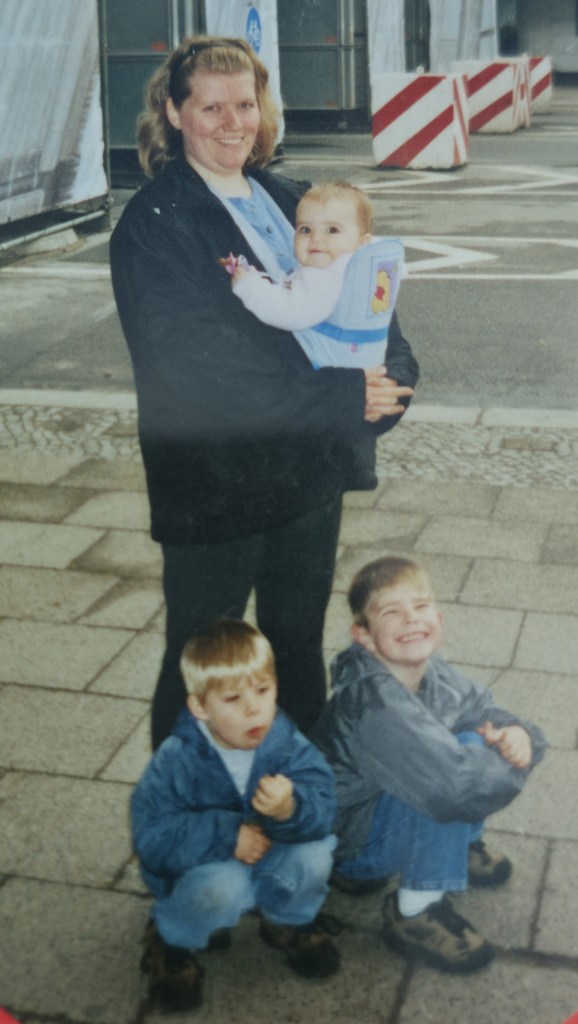
Our destination was Normandy. As a veteran, I was intent on experiencing the D-Day beaches, wanting to stand where the Greatest Generation cracked Hitler’s Atlantic Wall in 1944. We drove out of Germany, passed through Luxembourg City, and headed up into Belgium. Along the way, I spotted a cluster of old, concrete wartime pillboxes sitting silently near the tree line.
Captivated by the history, I pulled the car over. Stephanie stayed back with our baby girl while I took both of my young boys, Robert and Jon, by the hand. We walked right out to those cold, moss-covered fortifications, exploring the old firing slits and touching the concrete together. I didn’t know the exact history of those specific bunkers at the time; I just wanted my boys to see a piece of the world their country had fought to free.
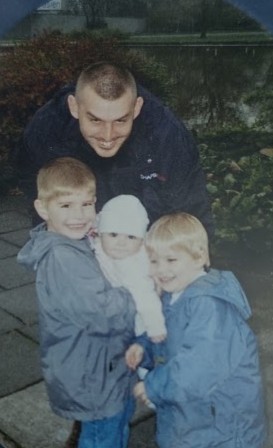
After a few minutes, we saddled back up and continued our journey to the coast.
The trip was incredible, but it was the drive back to Schweinfurt that secretly held the real magic.
Leaving Paris, we took the A4 highway, the Autoroute de l’Est, heading eastbound back toward Germany. It was a peaceful, scenic drive. My family was safe, free, and buckled into the back seat. I was just focused on the road, completely unaware of the geography passing outside my window.
I didn’t know it then. I wouldn’t find out until Stephanie cracked open the archives this year.
As our tires rolled down the A4, we were traveling through the Argonne region. We passed Sainte-Menehould and continued toward Verdun, through countryside intimately connected with the battlefields of the First World War. Somewhere north of our route lay the ground over which American soldiers had fought against the heavily fortified German defensive system known as the Kriemhilde Stellung.
And that is where the timeline folds in on itself.
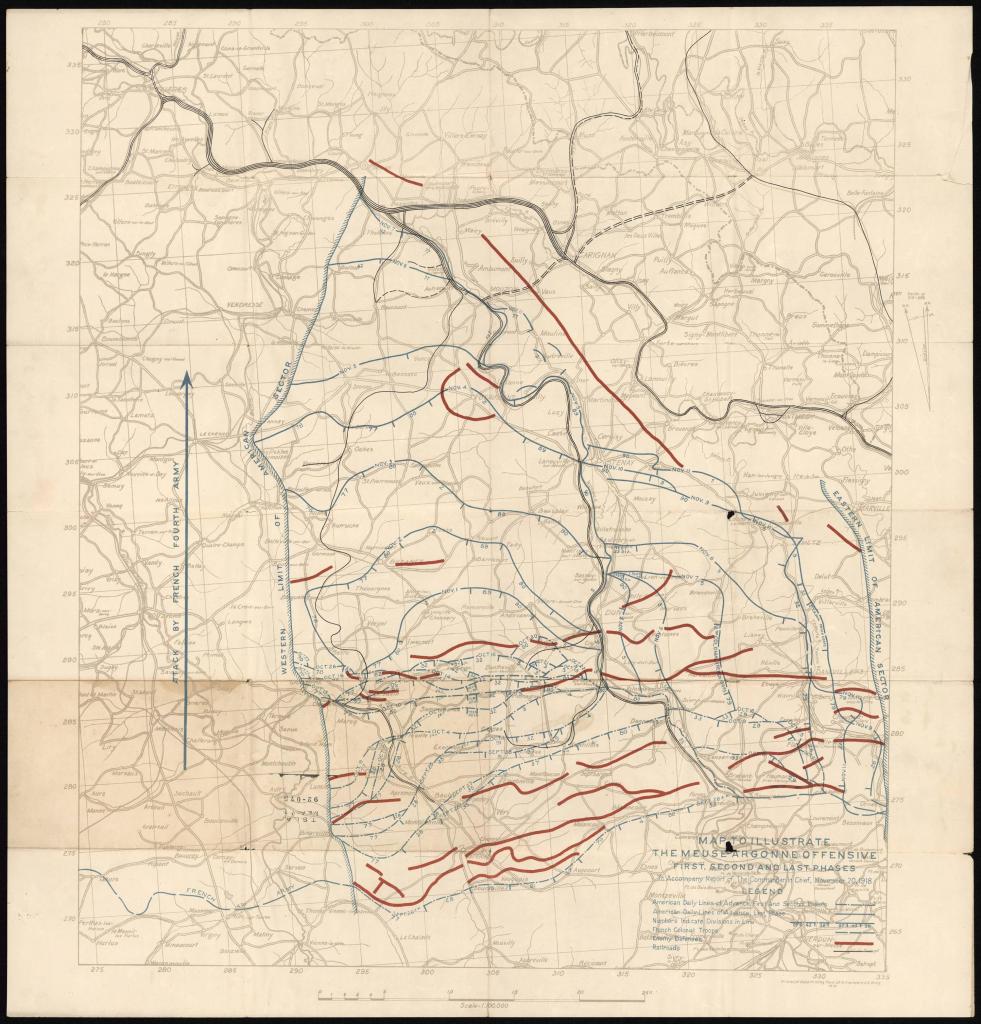
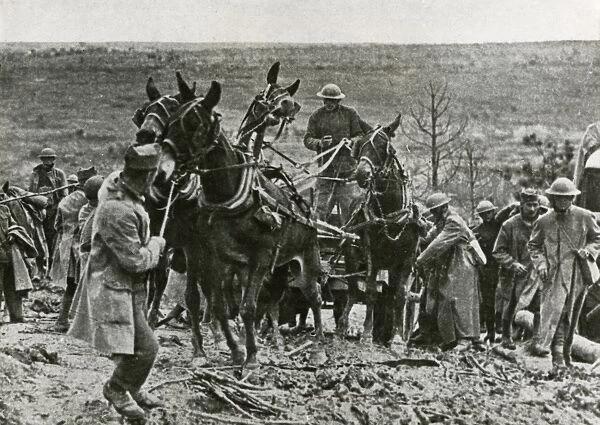
In October 1918, my grandfather—and my exact namesake—Joseph Robert Howell was serving in that campaign. He was an artilleryman with the 150th Field Artillery, part of the 42nd “Rainbow” Division, as American forces fought to break through the German defenses during the Meuse-Argonne Offensive.
During that fighting, the 42nd Division moved into the line and relieved a battered division that had suffered heavily while fighting across those ridges.
That unit was the 1st Infantry Division.
The Big Red One.
My unit.
During the final weeks of the war, my grandfather was severely wounded. He survived those wounds, came home, and passed his name down to me.
Decades later, the Army sent me across the Atlantic to serve in the exact division his division had relieved, proudly walking in the lineage of the 4th U.S. Cavalry—the very regiment his brother George had served in back in 1911.
But that is a story for another time, a masterclass in connecting the dots in genealogy.
Driving down that highway in 2002, I missed the chance to consciously connect with him. I didn’t pull over. I didn’t know to look out the window and whisper a thank you. Realizing now just how close I had unknowingly come to the battlefield where he fought, I’ll admit it brings chills to my arms and tears to my eyes.
But I didn’t miss the connection.
Not really.
Because Joseph Robert Howell was in the mud of France in 1918, enduring the artillery, gas, and misery of one of the final campaigns of the First World War, so that eighty-four years later, his grandson could drive his own children through those same valleys in absolute peace.
And the ultimate victory? The proof that the warrior gene never left our bloodline?
Years after that roadside stop, that same legacy of military service would quietly wake up in the next generation. One of those small boys who stood with me at those old concrete bunkers would grow up to put on the uniform himself, stepping forward to lead soldiers on the front lines today. The tradition endures, carrying the family’s quiet dedication to duty forward into a third century.
We didn’t know it in 2002, but as we drove down the A4, the past, the present, and the future of our family were all riding in the exact same car.
Historical Note: This story is part of a continuing series exploring the Howell family’s military legacy across generations. It is based on family records, military records, historical sources, and documented family research. Some narrative details are included to place those records within their historical setting. Where surviving records do not establish an exact location, event, or circumstance, the narrative should be understood as historical context rather than a statement of documented fact.
 Nomadic Roots Research
Leave a comment