Category: Military History

  • From Ranks to Records: How an Old Military Ledger Brought My Family History to Life

    From Ranks to Records: How an Old Military Ledger Brought My Family History to Life

    My husband is obsessed with genealogy. For years, he has researched his grandfather, Joseph Robert Howell, following him through records and piecing together the details of his life. He has also repeatedly tried to draw me into the project.

    I usually resisted.

    Names, dates, and isolated facts simply do not stick with me, and genealogy research often left me more frustrated than fascinated. But I do have one useful skill: I love old documents, and I am particularly good at reading vintage cursive handwriting—a beautiful art form that is slowly disappearing.

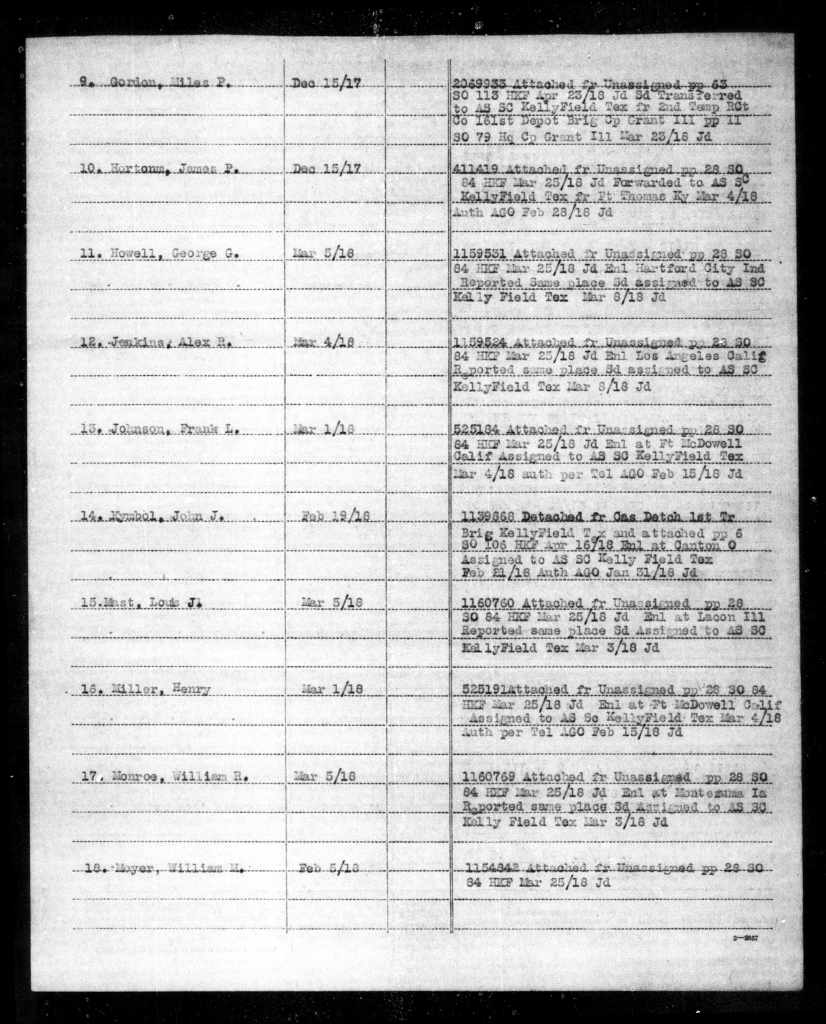
    Recently, my husband reached a difficult point while examining the World War I Morning Reports for Battery C of the 150th Field Artillery Regiment. Many of the pages were faded and handwritten, so he asked for my help deciphering them.

    I love a good challenge, and my competitive streak quickly took over. I wanted to be the first one to find something.

    The Mystery of the Missing Ranks

    Sitting down with the digital files, I tuned out everything around me and concentrated on finding one name: Joseph Howell.

    It did not take long to find my first clue.

    On October 2, 1917, a cramped handwritten entry recorded:

    1st cl Pvts Lovejoy, Messner, Howell, Freyman to Corporals vice vacancy.

    My husband, an Army veteran, immediately recognized the military shorthand. Joseph had been promoted from Private First Class to Corporal. The phrase “vice vacancy” was less familiar. Research showed that vice was used in military and administrative language to indicate that someone was serving in place of another person or filling a vacancy.

    We had found him. That was the goal, right?

    Not quite.

    My husband believed there had to be more. He encouraged me to continue through the reports, particularly looking for references to injuries, illness, or hospitalization.

    A few nights later, unable to sleep, I opened the records again. Only five days after Joseph’s promotion, an entry dated October 7, 1917, revealed an unexpected change:

    Corp Joseph Howell reduced to Pvt S.O. 25.

    Joseph had been reduced from Corporal to Private, leaving us with an obvious question: Why had he been promoted and then reduced in rank only five days later?

    The entry cited “S.O. 25,” referring to Special Order No. 25. The Morning Report recorded the action but did not explain the circumstances behind it. Finding that order—and discovering what happened—became another research question for another day.

    For the moment, we kept going.

    Joining the “Rainbow”

    As I worked through the daily reports, I began to see something beyond Joseph’s individual entries. The records were documenting the movements and transformation of an entire military organization.

    Near the end of October 1917, the reports recorded the unit’s movement from Long Island, New York, across the Atlantic and eventually to Camp de Coëtquidan, France.

    Research into the unit’s history gave those movements greater meaning. The 150th Field Artillery had originated as an Indiana National Guard organization before entering federal service during World War I. It became part of the 42nd Division, better known as the “Rainbow Division.”

    The division brought together National Guard units from states across the country. Its nickname has long been associated with Douglas MacArthur, then a young Army officer, and the idea that the division’s units stretched across the United States like a rainbow.

    Suddenly, the places and dates in the Morning Reports were no longer simply entries on a page. They were tracing Joseph’s movement from Indiana to New York and then overseas as part of the American war effort in France.

    On November 21, 1917, Joseph appeared again:

    1st cl Pvt Thomas J Cavanaugh and Private Joseph Howell from Pvts to Corporals R.S.O. 26 11/20/17.

    Joseph was a Corporal again.

    This time the entry cited “R.S.O. 26,” a Regimental Special Order dated November 20. Once again, the Morning Report documented the personnel action while pointing us toward another potentially valuable record.

    Mules, Machinery, and 155mm Howitzers

    By winter, I had begun to understand the structure of the Morning Reports themselves. What had initially looked like pages of nearly indecipherable handwriting and numbers had developed a pattern.

    The reports tracked the unit’s strength and status while also recording changes involving individual soldiers.

    Joseph appeared again during the winter:

    December 27, 1917: Corp Joseph Howell fr. D to SK in Hosp.

    He had gone from duty to sick in hospital.

    Then, on January 6, 1918:

    Corp Howell fr SK in Hosp to D.

    He had returned from the hospital to duty.

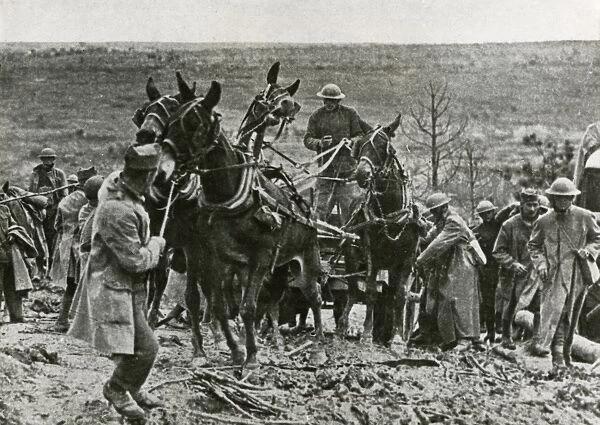
    As the unit continued its service in France, another part of the reports caught my attention: the accounting of horses and mules.

    The numbers were not incidental. Artillery units depended heavily upon animals for transportation. The 150th Field Artillery eventually operated French-designed 155mm Schneider howitzers, heavy artillery pieces that required substantial logistical support.

    The Morning Reports helped reveal that logistical side of the war. Horses and mules had to be maintained, replaced, fed, and cared for. Soldiers were needed to handle them and keep the battery functioning.

    What initially appeared to be mundane accounting began to tell another story. A field artillery regiment was not simply a collection of soldiers and guns. It was an enormous moving system of men, animals, equipment, ammunition, and supplies.

    By the summer of 1918, however, the tone of the records changed.

    More entries began recording soldiers who had been wounded or killed. The administrative language remained brief and unemotional, but the reality behind it was unmistakable.

    At one point I encountered another soldier named Howell who had been killed in action. He was a transfer and apparently unrelated to our family, but seeing the name stopped me for a moment.

    By then, these were no longer simply names in an old ledger.

    Wounded During the Meuse-Argonne Offensive

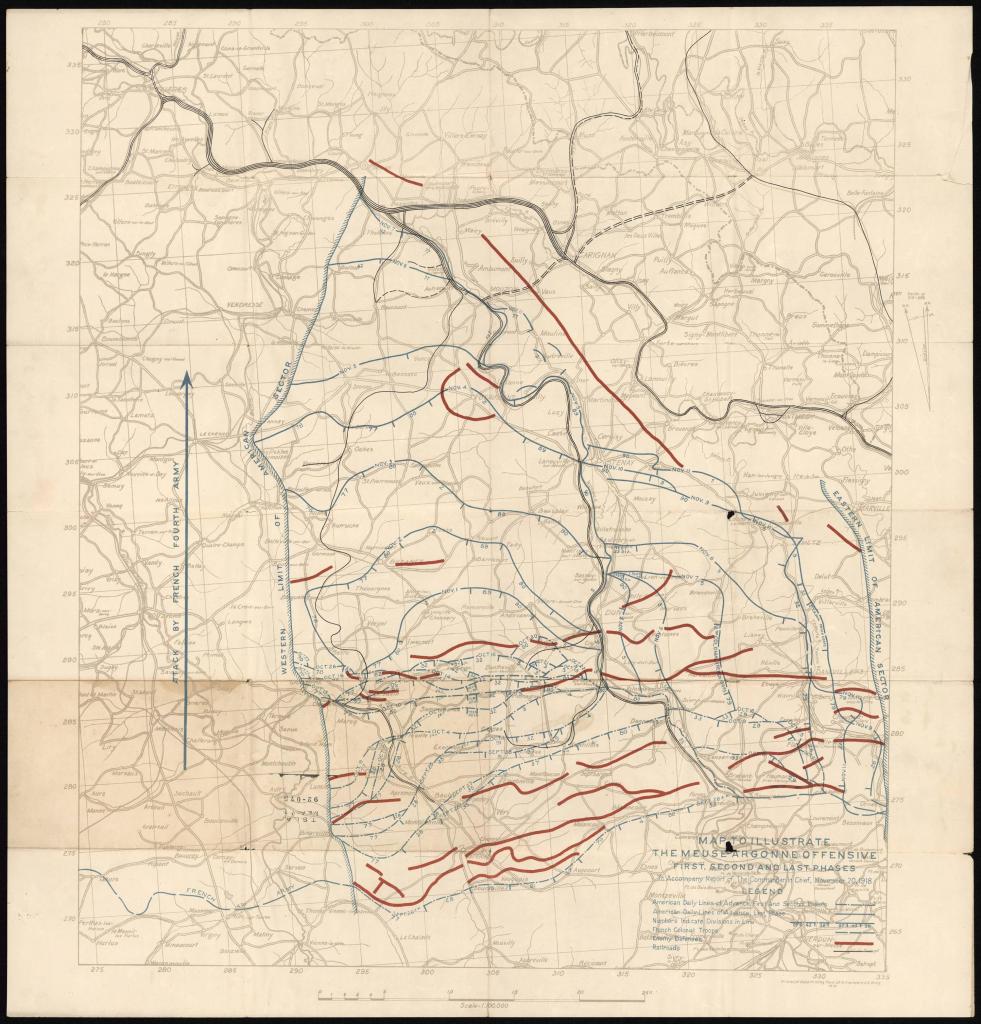
    During the autumn of 1918, the 42nd Division participated in the Meuse-Argonne Offensive, part of the massive final Allied operations of the war.

    Then came the entry we had been hoping—and perhaps dreading—to find.

    On October 18, 1918, Joseph’s name appeared again:

    Corp Joseph R. Howell 143910 slightly wounded in right arm. Hospital not known.

    Another entry provided an additional detail:

    Injuries caused by enemies’ bombs.

    For the first time, we had a contemporary military record documenting not only that Joseph had been wounded, but when he was wounded, where on his body he was injured, and what the Army recorded as the cause.

    The Morning Reports do not tell us precisely what happened on the battlefield or the exact circumstances in which Joseph received the wound. Those questions require additional records. But the brief entries establish something that family stories alone could not: Joseph was wounded while his unit was serving in France during the final weeks of World War I.

    He survived, but he subsequently disappeared from the battery’s active roster.

    On November 25, 1918, two weeks after the Armistice, Joseph’s name appeared among soldiers recorded as:

    dropped fr Rolls per GO 111, GHQAEF 1918.

    The notation referred to General Order No. 111 issued by General Headquarters, American Expeditionary Forces. Understanding exactly how that order applied to Joseph—and what happened to him after he left the battery’s rolls—opened yet another avenue of research.

    The Morning Reports had answered one question while creating several more.

    That, I was beginning to learn, is genealogy.

    Where History Meets the Heart

    Discovering the date and circumstances of Joseph’s wound changed the way I looked at these records.

    I could begin to picture the world behind the handwriting: France, the artillery batteries, the horses and mules, the hospitals, and the men whose names appeared for only a line or two before disappearing from the pages.

    I have never considered myself a military historian. If someone had told me a month earlier that I would spend nights studying century-old Army Morning Reports, I probably would have laughed.

    But somewhere along the way, Joseph Howell stopped being merely my husband’s grandfather.

    He became a young soldier whose movements I could follow through records created more than a century ago. I could watch him gain rank, lose it, regain it, become sick, return to duty, go into combat, suffer a wound, and eventually disappear from his unit’s rolls.

    The records did not tell us everything. In many ways, they created as many questions as they answered.

    But they brought him to life.

    That may be what finally made me understand why my husband loves genealogy so much.

    Our ancestors cannot sit across the table and tell us what happened to them. What remains are the traces they left behind—photographs, letters, government records, military reports, newspapers, and sometimes a nearly illegible line of cursive handwriting buried in a century-old ledger.

    If we take the time to read those records carefully, the names and dates begin to become something more.

    They become people.

    And sometimes, while searching for their stories, we discover a little more about our own.

  • Building the Airfields of Victory: The Story of the 1877th Engineer Aviation Battalion

    Building the Airfields of Victory: The Story of the 1877th Engineer Aviation Battalion

    Like many families of World War II veterans, ours was left with more questions than answers. My father, Robert Gordon Howell, rarely spoke about his wartime service, and many of the details of his military career remained unknown after he returned home. It was only years later, after I began researching his service and obtaining his military records, that one designation repeatedly appeared: Company C, 1877th Engineer Aviation Battalion. At first, those words were little more than numbers and letters on official documents. They identified the unit in which he served, but they revealed nothing about where he had been, what he had done, or how the men of the 1877th contributed to Allied victory. Those questions became the beginning of a research journey that continues today.

    As a genealogist and family historian, I learned long ago that one of the best ways to understand an individual service member’s experience is by studying the history of the unit in which he served. While a unit history cannot tell the complete story of one soldier, it can provide valuable insight into where he served, the conditions he endured, and the work performed by the men beside him. With that understanding, I began researching the wartime history of the 1877th Engineer Aviation Battalion.

    The 1877th Engineer Aviation Battalion was part of the U.S. Army Corps of Engineers, but its mission differed greatly from the combat aircrews it eventually supported. While Army Air Forces pilots flew bombing missions and fighter escorts, engineer aviation battalions built the airfields from which those aircraft operated. Their responsibilities extended far beyond simply constructing runways. They built taxiways, roads, drainage systems, electrical and water utilities, hangars, barracks, maintenance facilities, and countless other structures needed to support military aviation. Without the work of engineer aviation battalions, many of America’s air campaigns during World War II would never have been possible. ¹

    One of the best contemporary accounts of the battalion’s wartime service appeared in the December 6, 1945, issue of Roundup, the official newspaper of the China-Burma-India Theater. According to that article, the 1877th departed the United States in late 1943 and began a long journey across the globe. Traveling through Casablanca, Algiers, and Oran in North Africa, the battalion finally arrived at Bombay, India, on February 14, 1944. Nearly two months had passed since the men had left home. There was little opportunity to rest. Only three days after arriving in India, they were already at work constructing a new airfield at Chakulia. ²

    Chakulia was far more than another construction project. It became one of several airfields developed as part of Operation Matterhorn, the Allied plan to launch B-29 Superfortress bombing missions against Japan from bases in India and China. The B-29 represented the most advanced heavy bomber of the war, but its tremendous size and weight required runways that were both longer and stronger than those built for earlier aircraft. Before the first B-29 could begin combat operations, engineer aviation battalions had to create the airfields capable of supporting them. ³

    The accomplishments of the 1877th Engineer Aviation Battalion at Chakulia were nothing short of extraordinary. According to the battalion’s wartime account, the men constructed a 7,500-foot runway, poured approximately 10,000 cubic yards of concrete, moved nearly 400,000 cubic yards of earth, applied 25,000 gallons of asphalt seal, installed more than 400,000 feet of electrical wire, and built water systems, housing for approximately 3,000 men, hangars, and numerous support buildings. ² Even by today’s standards, those figures are impressive. In 1944, they were achieved under conditions that tested the endurance, skill, and determination of every man in the battalion.

    Bob Howell and unknown soldier, CBI Theater cica 1944-45

    Working conditions were often harsh. Construction crews labored in oppressive tropical heat with limited equipment and supplies. The battalion’s own history recalled that meals were frequently delivered directly to the construction site so work could continue without interruption. Heavy machinery arrived slowly, forcing engineers to improvise until additional equipment reached India. Official Army Air Forces histories likewise describe the shortages of construction equipment and the enormous logistical challenges facing engineer aviation units during the early stages of Operation Matterhorn. ² ³

    The successful completion of the Chakulia project earned the battalion a Meritorious Unit Citation, recognizing the exceptional quality of its engineering work. More importantly, the completed airfield became an important operating base supporting B-29 missions during Operation Matterhorn. ²

    The battalion’s work at Chakulia had scarcely been completed before new orders arrived. According to Roundup, Company A moved north to Sahmaw, where engineers first cleared unexploded bombs before beginning construction of a fighter and cargo airfield. Headquarters and Service Company, together with Companies B and C, traveled through Dinjan, India, where heavy construction equipment was dismantled and prepared for transport aboard C-46 and C-47 aircraft. The article reported that 324 transport sorties were required simply to move the battalion’s remaining personnel and equipment into the Myitkyina area. ²

    Near Myitkyina, the battalion continued its engineering mission by helping construct the Namponmao (West Strip) Airfield. Official Army Air Forces histories record that by January 1945, Namponmao had become an all-weather airfield supporting transport aircraft, fighter operations, medical evacuation flights, and the continuing Allied advance through Burma toward China. ³ ⁴

    Working alongside engineers from other aviation battalions, the men of the 1877th Engineer Aviation Battalion endured far more than difficult construction assignments. Throughout their service in India and Burma, they battled oppressive tropical heat, monsoon rains, mosquitoes, disease, primitive living conditions, and the constant threat of enemy air attack. While the bomber crews who flew from these airfields often received the public recognition, the engineers who built them quietly carried out a mission just as essential to Allied success. Every runway completed, every bridge constructed, every drainage ditch dug, and every utility line installed helped move supplies, launch aircraft, evacuate the wounded, and support the advance toward victory.

    By late 1945, with the war drawing to a close, the battalion’s work in the China-Burma-India Theater had come to an end. According to Roundup, the men began their journey home through Karachi, bringing to a close a wartime route that had carried them from the United States through North Africa, across India, and into the jungles of Burma. ² Like so many American servicemen, they returned home with memories and experiences that few outside their unit could fully understand.

    For my family, however, the story of the 1877th Engineer Aviation Battalion is much more than another chapter in military history. It is part of my father’s story.

    When I first began researching his military service, Company C, 1877th Engineer Aviation Battalion was little more than a designation on a government record. Today, those same words represent thousands of miles traveled across three continents, countless hours of labor under some of the harshest conditions imaginable, and a unit whose work helped make one of the most ambitious air campaigns of World War II possible.

    Although I may never know every detail of my father’s wartime service, studying the history of the battalion has allowed me to better understand the world in which he served. It has transformed a simple unit designation into the story of men whose determination, skill, and perseverance helped build the foundations of Allied victory.

    The history of the 1877th Engineer Aviation Battalion also serves as a reminder that history is often written through the actions of ordinary men performing extraordinary work. They were not seeking recognition or fame. They simply carried out the mission before them, knowing that every completed airfield would help save lives and bring the war one step closer to its end.

    As I continue researching my father’s military service, I know there are many more stories waiting to be uncovered. This is only one chapter in his journey, but it is a chapter that has given me a far greater appreciation for what he and his fellow soldiers accomplished during World War II.

    Researching the history of the 1877th Engineer Aviation Battalion has reminded me that victory was achieved not only by the men who flew the aircraft or fought on the front lines, but also by the engineers whose work made those victories possible. Every record I uncover deepens my appreciation for my father’s generation and the sacrifices they made in places that are often forgotten today. This is only one chapter of his military story, but it is one more reminder of why the men and women of World War II will forever be remembered as the Greatest Generation.

    We will remember them.

    Footnotes

    1. National Museum of the U.S. Air Force, “Origins of Engineer Aviation Battalions,” accessed August 2, 2026, https://www.nationalmuseum.af.mil/Visit/Museum-Exhibits/Fact-Sheets/Display/Article/3526447/origins-of-engineer-aviation-battalions/.
    2. Sgt. Ray Howard, “1877th Built Fields Amid Record Heat,” Roundup (China-Burma-India Theater), December 6, 1945, accessed August 2, 2026, https://www.cbi-theater.com/roundup/roundup120645.html.
    3. Wesley Frank Craven and James Lea Cate, eds., The Army Air Forces in World War II, vol. 5, The Pacific: Matterhorn to Nagasaki (Washington, D.C.: Office of Air Force History, 1953), accessed August 2, 2026, https://media.defense.gov/2010/Nov/05/2001329890/-1/-1/0/AFD-101105-012.pdf.
    4. Wesley Frank Craven and James Lea Cate, eds., The Army Air Forces in World War II, vol. 5, Chapter 6, HyperWar edition, accessed August 2, 2026, https://www.ibiblio.org/hyperwar/AAF/V/AAF-V-6.html.

    This article is part of my ongoing research into the military service of my father, Robert Gordon Howell, who served with Company C, 1877th Engineer Aviation Battalion during World War II. As new records become available, this article may be updated to reflect additional discoveries.

  • Finding My Father’s Missing Morning Reports

    One of the biggest challenges in military genealogy isn’t always finding the record—it’s figuring out where the record is located. That was exactly the situation I found myself in while researching my father, Robert Gordon Howell, and trying to document the two times he was hospitalized while serving with Company C, 1877th Engineer Aviation Battalion during World War II.

    Like many researchers, the first place I turned was Fold3.com (https://www.fold3.com), a subscription website owned by Ancestry.com that specializes in military records. I was excited, thinking I would quickly locate my father’s Morning Reports. Unfortunately, I soon discovered that Fold3’s current Morning Report collection only extends through 1939, well before my father’s World War II service.

    For a short time, I thought I had reached a dead end.

    Fortunately, I kept searching.

    While exploring the National Archives and Records Administration (NARA) website (https://www.archives.gov), I discovered that many Army Morning Reports through December 1944 have been digitized in the National Archives Catalog. Instead of searching by a person’s name, you search by the month and year, then browse the Morning Reports for the unit you are researching. The key is knowing the soldier’s unit designation and company. In my father’s case, that meant the 1877th Engineer Aviation Battalion, Company C.

    Armed with that information, I was able to locate exactly what I had been searching for.

    The Morning Reports documented both of my father’s hospitalizations. The first occurred from August 9–17, 1944, and the second from November 15–22, 1944. The reports recorded the day he left his unit for the hospital and the day he returned to duty. Although each entry consists of only a few lines, those few lines confirmed important events in his military service that I had never been able to document before.

    As I continued reading the November Morning Reports, another discovery caught my attention. On the report dated November 22, 1944, five soldiers—including my father—were mentioned. Several of the men were listed as being promoted from Private to Private First Class (PFC). That immediately made me wonder when my father eventually earned his promotion to Technician Fifth Grade (Tech 5).

    Naturally, I wanted to keep reading.

    That’s when I encountered another obstacle. The digitized Morning Reports currently available online end with December 1944. The 1945 reports I need, along with the reports from my father’s Korean War service between 1953 and 1958, have not yet been digitized.

    But instead of looking at that as bad news, I see it as my next adventure.

    Now I have a great excuse to take a genealogy road trip to St. Louis, Missouri, and spend time at the National Archives at St. Louis, where the original Morning Reports are preserved. Once I identify the units my father served with during his later military career, I’ll be able to examine those records in person. My hope is that the 1945 Morning Reports will tell me exactly when he was promoted to Tech 5, while the Korean-era reports may help reconstruct the rest of his military service from 1953 through his discharge in 1958.

    That’s one of the things I love most about genealogy.

    Every answer seems to lead to another question, and every new discovery opens another door. What began as a search for two hospital stays has turned into another chapter of my father’s military story—and another destination on my genealogy travels. I can’t wait to see what St. Louis has waiting for me.

    If you’re researching an Army veteran from the World War II era, don’t overlook the Morning Reports. They may not tell an entire story, but they often provide the missing pieces that bring a veteran’s service to life. Sometimes, all it takes is knowing where to look.


    This article is part of my ongoing Military History series. Through original records, photographs, archival research, and family stories, I am preserving my family’s military heritage one discovery at a time. My hope is that these articles not only honor those who served but also encourage others to uncover, preserve, and share the military history within their own families.