Tag: family history

  • From Ranks to Records: How an Old Military Ledger Brought My Family History to Life

    From Ranks to Records: How an Old Military Ledger Brought My Family History to Life

    My husband is obsessed with genealogy. For years, he has researched his grandfather, Joseph Robert Howell, following him through records and piecing together the details of his life. He has also repeatedly tried to draw me into the project.

    I usually resisted.

    Names, dates, and isolated facts simply do not stick with me, and genealogy research often left me more frustrated than fascinated. But I do have one useful skill: I love old documents, and I am particularly good at reading vintage cursive handwriting—a beautiful art form that is slowly disappearing.

    Recently, my husband reached a difficult point while examining the World War I Morning Reports for Battery C of the 150th Field Artillery Regiment. Many of the pages were faded and handwritten, so he asked for my help deciphering them.

    I love a good challenge, and my competitive streak quickly took over. I wanted to be the first one to find something.

    The Mystery of the Missing Ranks

    Sitting down with the digital files, I tuned out everything around me and concentrated on finding one name: Joseph Howell.

    It did not take long to find my first clue.

    On October 2, 1917, a cramped handwritten entry recorded:

    1st cl Pvts Lovejoy, Messner, Howell, Freyman to Corporals vice vacancy.

    My husband, an Army veteran, immediately recognized the military shorthand. Joseph had been promoted from Private First Class to Corporal. The phrase “vice vacancy” was less familiar. Research showed that vice was used in military and administrative language to indicate that someone was serving in place of another person or filling a vacancy.

    We had found him. That was the goal, right?

    Not quite.

    My husband believed there had to be more. He encouraged me to continue through the reports, particularly looking for references to injuries, illness, or hospitalization.

    A few nights later, unable to sleep, I opened the records again. Only five days after Joseph’s promotion, an entry dated October 7, 1917, revealed an unexpected change:

    Corp Joseph Howell reduced to Pvt S.O. 25.

    Joseph had been reduced from Corporal to Private, leaving us with an obvious question: Why had he been promoted and then reduced in rank only five days later?

    The entry cited “S.O. 25,” referring to Special Order No. 25. The Morning Report recorded the action but did not explain the circumstances behind it. Finding that order—and discovering what happened—became another research question for another day.

    For the moment, we kept going.

    Joining the “Rainbow”

    As I worked through the daily reports, I began to see something beyond Joseph’s individual entries. The records were documenting the movements and transformation of an entire military organization.

    Near the end of October 1917, the reports recorded the unit’s movement from Long Island, New York, across the Atlantic and eventually to Camp de Coëtquidan, France.

    Research into the unit’s history gave those movements greater meaning. The 150th Field Artillery had originated as an Indiana National Guard organization before entering federal service during World War I. It became part of the 42nd Division, better known as the “Rainbow Division.”

    The division brought together National Guard units from states across the country. Its nickname has long been associated with Douglas MacArthur, then a young Army officer, and the idea that the division’s units stretched across the United States like a rainbow.

    Suddenly, the places and dates in the Morning Reports were no longer simply entries on a page. They were tracing Joseph’s movement from Indiana to New York and then overseas as part of the American war effort in France.

    On November 21, 1917, Joseph appeared again:

    1st cl Pvt Thomas J Cavanaugh and Private Joseph Howell from Pvts to Corporals R.S.O. 26 11/20/17.

    Joseph was a Corporal again.

    This time the entry cited “R.S.O. 26,” a Regimental Special Order dated November 20. Once again, the Morning Report documented the personnel action while pointing us toward another potentially valuable record.

    Mules, Machinery, and 155mm Howitzers

    By winter, I had begun to understand the structure of the Morning Reports themselves. What had initially looked like pages of nearly indecipherable handwriting and numbers had developed a pattern.

    The reports tracked the unit’s strength and status while also recording changes involving individual soldiers.

    Joseph appeared again during the winter:

    December 27, 1917: Corp Joseph Howell fr. D to SK in Hosp.

    He had gone from duty to sick in hospital.

    Then, on January 6, 1918:

    Corp Howell fr SK in Hosp to D.

    He had returned from the hospital to duty.

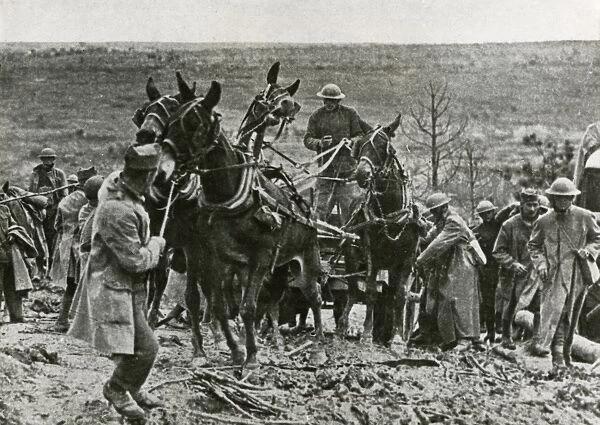
    As the unit continued its service in France, another part of the reports caught my attention: the accounting of horses and mules.

    The numbers were not incidental. Artillery units depended heavily upon animals for transportation. The 150th Field Artillery eventually operated French-designed 155mm Schneider howitzers, heavy artillery pieces that required substantial logistical support.

    The Morning Reports helped reveal that logistical side of the war. Horses and mules had to be maintained, replaced, fed, and cared for. Soldiers were needed to handle them and keep the battery functioning.

    What initially appeared to be mundane accounting began to tell another story. A field artillery regiment was not simply a collection of soldiers and guns. It was an enormous moving system of men, animals, equipment, ammunition, and supplies.

    By the summer of 1918, however, the tone of the records changed.

    More entries began recording soldiers who had been wounded or killed. The administrative language remained brief and unemotional, but the reality behind it was unmistakable.

    At one point I encountered another soldier named Howell who had been killed in action. He was a transfer and apparently unrelated to our family, but seeing the name stopped me for a moment.

    By then, these were no longer simply names in an old ledger.

    Wounded During the Meuse-Argonne Offensive

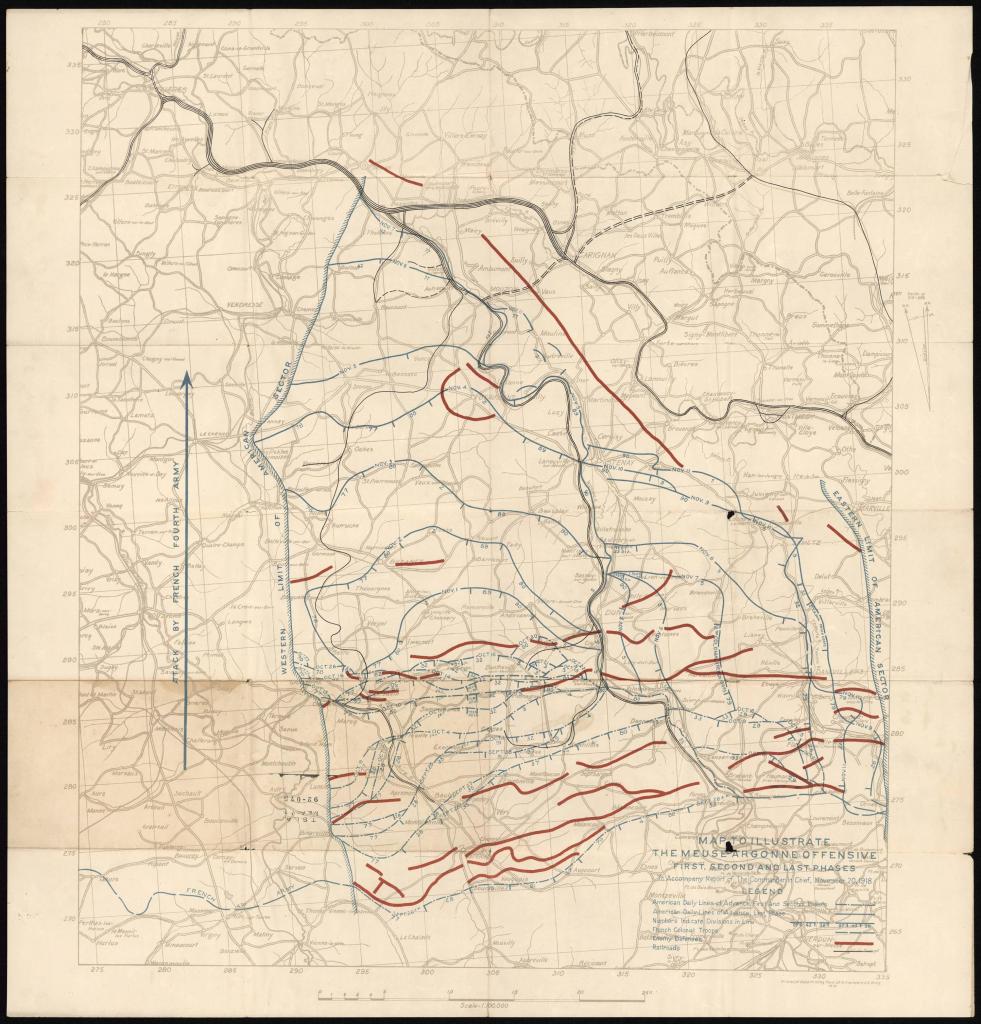
    During the autumn of 1918, the 42nd Division participated in the Meuse-Argonne Offensive, part of the massive final Allied operations of the war.

    Then came the entry we had been hoping—and perhaps dreading—to find.

    On October 18, 1918, Joseph’s name appeared again:

    Corp Joseph R. Howell 143910 slightly wounded in right arm. Hospital not known.

    Another entry provided an additional detail:

    Injuries caused by enemies’ bombs.

    For the first time, we had a contemporary military record documenting not only that Joseph had been wounded, but when he was wounded, where on his body he was injured, and what the Army recorded as the cause.

    The Morning Reports do not tell us precisely what happened on the battlefield or the exact circumstances in which Joseph received the wound. Those questions require additional records. But the brief entries establish something that family stories alone could not: Joseph was wounded while his unit was serving in France during the final weeks of World War I.

    He survived, but he subsequently disappeared from the battery’s active roster.

    On November 25, 1918, two weeks after the Armistice, Joseph’s name appeared among soldiers recorded as:

    dropped fr Rolls per GO 111, GHQAEF 1918.

    The notation referred to General Order No. 111 issued by General Headquarters, American Expeditionary Forces. Understanding exactly how that order applied to Joseph—and what happened to him after he left the battery’s rolls—opened yet another avenue of research.

    The Morning Reports had answered one question while creating several more.

    That, I was beginning to learn, is genealogy.

    Where History Meets the Heart

    Discovering the date and circumstances of Joseph’s wound changed the way I looked at these records.

    I could begin to picture the world behind the handwriting: France, the artillery batteries, the horses and mules, the hospitals, and the men whose names appeared for only a line or two before disappearing from the pages.

    I have never considered myself a military historian. If someone had told me a month earlier that I would spend nights studying century-old Army Morning Reports, I probably would have laughed.

    But somewhere along the way, Joseph Howell stopped being merely my husband’s grandfather.

    He became a young soldier whose movements I could follow through records created more than a century ago. I could watch him gain rank, lose it, regain it, become sick, return to duty, go into combat, suffer a wound, and eventually disappear from his unit’s rolls.

    The records did not tell us everything. In many ways, they created as many questions as they answered.

    But they brought him to life.

    That may be what finally made me understand why my husband loves genealogy so much.

    Our ancestors cannot sit across the table and tell us what happened to them. What remains are the traces they left behind—photographs, letters, government records, military reports, newspapers, and sometimes a nearly illegible line of cursive handwriting buried in a century-old ledger.

    If we take the time to read those records carefully, the names and dates begin to become something more.

    They become people.

    And sometimes, while searching for their stories, we discover a little more about our own.

  • Two Numbers, One Story: Unraveling the Mystery of My Father’s Social Security Records

    While researching my father, Robert Gordon Howell, I came across something that immediately caught my attention. Among the many records documenting his life were references to two different Social Security number prefixes: 312 and 457. At first glance, it appeared as though he may have been associated with two different Social Security numbers.

    For most people, that would raise an obvious question: How could one person have two Social Security numbers?

    As a genealogist, however, I have learned that the first conclusion is rarely the correct one. Rather than assuming an error—or assuming the records were correct—I decided to investigate. That journey led me into the history of the Social Security Administration and introduced me to two of the most valuable records available to family historians: the SS-5 Application for a Social Security Number and the Numident.

    The Beginning of Social Security

    The Social Security Act was signed into law by President Franklin D. Roosevelt on August 14, 1935, creating a nationwide retirement insurance program for American workers. As the program developed, every eligible worker needed a unique number so that wages and future benefits could be accurately recorded.

    Beginning in late 1936, Americans completed an Application for Account Number, better known today as the SS-5. What started as a simple administrative form has become one of the most valuable genealogical records available for twentieth-century research.

    Unlike many government documents, the SS-5 was usually completed by the applicant or with information provided directly by the applicant. Because of that, it often contains firsthand information rather than details supplied by relatives many years later.

    Why Genealogists Value the SS-5

    An original SS-5 application may include:

    • Full legal name
    • Date of birth
    • Place of birth
    • Father’s full name
    • Mother’s full maiden name
    • Employer
    • Home address
    • Signature of the applicant

    For genealogists, few twentieth-century documents provide so much reliable information in one place. When birth certificates are missing or conflicting records exist, the SS-5 often becomes one of the strongest pieces of evidence available.

    The Numident

    While many researchers are familiar with the SS-5, far fewer have heard of the Numident.

    The Numident—short for Numerical Identification System—is the Social Security Administration’s master electronic record for an individual’s Social Security account. It was developed as the agency computerized its records and serves as a lifetime history of a person’s Social Security file.

    Unlike the original SS-5, which records information provided when the account was first established, the Numident may document changes made throughout a person’s life. These updates can include:

    • Name corrections
    • Replacement Social Security cards
    • Changes resulting from marriage or divorce
    • Corrections to birth information
    • Death reporting
    • Administrative updates made by the Social Security Administration

    For genealogists, the Numident often answers questions that the original SS-5 cannot.

    A Research Mystery

    While reviewing my father’s records, I noticed references to two different number prefixes: 312 and 457.

    Rather than jumping to the conclusion that he had two Social Security numbers, I treated the discovery as a research problem.

    Were both numbers actually Social Security numbers?

    Was one the result of a transcription error?

    Could one have been copied incorrectly onto another record?

    Was one associated with a replacement card or an administrative action?

    Or was there another explanation entirely?

    These are exactly the kinds of questions genealogists should ask before reaching a conclusion.

    One of the most important lessons I have learned during years of family history research is that records do not always agree. Government documents contain mistakes. Clerks make errors. Information is copied incorrectly. Sometimes a document raises more questions than it answers.

    That is why original records matter.

    Following the Evidence

    Rather than relying on secondary sources or indexes, I requested copies of the original Social Security records associated with my father’s account. By comparing those records with military files, Veterans Administration records, employment documents, and other contemporary records, I hope to determine exactly why two different prefixes appear and whether they represent an actual discrepancy or a simple misunderstanding.

    This investigation is still underway.

    Like many genealogical problems, the answer may ultimately prove to be quite simple—or it may reveal an entirely unexpected chapter in my father’s life.

    Either outcome will be based on evidence rather than assumption.

    Lessons Learned

    This experience has reinforced several principles that guide my research.

    Never assume a record is correct simply because it is official.

    Always compare multiple independent sources.

    Whenever possible, obtain the original document rather than relying on an index or transcription.

    Allow the evidence—not the theory—to determine the conclusion.

    Those principles have served genealogists well for generations, and they remain just as important today.

    Looking Ahead

    As I continue researching my father’s life, I expect the SS-5, the Numident, and other Social Security records to answer many of the questions that still remain. Whether the mystery of the two prefixes proves to be a clerical error, an administrative correction, or something entirely different, the investigation itself has already demonstrated the value of careful documentation and thoughtful analysis.

    Every record tells part of a story.

    Sometimes the most important discoveries begin with something as simple as a few numbers on a government form.

    For a genealogist, those numbers are rarely just numbers—they are clues waiting to be understood.

    Footnotes

    1. Social Security Administration, “The Story of the Social Security Number,” accessed August 2, 2026, https://www.ssa.gov/history/ssn/ssnchron.html
    2. Social Security Administration, Application for a Social Security Card (Form SS-5), Social Security Administration, accessed August 2, 2026, https://www.ssa.gov/forms/ss-5.pdf
    3. Social Security Administration, Program Operations Manual System (POMS): Numident, accessed August 2, 2026, https://secure.ssa.gov/poms.nsf/home
    4. Social Security Administration, Historical Background and Development of Social Security, accessed August 2, 2026, https://www.ssa.gov/history/
  • Ordering Military Records

    What My Father’s File Taught Me

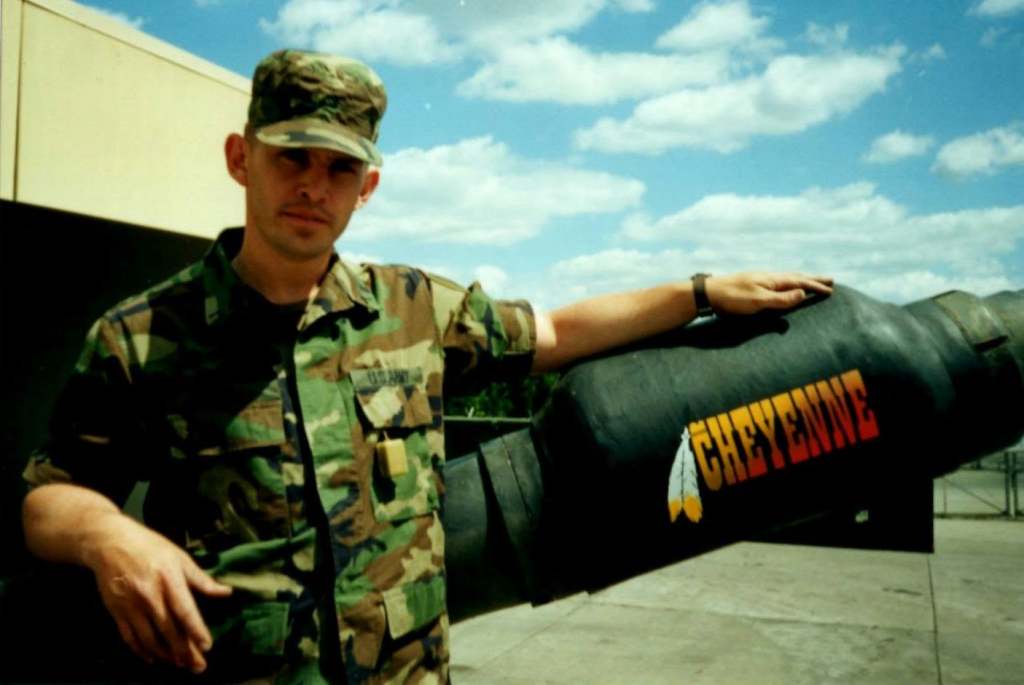
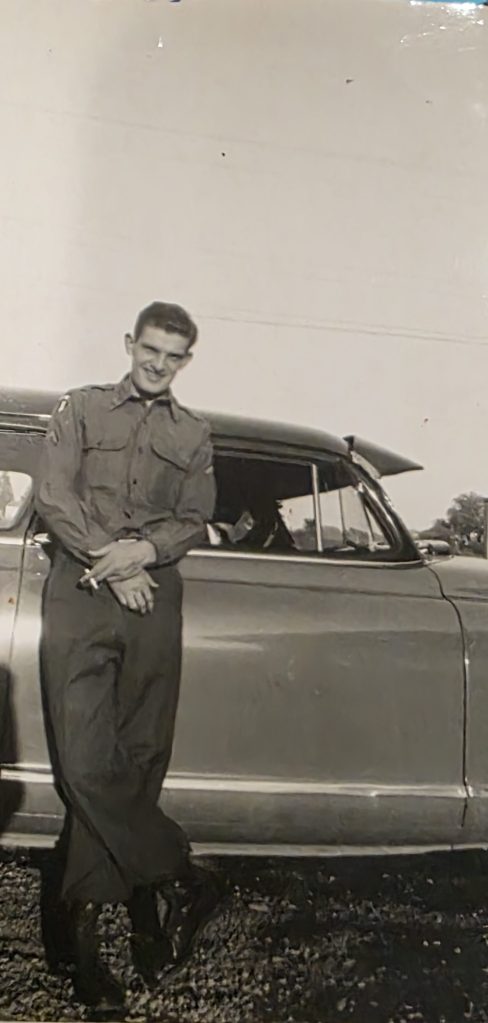
    Robert Gordon Howell during his U.S. Army service.

    Many of us know a parent, grandparent, or another relative served in the military, but beyond that, we may know very little about what happened while they were in service. Family stories are a great place to start, but official military records may confirm what you’ve heard—or they might set the story straight and reveal secrets your veteran didn’t ever talk about.

    That has certainly been true as I’ve delved deeper into records concerning my father, Robert Gordon Howell.

    I knew my dad was in the Army. I heard stories about WWII, Burma, and maybe serving again during the Korean War. But my dad was not a guy who freely shared his experiences. After he passed away several years ago, I was filled with questions I would never have the chance to ask.

    Requesting his military records was one of the best steps I took in learning who he was before he became my father.

    What Records Can Tell You

    An Official Military Personnel File, commonly referred to as an OMPF, can contain enlistment information, duty assignments, promotions, training, awards, evaluations, separation documents, and much more. Administrative records are included as well. The contents of an individual military record can vary widely based on the veteran, branch of service, when they served, and, of course, which records still exist.

    My father’s records held much more than dates and locations of his service. They introduced me to a side of his military career I was not expecting and prompted additional questions about his assignments, disciplinary issues, medical history, and the circumstances of his final discharge.

    I thought I was just ordering a box of paperwork. Instead, I was about to learn more about my father than I knew before.

    How to Request Those Records

    If you are a veteran or the next of kin to a veteran, you can request military personnel records from the National Archives. Generally, the next of kin is limited to an unmarried spouse, parent, child, sibling, or other direct relative. Requests can be submitted online via the National Archives’ eVetRecs system or by mail or fax using Standard Form 180.

    Before starting your request, compile as much information as you can.

    • Veteran’s full name (surname, prefix, and first name) as it was used during service
    • Branch of Service
    • Social Security number or service number
    • Approximate dates of service
    • Date and place of birth
    • Name of last unit, place of discharge, or place entered, when known

    The more information you can provide, the easier it will be for the National Personnel Records Center to locate the correct file. A next-of-kin request for a deceased veteran may also require you to include proof of the veteran’s death. Acceptable documentation includes a copy of the death certificate, obituary, or funeral-home proof of death.

    Files Destroyed in the 1973 Fire

    This tip is a must for military researchers. In 1973, a fire broke out in the National Personnel Records Center in St. Louis. Depending on the branch of service, approximately 16–18 million personnel files were lost in the fire. Records from the Army were hit especially hard, with an estimated 80 percent of Army personnel files destroyed for veterans who were discharged between November 1, 1912, and January 1, 1960.

    My father falls into that window of service dates. Even though military officials said his file was “fire-related,” that didn’t mean there were no records remaining. While searching for his file, I was warned the National Archives may not have everything, but they can often reconstruct parts of a veteran’s military service using alternative records.

    Don’t forget there may be other records that existed outside of the personnel file. Look for:

    • Unit histories
    • Hospital records
    • Military court-martial records
    • Department of Veterans Affairs records
    • Morning reports
    • Newspaper accounts

    Get Started on That Request

    Don’t go into your request expecting your military records will have the answers to all your questions. My father’s file answered some questions but also led me to ask many more. That is par for the course when doing genealogy research.

    Requesting my father’s file did open a new chapter in his life for me. Family stories only told me so much. After I received his records, I was able to begin learning about the young man who lived an incredible life before I was born.

    Military records aren’t just pieces of government-generated paperwork. They could be all that’s left of your veteran’s story.


    Sources

    National Archives. Request Military Service Records.
    https://www.archives.gov/veterans/military-service-records

    National Archives. Standard Form 180 (SF-180): Request Pertaining to Military Records.
    https://www.archives.gov/veterans/military-service-records/standard-form-180

    National Archives. The 1973 Fire, National Personnel Records Center.
    https://www.archives.gov/personnel-records-center/fire-1973