Tag: family-history

  • Ordering Military Records

    What My Father’s File Taught Me

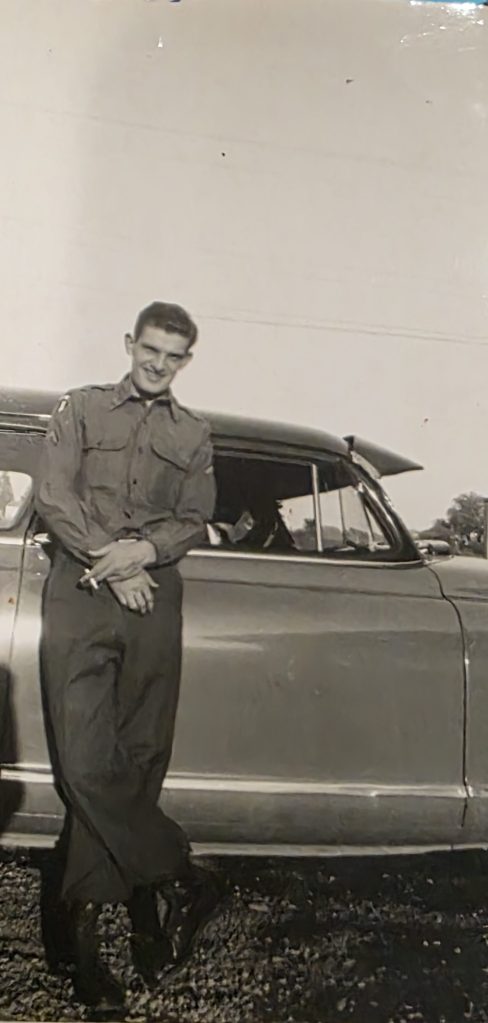
    Robert Gordon Howell during his U.S. Army service.

    Many of us know a parent, grandparent, or another relative served in the military, but beyond that, we may know very little about what happened while they were in service. Family stories are a great place to start, but official military records may confirm what you’ve heard—or they might set the story straight and reveal secrets your veteran didn’t ever talk about.

    That has certainly been true as I’ve delved deeper into records concerning my father, Robert Gordon Howell.

    I knew my dad was in the Army. I heard stories about WWII, Burma, and maybe serving again during the Korean War. But my dad was not a guy who freely shared his experiences. After he passed away several years ago, I was filled with questions I would never have the chance to ask.

    Requesting his military records was one of the best steps I took in learning who he was before he became my father.

    What Records Can Tell You

    An Official Military Personnel File, commonly referred to as an OMPF, can contain enlistment information, duty assignments, promotions, training, awards, evaluations, separation documents, and much more. Administrative records are included as well. The contents of an individual military record can vary widely based on the veteran, branch of service, when they served, and, of course, which records still exist.

    My father’s records held much more than dates and locations of his service. They introduced me to a side of his military career I was not expecting and prompted additional questions about his assignments, disciplinary issues, medical history, and the circumstances of his final discharge.

    I thought I was just ordering a box of paperwork. Instead, I was about to learn more about my father than I knew before.

    How to Request Those Records

    If you are a veteran or the next of kin to a veteran, you can request military personnel records from the National Archives. Generally, the next of kin is limited to an unmarried spouse, parent, child, sibling, or other direct relative. Requests can be submitted online via the National Archives’ eVetRecs system or by mail or fax using Standard Form 180.

    Before starting your request, compile as much information as you can.

    • Veteran’s full name (surname, prefix, and first name) as it was used during service
    • Branch of Service
    • Social Security number or service number
    • Approximate dates of service
    • Date and place of birth
    • Name of last unit, place of discharge, or place entered, when known

    The more information you can provide, the easier it will be for the National Personnel Records Center to locate the correct file. A next-of-kin request for a deceased veteran may also require you to include proof of the veteran’s death. Acceptable documentation includes a copy of the death certificate, obituary, or funeral-home proof of death.

    Files Destroyed in the 1973 Fire

    This tip is a must for military researchers. In 1973, a fire broke out in the National Personnel Records Center in St. Louis. Depending on the branch of service, approximately 16–18 million personnel files were lost in the fire. Records from the Army were hit especially hard, with an estimated 80 percent of Army personnel files destroyed for veterans who were discharged between November 1, 1912, and January 1, 1960.

    My father falls into that window of service dates. Even though military officials said his file was “fire-related,” that didn’t mean there were no records remaining. While searching for his file, I was warned the National Archives may not have everything, but they can often reconstruct parts of a veteran’s military service using alternative records.

    Don’t forget there may be other records that existed outside of the personnel file. Look for:

    • Unit histories
    • Hospital records
    • Military court-martial records
    • Department of Veterans Affairs records
    • Morning reports
    • Newspaper accounts

    Get Started on That Request

    Don’t go into your request expecting your military records will have the answers to all your questions. My father’s file answered some questions but also led me to ask many more. That is par for the course when doing genealogy research.

    Requesting my father’s file did open a new chapter in his life for me. Family stories only told me so much. After I received his records, I was able to begin learning about the young man who lived an incredible life before I was born.

    Military records aren’t just pieces of government-generated paperwork. They could be all that’s left of your veteran’s story.


    Sources

    National Archives. Request Military Service Records.
    https://www.archives.gov/veterans/military-service-records

    National Archives. Standard Form 180 (SF-180): Request Pertaining to Military Records.
    https://www.archives.gov/veterans/military-service-records/standard-form-180

    National Archives. The 1973 Fire, National Personnel Records Center.
    https://www.archives.gov/personnel-records-center/fire-1973

  • Cousins

    Cousins

    The Family My Grandmother Never Let Me Forget

    When I was born, I immediately became part of something much larger than just my immediate family. I had three first cousins close to my own age—Bob, Mike, and Alisha. As little children, we spent time together playing, laughing, and simply enjoying being kids.

    Unfortunately, those memories are few.

    When my parents divorced, I was almost four years old. Although our family changed, I remained in Oregon until I was eight. During those years, I saw my first cousins only occasionally. After moving to Florida, those visits became even more infrequent, and more than ten years would pass before I saw them again. As often happens in childhood, memories slowly fade with time.

    Moving to Florida, however, brought one of the greatest blessings of my life.

    My grandmother.

    If there was one lesson she taught me over and over again, it was that family mattered. She never forgot her cousins, and she made sure I knew them as well.

    One of those cousins was Virginia Hartman, née Makepeace, who would travel from Illinois to visit us. As a child, I also knew of Kenneth, Halford, and Paul. They were simply names to me then. Years later, through genealogical research, I discovered that Kenneth and Halford were Virginia’s brothers and that Paul was her son, who was tragically killed as a civilian during the Vietnam War in 1968.

    Another family I came to know was Richard Fisher and his wife, Marguerite, née Reinbach. They lived only about a quarter to half a mile from our home, making visits easy and frequent. Their son, Carleton Fisher, lived in Tampa but always made time to visit his parents. Whenever he came to see them, he also made sure to stop by and visit us. Carleton was only two years older than my father, and his kindness left a lasting impression on me. Their daughter, Lora, always enjoyed sitting down to play cards with me, creating memories that I still treasure today.

    As a child, these were simply people my grandmother loved.

    Only years later did I realize that I had been surrounded by family history all along.

    When I eventually began researching my grandmother’s family, I discovered that these cousins were all connected through the Hunsaker family.

    The names I had heard throughout my childhood slowly began to fit together like pieces of a puzzle.

    Alice.

    Virgilla.

    Charles.

    Franklin.

    Katherine “Kittie” Hunsaker—my great-grandmother.

    Idella.

    Laura.

    Genealogy gave me the relationships.

    My grandmother had already given me the people.

    After my grandmother passed away, I found an old photograph among her belongings showing the Hunsaker children together. Suddenly, those names were no longer just names on a pedigree chart. They became smiling faces connected to people I had actually known.

    One of the greatest gifts Virginia ever gave me was preserving family photographs. Because of her kindness, I now have photographs of my grandmother and her sisters that might otherwise have been lost forever.

    Those photographs are more than images.

    They are family history preserved.

    Looking back now, one memory stands out more than the others.

    As a young boy, I regularly visited Richard and Marguerite Fisher. I remember their kindness far more than I remember our conversations. Children rarely understand the significance of the people around them.

    Only years later did I realize something remarkable.

    I hadn’t simply met a World War I veteran.

    I had known one.

    I had sat in his home.

    I had visited him countless times.

    He wasn’t just a veteran I had read about in a history book.

    He was my cousin.

    That realization means even more today than it ever could have as a child.

    As Richard and Marguerite grew older, I remember visiting them even after they could no longer safely live by themselves. One Halloween, I remember walking past their empty house after they had moved away. At the time, I couldn’t explain why seeing that empty house affected me.

    Today I understand.

    That house represented family.

    Genealogy often focuses on discovering ancestors we never had the opportunity to meet.

    But sometimes the greatest blessing is realizing we actually knew some of them—or at least the cousins who carried those family stories forward.

    I owe that realization to my grandmother.

    She understood something that I wouldn’t appreciate until much later.

    Family isn’t only found in birth certificates, census records, or family trees.

    Family is found in relationships.

    It is found in visits, conversations, shared photographs, card games, and keeping in touch across decades.

    My grandmother never allowed those connections to disappear.

    Because of her, I didn’t simply inherit names.

    I inherited family.

    And because she valued those relationships, I now have photographs, memories, and stories that no document could ever provide.

    As I continue researching my family history, I often think back to those visits with cousins I barely understood at the time.

    Today, I understand exactly what my grandmother was trying to teach me.

    The greatest discoveries in genealogy are not always found in old records.

    Sometimes, they are found in the people we were fortunate enough to know.

    Today, many of those cousins are gone. Their homes are quiet, the visits have ended, and the card games are now only memories. Yet every time I open a family photograph, read an old letter, or discover another historical record, I find myself thinking of my grandmother. She understood something that took me decades to appreciate. Family is life’s greatest treasure. Genealogy has helped me discover my ancestors, but my grandmother taught me something even more important—to cherish the family we have the opportunity to know while they are still with us. The records preserve our history, but it is the relationships that preserve our hearts.


    This article is part of my ongoing Family History series. Through these stories, I hope to preserve the people, places, and discoveries that have shaped my family’s journey—and perhaps inspire you to preserve yours as well.


  • This Story Again

    This Story Again

    By Joseph Howell, Founder of Nomadic Roots Research

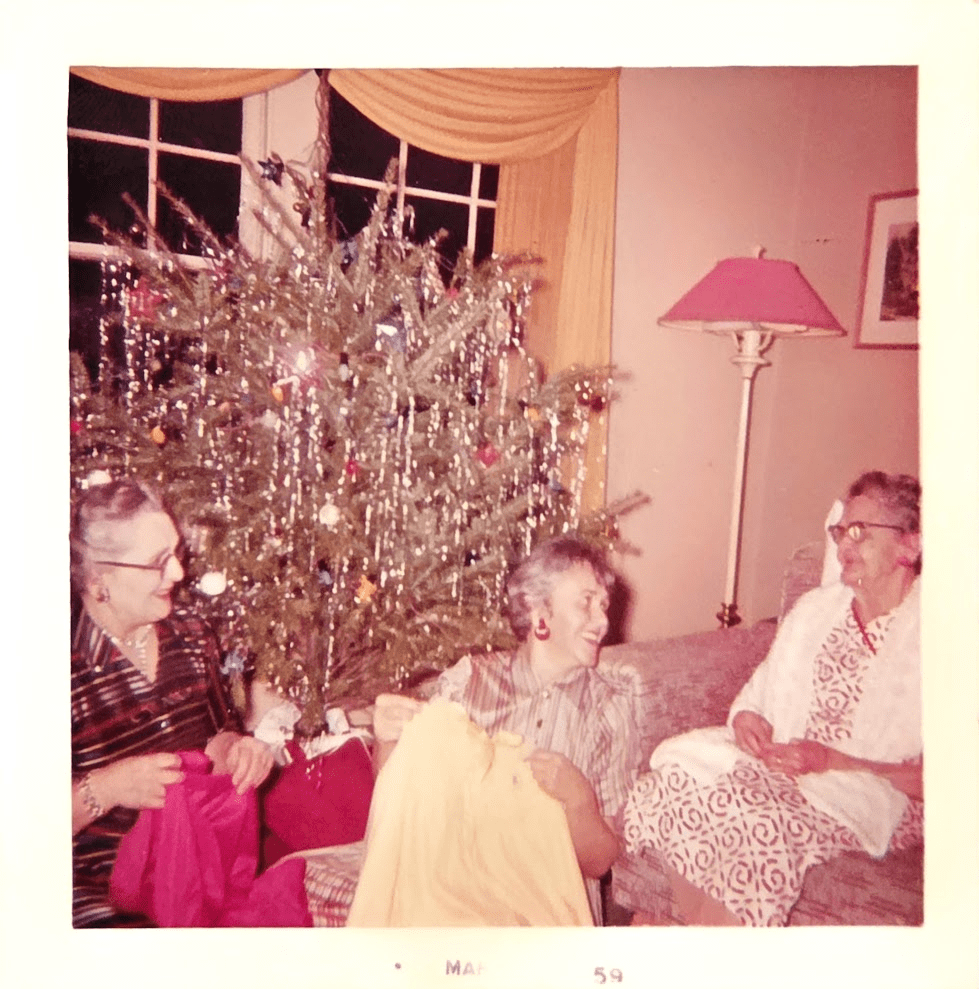
    As a youngster, I remember spending hours listening to relatives tell the same stories, again and again. The picture above features my grandmother, Alta M. (Fitts) Howell, my great-aunt, Eileen Virginia (Fitts) Lindskog, and my great-grandmother, Katherine “Kitty” Maude (Hunsaker) Fitts. Families like to gather and share stories, memories, and remembrances of days gone by.

    Sometimes, as a kid I would get a little frustrated and think to myself,

    “This story again?”

    I realize now that as a child I didn’t appreciate just how special those stories really were.

    Until they were gone.

    It was only two months between the passing of my grandmother and my father. Two months that brought life changes that forever changed my perspective on how quickly life can change. I was married only a few months myself and expecting my first child. I suddenly felt like I was standing in between generations; losing my links to my family’s history at the same time that I was about to bring a new generation into those families.

    Their deaths left many questions unanswered.

    There were stories I wanted to hear again. Questions I wanted to ask. Memories I wanted to capture forever.

    I knew that if I wanted answers to those questions, I would have to start finding them for myself.

    What began as a quest to learn about my own family tree became a passion. I began interviewing relatives, gathering documents, researching records, and studying anything I could about family history and genealogy. The more I learned, the more I realized that every family has a story that deserves to be preserved.

    Family stories can offer valuable clues to help us learn about our past. Names, Places, Occupations, Military Service, Migration, and  Family traditions. Stories are facts that are often filtered through emotions and personal biases. Sometimes stories are told accurately. Other times the truth is stretched over time. But they can provide wonderful starting points to help us uncover the facts.

    My personal journey has turned into over 30 years of genealogical research. Along the way I have earned an Associate Degree in Family History and Genealogy from BYU–Idaho, completed the Boston University Genealogical Research Certificate Program, and worked as a Family History Consultant for The Church of Jesus Christ of Latter-day Saints. But one thing I learned along the way is what made my journey so worthwhile:

    Listen to the stories.

    Talk to your parents, grandparents, aunts, uncles, and relatives while you still have the opportunity. Ask questions. Record the answers. Preserve photographs. Save letters. Protect family Bibles. Keep family records. Those stories that you may tire of hearing now may become priceless one day.

    I started this journey because I didn’t listen carefully to stories when I had the chance. If I could go back, I would listen differently.
    I want my children, my grandchildren, and future generations to know their family history. That is why I am devoted to teaching others how to find their own stories.
    Now, as I think back on those “stories I had heard too many times”, I would give almost anything to hear some of them just one more time.

  • Why Every Genealogist Should Use an Offline Family Tree Program Alongside Online Trees

    Why Every Genealogist Should Use an Offline Family Tree Program Alongside Online Trees

    One of the mistakes I see most often as a genealogy tech blogger is family historians using online trees exclusively. Companies like Ancestry, MyHeritage, FamilySearch, and Findmypast have great online tools for discovering new information about your ancestors. However, they shouldn’t be the only place you work on your family tree.

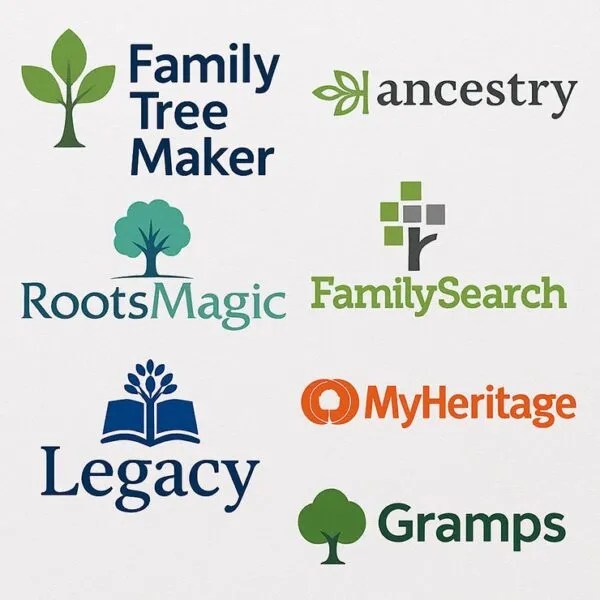
    Instead, power users employ an offline family tree program along with their online trees. Genealogy software like RootsMagic, Family Tree Maker, Legacy Family Tree, and Gramps offer advantages that many online-only genealogists never realize they are missing.

    Own Your Information

    When your tree lives only on a website, you don’t truly own your information. You are at the mercy of that company’s subscriptions, policies, and technology. An offline family tree program lets you store a copy of your database on your computer. You own your data and can access it no matter what changes an online company makes to their trees.

    Use RootsMagic, Family Tree Maker, Legacy Family Tree, or another program and you’ll have peace of mind knowing you own your own information. Online trees should be viewed as tools, not home.

    Better Organization

    Genealogy programs run on your computer are specifically designed for genealogy. Many have excellent source citation, research notes, timelines, reporting, and analysis tools that you just can’t find online.

    Offline trees become more valuable as your family tree grows to include hundreds or even thousands of people.

    Security From Mistakes

    Collaborative trees on the internet can be edited by others. Collaboration is great, but too many people making changes or adding mistakes can create problems. By maintaining your own tree separately, you can ensure that you have your own version of your ancestors carefully documented.

    Think of your offline tree as being the master copy. You can publish shares of it to the online world for collaboration or discovery.

    Superior Research Documentation

    Genealogists are taught to document sources and carefully evaluate evidence. Offline family tree programs typically have much better source citation capabilities. Being able to record where you found information and how you reached your conclusions is invaluable to the research process.

    Future generations may inherit your research. Proper documentation now will help them understand how you reached your conclusions.

    Data Backup and Security

    Hard drives crash and websites come and go. Having a database on your computer allows you to make regular backups on external hard drives or cloud storage. “Lots of copies keep stuff safe” is a rule of thumb in genealogy for a reason. Don’t put all of your tree in one place.

    If your subscription expires or a website decides to change how their trees work, your family tree is safe on your computer.

    Advanced Reporting

    All of the programs mentioned above can create beautiful charts and reports. You can create descendant and ancestor reports, family group sheets, research logs, and historical narratives with greater flexibility than many online trees allow.

    Preserving your research in a printable format is a great way to share your family history with relatives.

    Online and Offline Trees Can Work Together

    Online trees are great for discovering new records, getting hints, collaborating with relatives, and connecting with unknown cousins. Computer programs are great for organization, research documentation, preservation, and data security.

    Don’t rely on just online trees or just an offline program. Use both and experience the best of both worlds.

    Maintain a master tree on your computer that is well documented and backed up regularly. Then connect with the online genealogy community by publishing a share of your tree to your favorite websites like Ancestry, MyHeritage, FamilySearch, and Findmypast. Using an offline tree program in combination with online research is the best way to preserve your family’s history.