Author: Joseph Howell

  • Are They From Where You Believe?

    Are They From Where You Believe?

    One of the first things we are often given when beginning genealogy research is a place.

    “My grandfather lived in Indianapolis.”

    “My family was from Illinois.”

    “My great-grandmother lived in this county.”

    Sometimes that information comes from a family member. Sometimes it comes from a family tree that has been copied and recopied. Other times, we may have a record that appears to establish where the person lived.

    But before we begin searching for birth certificates, marriage records, deeds, probate files, church records, and all the other records that may tell us about our ancestor’s life, there is a basic question we should answer:

    Did this person actually live where we believe they lived?

    A simple residence survey can help answer that question. We do not need to search every possible record at this stage. Instead, we can begin with a handful of basic sources.

    1. Census Records

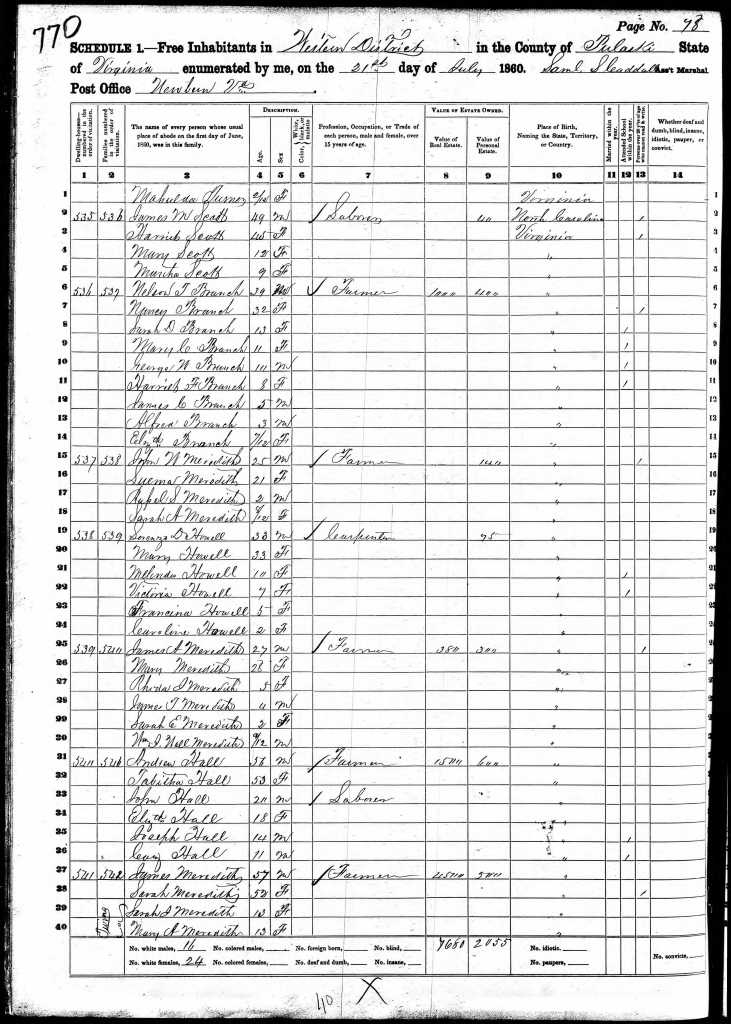
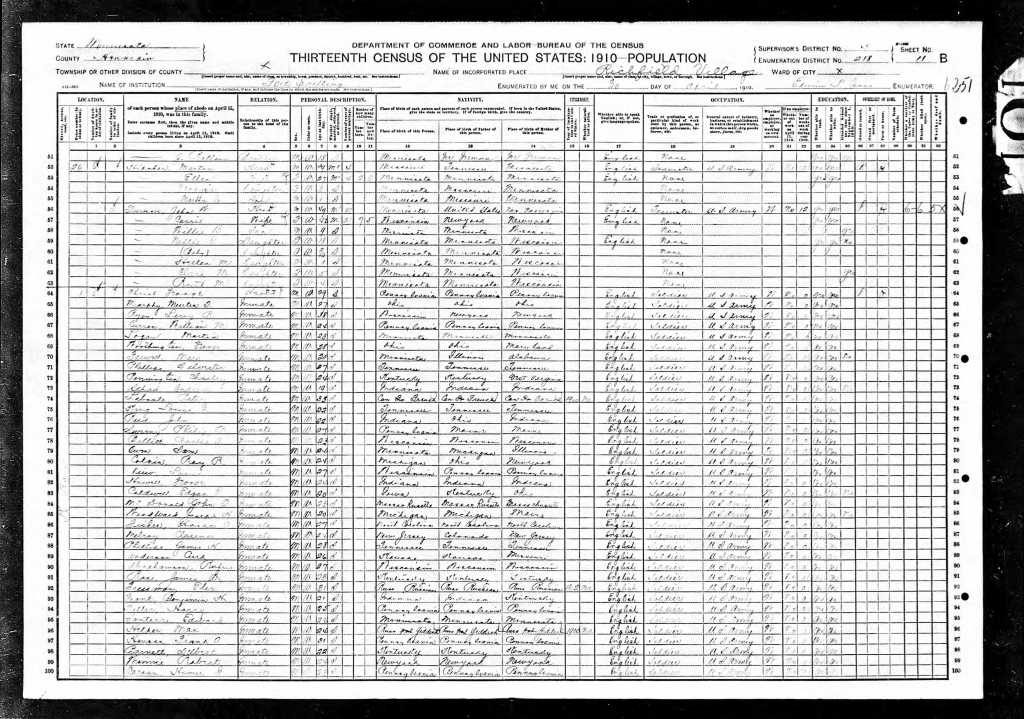
    The U.S. federal census is usually a good place to begin because it gives us a snapshot of a household at a particular time and place.

    But remember that word: snapshot.

    A census does not necessarily tell us where someone lived throughout the entire year, and we should not automatically assume that every piece of information on a census came directly from the person we are researching.

    The person providing the information might have been a spouse, child, another relative, landlord, or even a neighbor. Our ancestor might not have been home when the census taker arrived. The person answering the questions may have known some things about the family and guessed at others.

    There is another complication: a person can sometimes appear more than once.

    My own grandmother provides an excellent example. She was born in Illinois and lived in the Arthur and Loami area before later living in Indianapolis. In the 1920 census, however, she appears twice. She was enumerated with her family in Arthur, Illinois, but she was also enumerated separately in Indianapolis, Indiana.

    If I looked at only one of those records, I could come away with a very different understanding of where she was at that point in her life.

    That does not make the census useless. Far from it. It means the census should be treated as evidence that we compare with other evidence.

    2. City Directories

    City directories can be one of our best tools for establishing where someone lived between federal censuses.

    I have seen this in my own family research.

    I located my grandfather in the 1911 Hartford City, Indiana, city directory. Later, I was able to locate him in Indianapolis city directories covering the period from 1921 through 1946. My grandmother also begins appearing with him in later directory entries.

    Instead of having only the federal censuses—perhaps seeing someone in 1920, again in 1930, and again in 1940—the directories allow us to follow a person’s presence in a community much more closely.

    They can also provide more than a name. Depending on the year and publisher, an entry may identify an address, occupation, employer, or spouse.

    When we find a person repeatedly in directories for the same community, we begin building a timeline. Changes in address, occupation, or the addition of a spouse can become clues that lead us to other records.

    The directory is therefore more than a place to find an address. It can help us establish when someone arrived, how long they remained, and when something in their life changed.

    3. Tax Records

    Tax records can be another valuable tool for determining where someone was located, particularly during years when no census was taken.

    I have used tax records in my own Howell research involving Joshua Howell in Botetourt and Montgomery Counties, Virginia.

    At first glance, finding Joshua in records from different counties could make it appear that he moved.

    But that is not necessarily what happened.

    Sometimes our ancestors did not move. The boundaries moved around them.

    County boundaries changed as new counties were created and existing jurisdictions were divided or reorganized. A person could live on the same land for years and appear in records belonging to different counties without ever physically moving.

    That is why understanding the history of the locality is so important.

    When a person disappears from one county’s records and begins appearing in another, do not immediately conclude that the family relocated. Check the history of the county boundaries. Look at maps from the period. Determine whether the jurisdiction changed around the family.

    Joshua’s tax records teach another important lesson.

    Joshua was not the only Howell family member in the area. His brother Benjamin had given some of his children the same names Joshua had given his children.

    That creates an obvious problem: when a tax list contains one of those names, which man is it?

    Fortunately, some of the tax records helped make that distinction. Entries identifying individuals as “son of J” or “s of B” helped separate Joshua’s sons from Benjamin’s sons.

    This illustrates why we should not simply search a tax collection for a name and stop when we find it.

    Look at the entire entry. Look at the other people on the list. Follow the person through successive years. Pay attention to small notations added by the person who created the record.

    And understand the boundaries of the jurisdiction in which the record was created.

    A few words such as “son of J” may separate two men with the same name. A different county name at the top of a later tax list may reflect a boundary change rather than a physical move by the family.

    Tax records can therefore help us establish where someone was located over time, distinguish people with the same name, and sometimes reveal something equally important:

    The ancestor stayed put while the map changed.

    4. Voter Registration and Poll Records

    Where they survive, voter registration records and poll lists can provide another piece of evidence for residence.

    To register or vote, a person generally had to meet residency requirements. That makes these records useful when we are trying to determine whether someone was actually living within a particular city, county, or precinct.

    These records will not exist for everyone, and eligibility to vote varied greatly by time and place. Their absence should therefore never automatically be interpreted as evidence that someone did not live there.

    When they do exist, however, they can provide another independent source supporting a residence.

    5. Newspapers

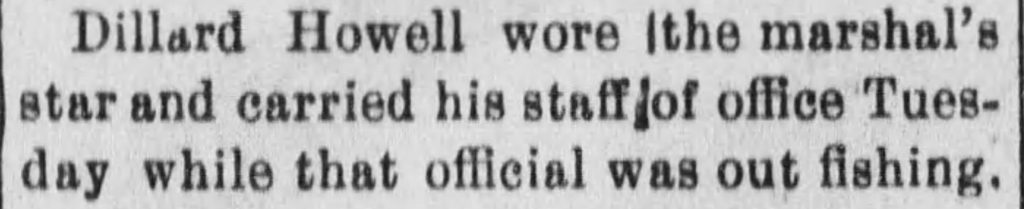
    Newspapers are one of my favorite resources for establishing where a family was at a particular time because they record something the census often cannot—the everyday activities and movements of ordinary people.

    Do not limit a newspaper search to obituaries, birth announcements, and marriage notices.

    My own family demonstrates why.

    My grandmother was born and lived in the Arthur and Loami area of Illinois before later living in Indianapolis. I have found newspaper articles concerning my grandmother herself in the Arthur and Loami area as well as Indianapolis, along with many newspaper entries involving other members of her family.

    Those articles help fill the spaces between the major records.

    A small social notice about visiting relatives might seem unimportant. But it gives us a name, a place, and a point in time. Several such articles collected over a period of years can help us follow the movements and connections of a family.

    My grandfather even received a speeding ticket that made the newspaper. It may not have been an event he wanted preserved for future generations, but for a genealogist, it is another dated piece of evidence placing him in a particular area.

    I have found countless newspaper entries involving members of my family in Hartford City and Indianapolis, Indiana, and around Arthur and Loami, Illinois.

    This demonstrates another important part of a residence survey:

    Do not search only for the person you are researching.

    Search for their spouse, parents, siblings, children, and other close relatives.

    Your ancestor may be mentioned in an article indexed under someone else’s name. A notice about parents receiving a visit from their daughter and grandson could help place that daughter in the community even though she was not the main subject of the article.

    But keep the evidence straight.

    An article placing a brother in Arthur establishes the brother’s presence there. It does not automatically establish that every member of his family lived there.

    Each piece of evidence needs to say what it actually says.

    When a Newspaper Gives You Another Question

    Newspapers can also give us a location that creates more questions than answers.

    I encountered exactly that with my great-granduncle, Tilghman Andrew Howell.

    In the newspaper obituary for his mother, Amelia Howell, née Rousseau, Tilghman was listed as living in “Washington.”

    Washington.

    But what Washington?

    Was the obituary referring to Washington, D.C.? Washington state? Or one of the many cities and towns named Washington?

    Without additional evidence, I cannot simply choose the Washington that seems most likely and begin researching as though I have established his residence.

    Instead, “Washington” becomes a clue.

    Now I can return to the other records in my residence survey. Census records, city directories, tax records, voter records, and additional newspapers may eventually provide the evidence necessary to determine which Washington the obituary meant.

    That is an important distinction in genealogy:

    A location mentioned in a record is evidence. It is not necessarily proof of the location we need.

    Don’t Search Just One Newspaper

    Another lesson I have learned is to search every newspaper available for the area you are researching.

    Do not assume that because you searched one newspaper—or one newspaper website—you have completed your search.

    A community may have had several newspapers operating at the same time. One might have carried a small social notice about your family that another newspaper never published.

    The surviving newspapers may also be scattered among different repositories.

    Some of the major online resources include Newspapers.com, NewspaperArchive.com, and GenealogyBank, but these should be starting points rather than the end of the search.

    Look for local digital newspaper collections as well.

    Then look beyond the internet.

    Newspaper archives may be located at the newspaper itself or at a local historical or genealogical society. But don’t stop there. Check public libraries, state libraries and archives, colleges, universities, museums, and other regional repositories.

    Some collections have been digitized and can be searched from home. Others may survive on microfilm or in original copies and require an in-person visit or assistance from an archivist or librarian.

    The newspaper you need may exist even though it does not appear on one of the major newspaper websites.

    6. Local and County Histories

    Do not overlook the history of the community itself.

    County histories, town histories, anniversary books, pioneer histories, local biographies, and publications produced by historical and genealogical societies can contain valuable clues about the people who lived there.

    Some contain biographical sketches of residents. Others discuss early settlers, businesses, churches, schools, military units, community organizations, migrations, and the families who helped establish the area.

    Even when the person you are researching does not have a biography of their own, look for their family members.

    A biography of a brother, uncle, cousin, neighbor, or business associate may mention your person. It may tell you where the family came from, when they arrived, where they moved, or which relatives remained behind.

    Local histories can also help us understand changing geography.

    Counties were created, divided, renamed, and reorganized. Townships changed. Communities disappeared or changed names. State and territorial boundaries changed.

    If an ancestor appears in one county and then another without any other evidence of a move, the history of those jurisdictions may explain what happened.

    The family may not have moved at all.

    The county line may have moved instead.

    But remember the same rule we have been applying throughout this survey:

    A local history gives us evidence—not automatic proof.

    Many local histories were compiled years after the events they describe. Information may have been supplied from someone’s memory or by descendants of the person being discussed. Names, dates, relationships, and places should be compared with contemporary records whenever possible.

    Local histories are also scattered among many repositories.

    Check local libraries and historical societies, but also look at state libraries and archives, college and university libraries, genealogical libraries, and digital book collections.

    Digital genealogy libraries can contain local histories, maps, family histories, yearbooks, and other books that help researchers understand both the people and the places they are studying.

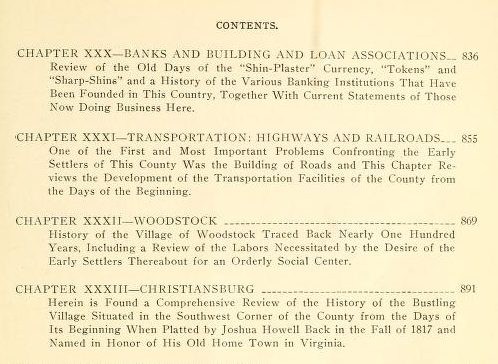
    Sometimes the book sitting unnoticed on a library shelf contains the clue that explains not only who lived in the community, but why the records suddenly begin calling that same place by another county’s name.

    Build the Foundation First

    The purpose of this initial survey is not to learn everything about our ancestor.

    It is to establish a foundation.

    Start with the location the family believes is correct.

    Check the census.

    Look through available city directories.

    Examine tax records.

    Check voter registration and poll records when appropriate.

    Search the newspapers—and determine which newspapers actually existed for that place and time and where surviving copies can be found.

    Examine local and county histories, both for the people and for the history of the jurisdiction itself.

    Then compare what you found.

    One record may suggest a location. Several independent records pointing toward the same place begin to build a much stronger case. City directories, for example, can provide names, addresses, and occupations and can be especially useful for following someone between census years.

    But never forget that place names themselves can change.

    If your ancestor suddenly appears in a different county, investigate before deciding that they moved. Sometimes the person remained on exactly the same land while a new county was created around them.

    Think about what happened in my own research.

    My grandmother was born and lived in the Arthur and Loami area of Illinois before later living in Indianapolis. Yet in the 1920 census she appears in two places, once with her family in Arthur and once in Indianapolis.

    My grandfather can be followed through years of city directories, connecting him first to Hartford City and later to Indianapolis.

    Joshua appears in tax records from Botetourt and Montgomery Counties, but that does not by itself mean Joshua moved. Understanding the changing county boundaries is necessary to understand what those records actually tell us. At the same time, notations such as “son of J” and “s of B” help distinguish Joshua’s sons from the similarly named sons of his brother Benjamin.

    Newspapers provide still more pieces. I have found articles about my grandmother in the Arthur and Loami area as well as Indianapolis, along with countless entries involving other members of the family. Even something as ordinary as visiting relatives—or as embarrassing as a speeding ticket—can provide dated evidence of someone’s presence in a community.

    And one obituary tells me that Tilghman Andrew Howell was living in “Washington” without telling me which Washington.

    Each source gives us another piece of the puzzle.

    Only after establishing where the person was living should we begin digging deeply into the major records of that locality—vital records, deeds, probate, court files, church records, military records, and the many other sources that can reconstruct a person’s life.

    Before asking what records your ancestor left behind, make sure you know where to look for them.

    Your ancestor may indeed have lived exactly where the family always said.

    But first, ask the question:

    Are they from where you believe?

  • Two Numbers, One Story: Unraveling the Mystery of My Father’s Social Security Records

    While researching my father, Robert Gordon Howell, I came across something that immediately caught my attention. Among the many records documenting his life were references to two different Social Security number prefixes: 312 and 457. At first glance, it appeared as though he may have been associated with two different Social Security numbers.

    For most people, that would raise an obvious question: How could one person have two Social Security numbers?

    As a genealogist, however, I have learned that the first conclusion is rarely the correct one. Rather than assuming an error—or assuming the records were correct—I decided to investigate. That journey led me into the history of the Social Security Administration and introduced me to two of the most valuable records available to family historians: the SS-5 Application for a Social Security Number and the Numident.

    The Beginning of Social Security

    The Social Security Act was signed into law by President Franklin D. Roosevelt on August 14, 1935, creating a nationwide retirement insurance program for American workers. As the program developed, every eligible worker needed a unique number so that wages and future benefits could be accurately recorded.

    Beginning in late 1936, Americans completed an Application for Account Number, better known today as the SS-5. What started as a simple administrative form has become one of the most valuable genealogical records available for twentieth-century research.

    Unlike many government documents, the SS-5 was usually completed by the applicant or with information provided directly by the applicant. Because of that, it often contains firsthand information rather than details supplied by relatives many years later.

    Why Genealogists Value the SS-5

    An original SS-5 application may include:

    • Full legal name
    • Date of birth
    • Place of birth
    • Father’s full name
    • Mother’s full maiden name
    • Employer
    • Home address
    • Signature of the applicant

    For genealogists, few twentieth-century documents provide so much reliable information in one place. When birth certificates are missing or conflicting records exist, the SS-5 often becomes one of the strongest pieces of evidence available.

    The Numident

    While many researchers are familiar with the SS-5, far fewer have heard of the Numident.

    The Numident—short for Numerical Identification System—is the Social Security Administration’s master electronic record for an individual’s Social Security account. It was developed as the agency computerized its records and serves as a lifetime history of a person’s Social Security file.

    Unlike the original SS-5, which records information provided when the account was first established, the Numident may document changes made throughout a person’s life. These updates can include:

    • Name corrections
    • Replacement Social Security cards
    • Changes resulting from marriage or divorce
    • Corrections to birth information
    • Death reporting
    • Administrative updates made by the Social Security Administration

    For genealogists, the Numident often answers questions that the original SS-5 cannot.

    A Research Mystery

    While reviewing my father’s records, I noticed references to two different number prefixes: 312 and 457.

    Rather than jumping to the conclusion that he had two Social Security numbers, I treated the discovery as a research problem.

    Were both numbers actually Social Security numbers?

    Was one the result of a transcription error?

    Could one have been copied incorrectly onto another record?

    Was one associated with a replacement card or an administrative action?

    Or was there another explanation entirely?

    These are exactly the kinds of questions genealogists should ask before reaching a conclusion.

    One of the most important lessons I have learned during years of family history research is that records do not always agree. Government documents contain mistakes. Clerks make errors. Information is copied incorrectly. Sometimes a document raises more questions than it answers.

    That is why original records matter.

    Following the Evidence

    Rather than relying on secondary sources or indexes, I requested copies of the original Social Security records associated with my father’s account. By comparing those records with military files, Veterans Administration records, employment documents, and other contemporary records, I hope to determine exactly why two different prefixes appear and whether they represent an actual discrepancy or a simple misunderstanding.

    This investigation is still underway.

    Like many genealogical problems, the answer may ultimately prove to be quite simple—or it may reveal an entirely unexpected chapter in my father’s life.

    Either outcome will be based on evidence rather than assumption.

    Lessons Learned

    This experience has reinforced several principles that guide my research.

    Never assume a record is correct simply because it is official.

    Always compare multiple independent sources.

    Whenever possible, obtain the original document rather than relying on an index or transcription.

    Allow the evidence—not the theory—to determine the conclusion.

    Those principles have served genealogists well for generations, and they remain just as important today.

    Looking Ahead

    As I continue researching my father’s life, I expect the SS-5, the Numident, and other Social Security records to answer many of the questions that still remain. Whether the mystery of the two prefixes proves to be a clerical error, an administrative correction, or something entirely different, the investigation itself has already demonstrated the value of careful documentation and thoughtful analysis.

    Every record tells part of a story.

    Sometimes the most important discoveries begin with something as simple as a few numbers on a government form.

    For a genealogist, those numbers are rarely just numbers—they are clues waiting to be understood.

    Footnotes

    1. Social Security Administration, “The Story of the Social Security Number,” accessed August 2, 2026, https://www.ssa.gov/history/ssn/ssnchron.html
    2. Social Security Administration, Application for a Social Security Card (Form SS-5), Social Security Administration, accessed August 2, 2026, https://www.ssa.gov/forms/ss-5.pdf
    3. Social Security Administration, Program Operations Manual System (POMS): Numident, accessed August 2, 2026, https://secure.ssa.gov/poms.nsf/home
    4. Social Security Administration, Historical Background and Development of Social Security, accessed August 2, 2026, https://www.ssa.gov/history/
  • Building the Airfields of Victory: The Story of the 1877th Engineer Aviation Battalion

    Building the Airfields of Victory: The Story of the 1877th Engineer Aviation Battalion

    Like many families of World War II veterans, ours was left with more questions than answers. My father, Robert Gordon Howell, rarely spoke about his wartime service, and many of the details of his military career remained unknown after he returned home. It was only years later, after I began researching his service and obtaining his military records, that one designation repeatedly appeared: Company C, 1877th Engineer Aviation Battalion. At first, those words were little more than numbers and letters on official documents. They identified the unit in which he served, but they revealed nothing about where he had been, what he had done, or how the men of the 1877th contributed to Allied victory. Those questions became the beginning of a research journey that continues today.

    As a genealogist and family historian, I learned long ago that one of the best ways to understand an individual service member’s experience is by studying the history of the unit in which he served. While a unit history cannot tell the complete story of one soldier, it can provide valuable insight into where he served, the conditions he endured, and the work performed by the men beside him. With that understanding, I began researching the wartime history of the 1877th Engineer Aviation Battalion.

    The 1877th Engineer Aviation Battalion was part of the U.S. Army Corps of Engineers, but its mission differed greatly from the combat aircrews it eventually supported. While Army Air Forces pilots flew bombing missions and fighter escorts, engineer aviation battalions built the airfields from which those aircraft operated. Their responsibilities extended far beyond simply constructing runways. They built taxiways, roads, drainage systems, electrical and water utilities, hangars, barracks, maintenance facilities, and countless other structures needed to support military aviation. Without the work of engineer aviation battalions, many of America’s air campaigns during World War II would never have been possible. ¹

    One of the best contemporary accounts of the battalion’s wartime service appeared in the December 6, 1945, issue of Roundup, the official newspaper of the China-Burma-India Theater. According to that article, the 1877th departed the United States in late 1943 and began a long journey across the globe. Traveling through Casablanca, Algiers, and Oran in North Africa, the battalion finally arrived at Bombay, India, on February 14, 1944. Nearly two months had passed since the men had left home. There was little opportunity to rest. Only three days after arriving in India, they were already at work constructing a new airfield at Chakulia. ²

    Chakulia was far more than another construction project. It became one of several airfields developed as part of Operation Matterhorn, the Allied plan to launch B-29 Superfortress bombing missions against Japan from bases in India and China. The B-29 represented the most advanced heavy bomber of the war, but its tremendous size and weight required runways that were both longer and stronger than those built for earlier aircraft. Before the first B-29 could begin combat operations, engineer aviation battalions had to create the airfields capable of supporting them. ³

    The accomplishments of the 1877th Engineer Aviation Battalion at Chakulia were nothing short of extraordinary. According to the battalion’s wartime account, the men constructed a 7,500-foot runway, poured approximately 10,000 cubic yards of concrete, moved nearly 400,000 cubic yards of earth, applied 25,000 gallons of asphalt seal, installed more than 400,000 feet of electrical wire, and built water systems, housing for approximately 3,000 men, hangars, and numerous support buildings. ² Even by today’s standards, those figures are impressive. In 1944, they were achieved under conditions that tested the endurance, skill, and determination of every man in the battalion.

    Bob Howell and unknown soldier, CBI Theater cica 1944-45

    Working conditions were often harsh. Construction crews labored in oppressive tropical heat with limited equipment and supplies. The battalion’s own history recalled that meals were frequently delivered directly to the construction site so work could continue without interruption. Heavy machinery arrived slowly, forcing engineers to improvise until additional equipment reached India. Official Army Air Forces histories likewise describe the shortages of construction equipment and the enormous logistical challenges facing engineer aviation units during the early stages of Operation Matterhorn. ² ³

    The successful completion of the Chakulia project earned the battalion a Meritorious Unit Citation, recognizing the exceptional quality of its engineering work. More importantly, the completed airfield became an important operating base supporting B-29 missions during Operation Matterhorn. ²

    The battalion’s work at Chakulia had scarcely been completed before new orders arrived. According to Roundup, Company A moved north to Sahmaw, where engineers first cleared unexploded bombs before beginning construction of a fighter and cargo airfield. Headquarters and Service Company, together with Companies B and C, traveled through Dinjan, India, where heavy construction equipment was dismantled and prepared for transport aboard C-46 and C-47 aircraft. The article reported that 324 transport sorties were required simply to move the battalion’s remaining personnel and equipment into the Myitkyina area. ²

    Near Myitkyina, the battalion continued its engineering mission by helping construct the Namponmao (West Strip) Airfield. Official Army Air Forces histories record that by January 1945, Namponmao had become an all-weather airfield supporting transport aircraft, fighter operations, medical evacuation flights, and the continuing Allied advance through Burma toward China. ³ ⁴

    Working alongside engineers from other aviation battalions, the men of the 1877th Engineer Aviation Battalion endured far more than difficult construction assignments. Throughout their service in India and Burma, they battled oppressive tropical heat, monsoon rains, mosquitoes, disease, primitive living conditions, and the constant threat of enemy air attack. While the bomber crews who flew from these airfields often received the public recognition, the engineers who built them quietly carried out a mission just as essential to Allied success. Every runway completed, every bridge constructed, every drainage ditch dug, and every utility line installed helped move supplies, launch aircraft, evacuate the wounded, and support the advance toward victory.

    By late 1945, with the war drawing to a close, the battalion’s work in the China-Burma-India Theater had come to an end. According to Roundup, the men began their journey home through Karachi, bringing to a close a wartime route that had carried them from the United States through North Africa, across India, and into the jungles of Burma. ² Like so many American servicemen, they returned home with memories and experiences that few outside their unit could fully understand.

    For my family, however, the story of the 1877th Engineer Aviation Battalion is much more than another chapter in military history. It is part of my father’s story.

    When I first began researching his military service, Company C, 1877th Engineer Aviation Battalion was little more than a designation on a government record. Today, those same words represent thousands of miles traveled across three continents, countless hours of labor under some of the harshest conditions imaginable, and a unit whose work helped make one of the most ambitious air campaigns of World War II possible.

    Although I may never know every detail of my father’s wartime service, studying the history of the battalion has allowed me to better understand the world in which he served. It has transformed a simple unit designation into the story of men whose determination, skill, and perseverance helped build the foundations of Allied victory.

    The history of the 1877th Engineer Aviation Battalion also serves as a reminder that history is often written through the actions of ordinary men performing extraordinary work. They were not seeking recognition or fame. They simply carried out the mission before them, knowing that every completed airfield would help save lives and bring the war one step closer to its end.

    As I continue researching my father’s military service, I know there are many more stories waiting to be uncovered. This is only one chapter in his journey, but it is a chapter that has given me a far greater appreciation for what he and his fellow soldiers accomplished during World War II.

    Researching the history of the 1877th Engineer Aviation Battalion has reminded me that victory was achieved not only by the men who flew the aircraft or fought on the front lines, but also by the engineers whose work made those victories possible. Every record I uncover deepens my appreciation for my father’s generation and the sacrifices they made in places that are often forgotten today. This is only one chapter of his military story, but it is one more reminder of why the men and women of World War II will forever be remembered as the Greatest Generation.

    We will remember them.

    Footnotes

    1. National Museum of the U.S. Air Force, “Origins of Engineer Aviation Battalions,” accessed August 2, 2026, https://www.nationalmuseum.af.mil/Visit/Museum-Exhibits/Fact-Sheets/Display/Article/3526447/origins-of-engineer-aviation-battalions/.
    2. Sgt. Ray Howard, “1877th Built Fields Amid Record Heat,” Roundup (China-Burma-India Theater), December 6, 1945, accessed August 2, 2026, https://www.cbi-theater.com/roundup/roundup120645.html.
    3. Wesley Frank Craven and James Lea Cate, eds., The Army Air Forces in World War II, vol. 5, The Pacific: Matterhorn to Nagasaki (Washington, D.C.: Office of Air Force History, 1953), accessed August 2, 2026, https://media.defense.gov/2010/Nov/05/2001329890/-1/-1/0/AFD-101105-012.pdf.
    4. Wesley Frank Craven and James Lea Cate, eds., The Army Air Forces in World War II, vol. 5, Chapter 6, HyperWar edition, accessed August 2, 2026, https://www.ibiblio.org/hyperwar/AAF/V/AAF-V-6.html.

    This article is part of my ongoing research into the military service of my father, Robert Gordon Howell, who served with Company C, 1877th Engineer Aviation Battalion during World War II. As new records become available, this article may be updated to reflect additional discoveries.

  • Finding My Father’s Missing Morning Reports

    One of the biggest challenges in military genealogy isn’t always finding the record—it’s figuring out where the record is located. That was exactly the situation I found myself in while researching my father, Robert Gordon Howell, and trying to document the two times he was hospitalized while serving with Company C, 1877th Engineer Aviation Battalion during World War II.

    Like many researchers, the first place I turned was Fold3.com (https://www.fold3.com), a subscription website owned by Ancestry.com that specializes in military records. I was excited, thinking I would quickly locate my father’s Morning Reports. Unfortunately, I soon discovered that Fold3’s current Morning Report collection only extends through 1939, well before my father’s World War II service.

    For a short time, I thought I had reached a dead end.

    Fortunately, I kept searching.

    While exploring the National Archives and Records Administration (NARA) website (https://www.archives.gov), I discovered that many Army Morning Reports through December 1944 have been digitized in the National Archives Catalog. Instead of searching by a person’s name, you search by the month and year, then browse the Morning Reports for the unit you are researching. The key is knowing the soldier’s unit designation and company. In my father’s case, that meant the 1877th Engineer Aviation Battalion, Company C.

    Armed with that information, I was able to locate exactly what I had been searching for.

    The Morning Reports documented both of my father’s hospitalizations. The first occurred from August 9–17, 1944, and the second from November 15–22, 1944. The reports recorded the day he left his unit for the hospital and the day he returned to duty. Although each entry consists of only a few lines, those few lines confirmed important events in his military service that I had never been able to document before.

    As I continued reading the November Morning Reports, another discovery caught my attention. On the report dated November 22, 1944, five soldiers—including my father—were mentioned. Several of the men were listed as being promoted from Private to Private First Class (PFC). That immediately made me wonder when my father eventually earned his promotion to Technician Fifth Grade (Tech 5).

    Naturally, I wanted to keep reading.

    That’s when I encountered another obstacle. The digitized Morning Reports currently available online end with December 1944. The 1945 reports I need, along with the reports from my father’s Korean War service between 1953 and 1958, have not yet been digitized.

    But instead of looking at that as bad news, I see it as my next adventure.

    Now I have a great excuse to take a genealogy road trip to St. Louis, Missouri, and spend time at the National Archives at St. Louis, where the original Morning Reports are preserved. Once I identify the units my father served with during his later military career, I’ll be able to examine those records in person. My hope is that the 1945 Morning Reports will tell me exactly when he was promoted to Tech 5, while the Korean-era reports may help reconstruct the rest of his military service from 1953 through his discharge in 1958.

    That’s one of the things I love most about genealogy.

    Every answer seems to lead to another question, and every new discovery opens another door. What began as a search for two hospital stays has turned into another chapter of my father’s military story—and another destination on my genealogy travels. I can’t wait to see what St. Louis has waiting for me.

    If you’re researching an Army veteran from the World War II era, don’t overlook the Morning Reports. They may not tell an entire story, but they often provide the missing pieces that bring a veteran’s service to life. Sometimes, all it takes is knowing where to look.


    This article is part of my ongoing Military History series. Through original records, photographs, archival research, and family stories, I am preserving my family’s military heritage one discovery at a time. My hope is that these articles not only honor those who served but also encourage others to uncover, preserve, and share the military history within their own families.

  • Ordering Military Records

    What My Father’s File Taught Me

    Robert Gordon Howell during his U.S. Army service.

    Many of us know a parent, grandparent, or another relative served in the military, but beyond that, we may know very little about what happened while they were in service. Family stories are a great place to start, but official military records may confirm what you’ve heard—or they might set the story straight and reveal secrets your veteran didn’t ever talk about.

    That has certainly been true as I’ve delved deeper into records concerning my father, Robert Gordon Howell.

    I knew my dad was in the Army. I heard stories about WWII, Burma, and maybe serving again during the Korean War. But my dad was not a guy who freely shared his experiences. After he passed away several years ago, I was filled with questions I would never have the chance to ask.

    Requesting his military records was one of the best steps I took in learning who he was before he became my father.

    What Records Can Tell You

    An Official Military Personnel File, commonly referred to as an OMPF, can contain enlistment information, duty assignments, promotions, training, awards, evaluations, separation documents, and much more. Administrative records are included as well. The contents of an individual military record can vary widely based on the veteran, branch of service, when they served, and, of course, which records still exist.

    My father’s records held much more than dates and locations of his service. They introduced me to a side of his military career I was not expecting and prompted additional questions about his assignments, disciplinary issues, medical history, and the circumstances of his final discharge.

    I thought I was just ordering a box of paperwork. Instead, I was about to learn more about my father than I knew before.

    How to Request Those Records

    If you are a veteran or the next of kin to a veteran, you can request military personnel records from the National Archives. Generally, the next of kin is limited to an unmarried spouse, parent, child, sibling, or other direct relative. Requests can be submitted online via the National Archives’ eVetRecs system or by mail or fax using Standard Form 180.

    Before starting your request, compile as much information as you can.

    • Veteran’s full name (surname, prefix, and first name) as it was used during service
    • Branch of Service
    • Social Security number or service number
    • Approximate dates of service
    • Date and place of birth
    • Name of last unit, place of discharge, or place entered, when known

    The more information you can provide, the easier it will be for the National Personnel Records Center to locate the correct file. A next-of-kin request for a deceased veteran may also require you to include proof of the veteran’s death. Acceptable documentation includes a copy of the death certificate, obituary, or funeral-home proof of death.

    Files Destroyed in the 1973 Fire

    This tip is a must for military researchers. In 1973, a fire broke out in the National Personnel Records Center in St. Louis. Depending on the branch of service, approximately 16–18 million personnel files were lost in the fire. Records from the Army were hit especially hard, with an estimated 80 percent of Army personnel files destroyed for veterans who were discharged between November 1, 1912, and January 1, 1960.

    My father falls into that window of service dates. Even though military officials said his file was “fire-related,” that didn’t mean there were no records remaining. While searching for his file, I was warned the National Archives may not have everything, but they can often reconstruct parts of a veteran’s military service using alternative records.

    Don’t forget there may be other records that existed outside of the personnel file. Look for:

    • Unit histories
    • Hospital records
    • Military court-martial records
    • Department of Veterans Affairs records
    • Morning reports
    • Newspaper accounts

    Get Started on That Request

    Don’t go into your request expecting your military records will have the answers to all your questions. My father’s file answered some questions but also led me to ask many more. That is par for the course when doing genealogy research.

    Requesting my father’s file did open a new chapter in his life for me. Family stories only told me so much. After I received his records, I was able to begin learning about the young man who lived an incredible life before I was born.

    Military records aren’t just pieces of government-generated paperwork. They could be all that’s left of your veteran’s story.


    Sources

    National Archives. Request Military Service Records.
    https://www.archives.gov/veterans/military-service-records

    National Archives. Standard Form 180 (SF-180): Request Pertaining to Military Records.
    https://www.archives.gov/veterans/military-service-records/standard-form-180

    National Archives. The 1973 Fire, National Personnel Records Center.
    https://www.archives.gov/personnel-records-center/fire-1973

  • Cousins

    Cousins

    The Family My Grandmother Never Let Me Forget

    When I was born, I immediately became part of something much larger than just my immediate family. I had three first cousins close to my own age—Bob, Mike, and Alisha. As little children, we spent time together playing, laughing, and simply enjoying being kids.

    Unfortunately, those memories are few.

    When my parents divorced, I was almost four years old. Although our family changed, I remained in Oregon until I was eight. During those years, I saw my first cousins only occasionally. After moving to Florida, those visits became even more infrequent, and more than ten years would pass before I saw them again. As often happens in childhood, memories slowly fade with time.

    Moving to Florida, however, brought one of the greatest blessings of my life.

    My grandmother.

    If there was one lesson she taught me over and over again, it was that family mattered. She never forgot her cousins, and she made sure I knew them as well.

    One of those cousins was Virginia Hartman, née Makepeace, who would travel from Illinois to visit us. As a child, I also knew of Kenneth, Halford, and Paul. They were simply names to me then. Years later, through genealogical research, I discovered that Kenneth and Halford were Virginia’s brothers and that Paul was her son, who was tragically killed as a civilian during the Vietnam War in 1968.

    Another family I came to know was Richard Fisher and his wife, Marguerite, née Reinbach. They lived only about a quarter to half a mile from our home, making visits easy and frequent. Their son, Carleton Fisher, lived in Tampa but always made time to visit his parents. Whenever he came to see them, he also made sure to stop by and visit us. Carleton was only two years older than my father, and his kindness left a lasting impression on me. Their daughter, Lora, always enjoyed sitting down to play cards with me, creating memories that I still treasure today.

    As a child, these were simply people my grandmother loved.

    Only years later did I realize that I had been surrounded by family history all along.

    When I eventually began researching my grandmother’s family, I discovered that these cousins were all connected through the Hunsaker family.

    The names I had heard throughout my childhood slowly began to fit together like pieces of a puzzle.

    Alice.

    Virgilla.

    Charles.

    Franklin.

    Katherine “Kittie” Hunsaker—my great-grandmother.

    Idella.

    Laura.

    Genealogy gave me the relationships.

    My grandmother had already given me the people.

    After my grandmother passed away, I found an old photograph among her belongings showing the Hunsaker children together. Suddenly, those names were no longer just names on a pedigree chart. They became smiling faces connected to people I had actually known.

    One of the greatest gifts Virginia ever gave me was preserving family photographs. Because of her kindness, I now have photographs of my grandmother and her sisters that might otherwise have been lost forever.

    Those photographs are more than images.

    They are family history preserved.

    Looking back now, one memory stands out more than the others.

    As a young boy, I regularly visited Richard and Marguerite Fisher. I remember their kindness far more than I remember our conversations. Children rarely understand the significance of the people around them.

    Only years later did I realize something remarkable.

    I hadn’t simply met a World War I veteran.

    I had known one.

    I had sat in his home.

    I had visited him countless times.

    He wasn’t just a veteran I had read about in a history book.

    He was my cousin.

    That realization means even more today than it ever could have as a child.

    As Richard and Marguerite grew older, I remember visiting them even after they could no longer safely live by themselves. One Halloween, I remember walking past their empty house after they had moved away. At the time, I couldn’t explain why seeing that empty house affected me.

    Today I understand.

    That house represented family.

    Genealogy often focuses on discovering ancestors we never had the opportunity to meet.

    But sometimes the greatest blessing is realizing we actually knew some of them—or at least the cousins who carried those family stories forward.

    I owe that realization to my grandmother.

    She understood something that I wouldn’t appreciate until much later.

    Family isn’t only found in birth certificates, census records, or family trees.

    Family is found in relationships.

    It is found in visits, conversations, shared photographs, card games, and keeping in touch across decades.

    My grandmother never allowed those connections to disappear.

    Because of her, I didn’t simply inherit names.

    I inherited family.

    And because she valued those relationships, I now have photographs, memories, and stories that no document could ever provide.

    As I continue researching my family history, I often think back to those visits with cousins I barely understood at the time.

    Today, I understand exactly what my grandmother was trying to teach me.

    The greatest discoveries in genealogy are not always found in old records.

    Sometimes, they are found in the people we were fortunate enough to know.

    Today, many of those cousins are gone. Their homes are quiet, the visits have ended, and the card games are now only memories. Yet every time I open a family photograph, read an old letter, or discover another historical record, I find myself thinking of my grandmother. She understood something that took me decades to appreciate. Family is life’s greatest treasure. Genealogy has helped me discover my ancestors, but my grandmother taught me something even more important—to cherish the family we have the opportunity to know while they are still with us. The records preserve our history, but it is the relationships that preserve our hearts.


    This article is part of my ongoing Family History series. Through these stories, I hope to preserve the people, places, and discoveries that have shaped my family’s journey—and perhaps inspire you to preserve yours as well.


  • Why RootsMagic 11 Became My Favorite Offline Family Tree Software

    Why RootsMagic 11 Became My Favorite Offline Family Tree Software

    When customers ask me what genealogy software I use, they’re usually surprised with my answer. To be honest, there are lots of great family tree programs available and many wonderful researchers who swear by their favorite software. But as someone who has researched his family for many years and tried numerous programs, RootsMagic 11 is the family tree software I prefer.

    That isn’t to say it’s the best software for everyone. Programs like Family Tree Maker, Legacy Family Tree, and Gramps are all fantastic programs that serve different researchers in unique ways. At the end of the day, the best genealogy software is whatever allows you to conduct your research the way you want.

    Here Are a Few Reasons RootsMagic Works Well for Me

    My Family Tree Belongs to Me

    I like RootsMagic primarily because it’s an offline program. My research lives on my computer and no one else’s. If the program changes, my subscriptions run out, or another researcher accidentally modifies my tree, it doesn’t impact my family data.

    An offline database also acts as my master copy. I get to choose when and if I want to synchronize or share information with online family trees, all while keeping one definitive version of my research.

    Excellent Source Citation Abilities

    Genealogy is about evidence. If you remember nothing else about researching your family tree, remember this.

    RootsMagic allows me to keep track of where every bit of information originated. I can cite census records, probate files, deeds, tax lists, military records, church registers, and more in a way that’s organized and easy to understand.

    For someone who likes to attach reliable sources to every conclusion they make in their family tree, RootsMagic has excellent source citation abilities.

    Organizes My Research

    Family tree research can be disastrous if you let it get out of control. Thousands of records, photos, documents, and handwritten notes can pile up as you conduct your genealogy.

    RM11 helps me stay organized by allowing me to:

    • Organize people and families.
    • Attach photos and scanned documents.
    • Take detailed research notes.
    • Track citations for every fact I find.
    • Print reports and charts when necessary.

    So much information is kept in one spot that I can spend more time researching and less time trying to find what I need.

    Ability to Connect to Online Sites

    While I prefer to keep my research mostly offline, I still frequent many online genealogy sites. RootsMagic makes it easy to link my research to services like FamilySearch while keeping my local RootsMagic database as my master copy.

    I get the benefit of working with online resources without storing everything in the cloud.

    Simple to Use

    I’m also a big fan of how simple RootsMagic is to use. The program runs smoothly, and I haven’t experienced issues as my database expands. From adding people and entering sources to attaching photos and reviewing relationships, everyday tasks are simple and easy to learn.

    I don’t have to worry about investing hours learning complicated software when I could be spending that time researching my ancestors.

    RootsMagic isn’t perfect, but it has served me well over the years and will continue to be my go-to software for everyday research and special projects.

    What About You?

    Everyone is different, and every researcher has different software needs. Some researchers might prefer Family Tree Maker because it works well with Ancestry. Others might lean toward Legacy Family Tree for its superb reporting or Gramps for being open-source.

    In my opinion, RootsMagic provides the best combination of research organization, easy source citation, local database ownership, and overall simplicity.

    Which is why RootsMagic is my favorite genealogy software and the program I use to build my family tree.

    What Software Do You Use?

    Picking the right genealogy software takes time because your family tree is something you’ll build for years to come. Think about how you work and what you need to be productive. Whether you choose RootsMagic or something else, just remember that genealogy software should motivate you to:

    • Document carefully.
    • Cite your sources.
    • Backup your tree regularly.
    • Research carefully.

    Software doesn’t create family historians. Thoughtful research does. So whatever program you pick, use it to preserve your family history and pass it on to future generations.

  • Stories Never Shared

    Stories Never Shared

    Some of the most meaningful family stories are never told. They remain tucked away in a box of old papers, hidden in a drawer, or carried silently in the hearts of those who lived them.

    This is one of those stories.

    I was about twelve or thirteen years old when my curiosity got the best of me. Like most kids whose dad had a bedroom with the door closed, I sneaked into his room while he was at work.

    Digging through one of his accordion files, I found what he referred to as his “important papers.” As important as many of those papers must have been to him, most of what I found was pretty boring—old check stubs, receipts, and other miscellany that people keep from years of filing away tax documents.

    Then I saw it.

    His WWII discharge papers.

    Unfolding the crisp white document, something caught my eye. My dad had been awarded a Bronze Star and two Purple Hearts!

    You don’t have to be a particularly intuitive young boy to figure out what that means.

    My dad was a HERO.

    At that moment, my father walked into the room. He wasn’t angry, however. He simply asked me what I was doing. I told him I had found his military papers and began grilling him about how he received his awards. He must have done something brave or noble to earn those medals, right?

    “What are you doing?”

    “What?” I replied. “Oh, I found these…” motioning to the papers in my hands.

    Instead of answering, he looked me dead in the eyes and said,

    “All I did was make it home alive. The real heroes never did.”

    Those were the only words he would ever give me on the topic.

    Decades passed, and through small snippets here and there, I discovered that he had friends that he lost “over there.” Like so many veterans of that war, they called it that. No names. Just “over there.”

    He was like so many others from what has since been called the Greatest Generation. He didn’t talk about the war. What he saw and experienced was locked away in his heart. He never spoke of how he received the Bronze Star or his Purple Hearts.

    After I fell in love with family history and grew up, I wanted to learn more. I ordered his military records from the National Personnel Records Center. That’s when I hit another sad, all-too-common roadblock.

    The 1973 fire at the records center in St. Louis destroyed millions of Army personnel files, including most of my father’s military record.

    Devastated, I almost gave up.

    Then I received a call from the archives in St. Louis.

    Most of his file was gone, but they had found some records that had not been archived at the time of the fire. Not much, but enough to start filling in some blanks.

    The records that survived confirmed that Dad had contracted malaria in Burma. His dental records, along with a few other surviving documents, also gave me enough information to trace his path overseas through North Africa before eventually ending up in Burma.

    My searching had now turned into detective mode.

    Pouring over unit histories, military records, and anything I could get my hands on, I eventually narrowed his unit down to Company C, 1836th Engineer Aviation Battalion. Now many of the small stories he told me made sense. I remembered him telling me about playing basketball with some Black soldiers who were stationed at a neighboring base. That was something that was rare back then and obviously stuck with him.

    Digging deeper, I uncovered just how important his battalion’s job was. They worked up to twenty hours a day with few tools to build two B-17 bomber airfields in Burma from scratch in just six months. Those airfields allowed Allied aircraft to fly deep into enemy territory and provided critical support for operations across one of the most challenging battlefields of the war.

    I’ll never look at my father the same way again.

    He once told me he didn’t feel that he was a hero. The heroes, he told me, were the guys who didn’t make it home.

    But my dad was—and always will be—MY HERO.

    Exploring family history is more than discovering names and dates. It’s about discovering the stories that never got the chance to be told. It’s about honoring the sacrifices that our families made for us and preserving those stories so that generations to come will know and remember them when those stories are no longer able to tell themselves.

  • This Story Again

    This Story Again

    By Joseph Howell, Founder of Nomadic Roots Research

    As a youngster, I remember spending hours listening to relatives tell the same stories, again and again. The picture above features my grandmother, Alta M. (Fitts) Howell, my great-aunt, Eileen Virginia (Fitts) Lindskog, and my great-grandmother, Katherine “Kitty” Maude (Hunsaker) Fitts. Families like to gather and share stories, memories, and remembrances of days gone by.

    Sometimes, as a kid I would get a little frustrated and think to myself,

    “This story again?”

    I realize now that as a child I didn’t appreciate just how special those stories really were.

    Until they were gone.

    It was only two months between the passing of my grandmother and my father. Two months that brought life changes that forever changed my perspective on how quickly life can change. I was married only a few months myself and expecting my first child. I suddenly felt like I was standing in between generations; losing my links to my family’s history at the same time that I was about to bring a new generation into those families.

    Their deaths left many questions unanswered.

    There were stories I wanted to hear again. Questions I wanted to ask. Memories I wanted to capture forever.

    I knew that if I wanted answers to those questions, I would have to start finding them for myself.

    What began as a quest to learn about my own family tree became a passion. I began interviewing relatives, gathering documents, researching records, and studying anything I could about family history and genealogy. The more I learned, the more I realized that every family has a story that deserves to be preserved.

    Family stories can offer valuable clues to help us learn about our past. Names, Places, Occupations, Military Service, Migration, and  Family traditions. Stories are facts that are often filtered through emotions and personal biases. Sometimes stories are told accurately. Other times the truth is stretched over time. But they can provide wonderful starting points to help us uncover the facts.

    My personal journey has turned into over 30 years of genealogical research. Along the way I have earned an Associate Degree in Family History and Genealogy from BYU–Idaho, completed the Boston University Genealogical Research Certificate Program, and worked as a Family History Consultant for The Church of Jesus Christ of Latter-day Saints. But one thing I learned along the way is what made my journey so worthwhile:

    Listen to the stories.

    Talk to your parents, grandparents, aunts, uncles, and relatives while you still have the opportunity. Ask questions. Record the answers. Preserve photographs. Save letters. Protect family Bibles. Keep family records. Those stories that you may tire of hearing now may become priceless one day.

    I started this journey because I didn’t listen carefully to stories when I had the chance. If I could go back, I would listen differently.
    I want my children, my grandchildren, and future generations to know their family history. That is why I am devoted to teaching others how to find their own stories.
    Now, as I think back on those “stories I had heard too many times”, I would give almost anything to hear some of them just one more time.

  • Why Every Genealogist Should Use an Offline Family Tree Program Alongside Online Trees

    Why Every Genealogist Should Use an Offline Family Tree Program Alongside Online Trees

    One of the mistakes I see most often as a genealogy tech blogger is family historians using online trees exclusively. Companies like Ancestry, MyHeritage, FamilySearch, and Findmypast have great online tools for discovering new information about your ancestors. However, they shouldn’t be the only place you work on your family tree.

    Instead, power users employ an offline family tree program along with their online trees. Genealogy software like RootsMagic, Family Tree Maker, Legacy Family Tree, and Gramps offer advantages that many online-only genealogists never realize they are missing.

    Own Your Information

    When your tree lives only on a website, you don’t truly own your information. You are at the mercy of that company’s subscriptions, policies, and technology. An offline family tree program lets you store a copy of your database on your computer. You own your data and can access it no matter what changes an online company makes to their trees.

    Use RootsMagic, Family Tree Maker, Legacy Family Tree, or another program and you’ll have peace of mind knowing you own your own information. Online trees should be viewed as tools, not home.

    Better Organization

    Genealogy programs run on your computer are specifically designed for genealogy. Many have excellent source citation, research notes, timelines, reporting, and analysis tools that you just can’t find online.

    Offline trees become more valuable as your family tree grows to include hundreds or even thousands of people.

    Security From Mistakes

    Collaborative trees on the internet can be edited by others. Collaboration is great, but too many people making changes or adding mistakes can create problems. By maintaining your own tree separately, you can ensure that you have your own version of your ancestors carefully documented.

    Think of your offline tree as being the master copy. You can publish shares of it to the online world for collaboration or discovery.

    Superior Research Documentation

    Genealogists are taught to document sources and carefully evaluate evidence. Offline family tree programs typically have much better source citation capabilities. Being able to record where you found information and how you reached your conclusions is invaluable to the research process.

    Future generations may inherit your research. Proper documentation now will help them understand how you reached your conclusions.

    Data Backup and Security

    Hard drives crash and websites come and go. Having a database on your computer allows you to make regular backups on external hard drives or cloud storage. “Lots of copies keep stuff safe” is a rule of thumb in genealogy for a reason. Don’t put all of your tree in one place.

    If your subscription expires or a website decides to change how their trees work, your family tree is safe on your computer.

    Advanced Reporting

    All of the programs mentioned above can create beautiful charts and reports. You can create descendant and ancestor reports, family group sheets, research logs, and historical narratives with greater flexibility than many online trees allow.

    Preserving your research in a printable format is a great way to share your family history with relatives.

    Online and Offline Trees Can Work Together

    Online trees are great for discovering new records, getting hints, collaborating with relatives, and connecting with unknown cousins. Computer programs are great for organization, research documentation, preservation, and data security.

    Don’t rely on just online trees or just an offline program. Use both and experience the best of both worlds.

    Maintain a master tree on your computer that is well documented and backed up regularly. Then connect with the online genealogy community by publishing a share of your tree to your favorite websites like Ancestry, MyHeritage, FamilySearch, and Findmypast. Using an offline tree program in combination with online research is the best way to preserve your family’s history.